1 Introduction: The Evolving Landscape of Additive Manufacturing in Moscow
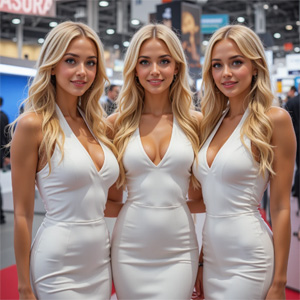
The additive manufacturing (AM) sector in Moscow represents a rapidly growing segment of Russia’s advanced manufacturing industry, positioning the city as an emerging hub for 3D printing innovation across Eastern Europe and Central Asia. As Moscow continues to develop its technological capabilities in this field, specialized trade fairs and exhibitions have become crucial platforms for knowledge exchange, business development, and technological demonstration. Within this context, professional hostesses serve as indispensable ambassadors who bridge the gap between complex technologies and diverse audiences, enhancing both the educational and commercial value of these events.
The Moscow additive manufacturing market has witnessed significant expansion in recent years, with events like the 3D Print Expo attracting growing numbers of exhibitors and visitors since its inception 5. These exhibitions showcase cutting-edge technologies ranging from industrial 3D printers and advanced materials to software solutions and finished products across various applications. As the sector continues to mature, the role of hostesses has evolved from simple greeting personnel to technical facilitators and brand ambassadors who significantly contribute to the overall success and professionalism of these premier gatherings.
2 Strategic Importance of Professional Hostesses
2.1 Enhancing Exhibition Value and Visitor Experience
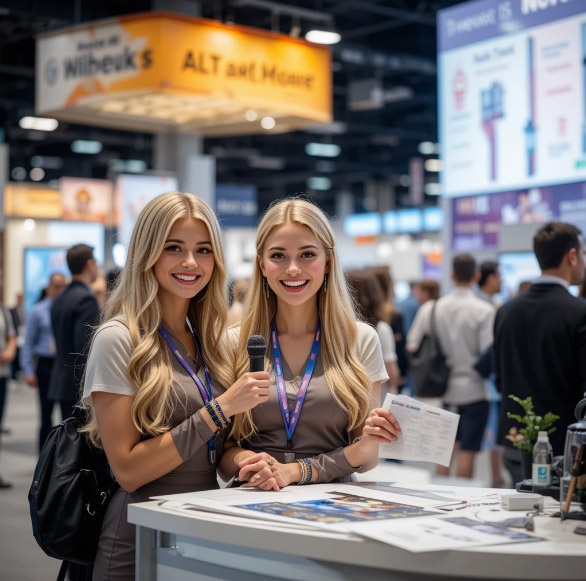
Professional hostesses serve as the human face of additive manufacturing exhibitions, creating immediate visual and interpersonal connections with attendees from diverse backgrounds. At events like the 3D Print Expo in Moscow, which features everything from industrial applications to consumer-oriented demonstrations, hostesses play a crucial role in setting the tone for visitor experiences 5. Their presence transforms sterile exhibition environments into welcoming spaces that encourage exploration, questions, and extended engagement with displayed technologies.
The multifunctional nature of additive manufacturing fairs—encompassing business-to-business interactions, technical education, and public engagement—requires hostesses who can adapt their approach based on visitor profiles. For industry professionals seeking specific technical information, hostesses provide directed guidance to appropriate exhibitors or technical specialists. For students and general visitors, they offer accessible explanations that make complex AM technologies understandable and engaging, thereby supporting broader educational objectives within the sector.
2.2 Brand Representation and Market Positioning
For exhibiting companies, hostesses function as living embodiments of brand identity and corporate values. In the highly competitive additive manufacturing market, where technological differentiation can be challenging to communicate, well-trained hostesses effectively amplify brand messaging through both verbal and non-verbal communication. Their appearance, demeanor, and product knowledge directly influence perceptions of exhibiting companies’ professionalism and technological capabilities.
The international character of Moscow’s additive manufacturing events, which attract participants from across Russia, CIS countries, and beyond, necessitates hostesses with cross-cultural competence 5. Multilingual hostesses particularly valuable for facilitating interactions with international delegates, translating technical information, and navigating cultural nuances in business communication. This capability has become increasingly important as Moscow positions itself as a regional hub for additive manufacturing innovation and collaboration.
3 Comprehensive Role Breakdown
3.1 Technical Guidance and Visitor Navigation
Hostesses at additive manufacturing fairs provide essential orientation services that help visitors navigate often extensive exhibition spaces efficiently. With events like the 3D Print Expo featuring diverse zones dedicated to industrial equipment, materials, software, and application-specific demonstrations, hostesses must possess thorough familiarity with exhibition layouts and content categories 5. This enables them to direct visitors to areas matching their specific interests, whether they represent industrial buyers seeking production solutions, designers exploring prototyping capabilities, or investors assessing market opportunities.
Beyond basic navigation, hostesses offer preliminary technical guidance regarding exhibited technologies and their applications. While not expected to be engineering experts, they receive sufficient training to explain basic AM processes (e.g., FDM, SLA, SLS), material properties, and typical applications across industries such as aerospace, automotive, healthcare, and consumer products. This foundational knowledge enables them to answer common questions and identify when specialist intervention is required, ensuring visitors receive accurate and helpful information.
3.2 Demonstrations and Interactive Experiences
Additive manufacturing exhibitions increasingly feature interactive elements that allow visitors to experience technologies firsthand. Hostesses play crucial roles in managing these demonstrations, ensuring equipment operates correctly, facilitating participant engagement, and maintaining safety protocols. At the Moscow 3D Print Expo, for example, hostesses have supported diverse activities including master classes where visitors test equipment, chocolate printing demonstrations, and fashion shows featuring 3D-printed wearables 5.
The management of these interactive experiences requires hostesses to balance educational value with entertainment appeal, particularly when engaging general audiences. They learn to explain technical processes in accessible language, highlight the novelty and practical applications of demonstrated technologies, and encourage participation while ensuring demonstrations remain structured and informative. This combination of technical facilitation and audience engagement skills represents a specialized capability that distinguishes professional exhibition hostesses in the additive manufacturing sector.
4 Essential Skills and Qualifications
4.1 Technical Knowledge and Industry Familiarity
The specialized nature of additive manufacturing necessitates hostesses with at least foundational understanding of AM technologies, applications, and market trends. While not requiring engineering expertise, successful hostesses develop functional knowledge of key concepts including various 3D printing processes, material properties, post-processing techniques, and industry-specific applications. This technical familiarity enables them to engage in meaningful preliminary conversations with technically-oriented visitors and accurately assess which specialists would best address specific inquiries.
Additionally, hostesses benefit from understanding Russia’s AM landscape, including major market players, research institutions, and government initiatives supporting additive manufacturing development. This contextual knowledge allows them to provide relevant background information to international attendees seeking to understand the local market environment and potential partnership opportunities. Keeping abreast of emerging trends and technological advancements ensures hostesses can discuss the latest developments with credibility and enthusiasm.
4.2 Interpersonal and Communication Excellence
Regardless of technical knowledge, exceptional communication skills remain the foundation of effective hostess performance. Additive manufacturing fairs attract diverse audiences ranging from PhD researchers and corporate executives to students and hobbyists, requiring hostesses to adjust their communication style appropriately for each segment. Clear articulation, active listening, and diplomatic problem-solving when addressing visitor concerns or conflicts are essential capabilities for maintaining positive interactions throughout often lengthy exhibition days.
Multilingual abilities represent particularly valuable assets given the international composition of many additive manufacturing events in Moscow. While Russian-English bilingualism is typically essential, additional language skills (particularly German, Chinese, or languages from CIS countries) provide significant advantages when engaging with international delegates 5. Beyond verbal communication, hostesses must demonstrate strong non-verbal communication through professional appearance, confident posture, and approachable body language that puts visitors at ease.
Table: Essential Hostess Skills for Additive Manufacturing Fairs
| Skill Category | Specific Requirements | Importance Level |
|---|---|---|
| Technical Knowledge | Understanding of AM processes, materials, applications | High |
| Communication Skills | Fluent Russian/English, clear articulation, active listening | Critical |
| Interpersonal Abilities | Cultural sensitivity, diplomacy, customer service orientation | Critical |
| Professional Presentation | Appropriate attire, grooming, posture, brand alignment | High |
| Organizational Skills | Crowd management, scheduling, multitasking | Medium-High |
| Problem-Solving | Conflict resolution, quick thinking, adaptability | High |
5 Specialized Training and Preparation
5.1 Pre-Event Technical Briefings
The effectiveness of hostesses at additive manufacturing events is directly proportional to the quality of their pre-event preparation. Comprehensive training programs typically include technical briefings on exhibited technologies, market overviews, and detailed information about exhibitors’ products and services. For an event like 3D Print Expo, which encompasses everything from industrial manufacturing to consumer applications, this training must cover a broad spectrum of AM applications and technology categories 5.
Training protocols typically incorporate interactive learning methods such as hands-on demonstration practice, question-and-answer sessions with technical experts, and scenario-based roleplaying to simulate challenging visitor interactions. Hostesses receive detailed product information sheets and exhibition guides for study, supplemented by visual aids and simplified explanations that help them translate complex engineering concepts into accessible language for diverse audiences. This technical preparation is complemented by instruction on safety protocols, particularly when demonstrating operational equipment or handling finished products.
5.2 Cultural Sensitivity and Protocol Training
Given the international character of Moscow’s premier additive manufacturing events, hostesses receive specialized training in cross-cultural communication and business etiquette. This includes understanding communication norms, business card exchange protocols, and presentation styles preferred by delegates from different regions, particularly from CIS countries that feature prominently in these events 5. This cultural competence enables hostesses to facilitate productive interactions between diverse participants, potentially leading to international partnerships and collaborations.
Additionally, hostesses are trained on specific event protocols regarding media interactions, confidentiality requirements, and handling of sensitive information—particularly important at events where companies may showcase proprietary technologies or unpublished research findings. This discretion is essential for maintaining trust with exhibiting companies and protecting their competitive advantages in a rapidly evolving technological field.
6 Operational Excellence and Logistics
6.1 Crowd Management and Flow Optimization
The physical layout of additive manufacturing exhibitions presents unique challenges that hostesses must navigate effectively. These events often feature a mix of traditional booth displays, interactive demonstration zones, presentation stages, and networking areas—all within large venues like Moscow’s Sokolniki Exhibition and Convention Centre 5. Hostesses are responsible for managing crowd flow between these areas, preventing congestion around popular demonstrations while ensuring all exhibits receive adequate visitor attention.
For events featuring large equipment or interactive technologies, hostesses also implement and enforce safety protocols to protect both attendees and expensive equipment. This requires vigilant monitoring of demonstration areas, clear communication of safety guidelines, and coordination with security personnel when necessary to maintain orderly environments conducive to both learning and business development. The ability to manage crowds discreetly while maintaining a welcoming atmosphere represents a specialized skill that distinguishes professional hostesses in the technical exhibition context.
6.2 Technology Integration and Digital Tools
Modern additive manufacturing exhibitions increasingly incorporate digital elements that hostesses must navigate proficiently. This includes tablet-based registration systems, lead capture applications, interactive displays, and sometimes even augmented or virtual reality experiences demonstrating AM applications. Hostesses receive training on these digital tools, enabling them to assist visitors with technology interfaces, input participant data accurately, and troubleshoot basic technical issues that may arise during demonstrations.
The hybrid event format adopted by many exhibitions following global pandemic restrictions requires hostesses to develop additional skills in managing both physical and virtual participants simultaneously. This may involve facilitating online Q&A sessions, positioning cameras for optimal streaming angles, or engaging with remote attendees through digital platforms while maintaining focus on physical visitors. This digital adaptability has become an increasingly important aspect of hostess capabilities in the contemporary exhibition environment.
7 Performance Measurement and Value Demonstration
7.1 Quantitative and Qualitative Metrics
The effectiveness of hostess services is measured through both quantitative and qualitative assessment methods that correlate with event success. Quantitative metrics typically include visitor interaction counts, lead generation numbers, demonstration participation rates, and satisfaction survey scores. These numerical indicators help demonstrate the tangible value provided by hostess services and inform staffing decisions for future events. For exhibiting companies, more specific metrics might include lead conversion rates and follow-up meeting scheduling facilitated by hostess interventions.
Qualitative assessment incorporates observational feedback from exhibition managers, exhibitor comments, and anecdotal evidence of positive participant experiences. This qualitative dimension captures aspects of hostess performance that resist easy quantification, such as problem-solving creativity, diplomatic skill in handling difficult situations, and contribution to overall exhibition atmosphere. The combination of quantitative and qualitative evaluation provides a comprehensive picture of hostess effectiveness and areas for potential improvement.
7.2 Return on Investment Considerations
For exhibition organizers and participating companies, investing in professional hostess services represents a strategic decision with demonstrable return on investment when properly implemented. The presence of knowledgeable, engaging hostesses can significantly enhance exhibitor lead generation, improve visitor satisfaction scores, and increase dwell time at individual stands—all factors that contribute directly to exhibition success. Additionally, the positive brand associations created by professional hostess interactions can influence longer-term business relationships beyond immediate event outcomes.
The cost-benefit analysis of hostess services must account for both direct costs (compensation, training, uniforms) and indirect benefits (brand enhancement, competitive differentiation, relationship building). In the context of additive manufacturing exhibitions, where sales cycles may be extended and relationship development crucial, the qualitative benefits of professional hostess services often justify investment even when immediate ROI calculations appear modest. This strategic perspective recognizes hostesses as integral contributors to overall exhibition value rather than merely incidental expenses.
8 Future Evolution and Emerging Trends
8.1 Technological Integration and Changing Roles
The role of exhibition hostesses continues to evolve with technological advancements that enhance their capabilities and extend their impact. Digital tools including tablet-based registration systems, multilingual translation applications, and interactive information platforms augment traditional hostess functions while improving efficiency and accuracy. These technologies allow hostesses to access real-time information and provide more personalized service to attendees, particularly as artificial intelligence and data analytics become more integrated into exhibition management systems.
Looking forward, hostesses may increasingly function as facilitators of hybrid experiences that blend physical and digital participation. As additive manufacturing exhibitions develop more sophisticated virtual components, hostesses will likely need skills in managing streaming equipment, engaging with remote audiences, and ensuring seamless experiences for both physical and virtual participants. This expansion of traditional hostess responsibilities reflects broader trends in event management toward integrated physical-digital experiences that extend reach beyond geographical limitations.
8.2 Professionalization and Career Development
As the additive manufacturing sector matures, hostess services are increasingly characterized by specialized knowledge and professional certification. Rather than general hospitality staff, exhibitions increasingly seek hostesses with specific understanding of AM technologies, applications, and industry dynamics. This specialization enables more sophisticated participant engagement and enhances the technical credibility of hostess interactions, particularly when dealing with specialized professional audiences.
The professionalization of exhibition hostesses is reflected in developed career paths, specialized training programs, and industry recognition of excellence. This evolution elevates hostess services from temporary event staffing to recognized professional specialization within the broader additive manufacturing ecosystem, with corresponding implications for compensation, training investment, and career development opportunities. For individuals interested in technology careers, exhibition hostess roles can provide valuable industry exposure and networking opportunities that serve as entry points to more technical positions within the additive manufacturing sector.
9 Conclusion: Strategic Partners in Additive Manufacturing Advancement
Professional hostesses at Moscow’s additive manufacturing fairs have evolved far beyond traditional decorative roles to become strategic enablers of knowledge exchange, business development, and technological adoption. Their ability to bridge technical complexity and human curiosity, to facilitate connections across cultures and disciplines, and to ensure seamless experiences for diverse participant groups makes them indispensable contributors to the success of these premier events.
As Moscow continues to develop its position as a regional hub for additive manufacturing—evidenced by the growth of events like 3D Print Expo—the specialized capabilities of professional hostesses will become increasingly valuable in navigating the complex technical, business, and cultural dimensions of international AM exhibitions 5. By investing in comprehensive training, advanced tools, and professional development pathways for these frontline ambassadors, event organizers and exhibiting companies not only enhance immediate event outcomes but also contribute to the broader advancement of Russia’s additive manufacturing ecosystem through facilitated connections and amplified engagement.
The future of exhibition hostessing in the additive manufacturing sector will likely see even greater integration of technology into hostess functions, with AI-powered tools enhancing everything from participant matching to real-time translation services. However, even as technology evolves, the human elements of empathy, cultural intelligence, and creative problem-solving that hostesses provide will remain irreplaceable in creating meaningful connections and transforming technological potential into tangible progress. Their role as interpreters, facilitators, and ambassadors ensures that additive manufacturing exhibitions remain not just marketplaces of products, but forums for inspiration, education, and collaboration that drive the entire industry forward.