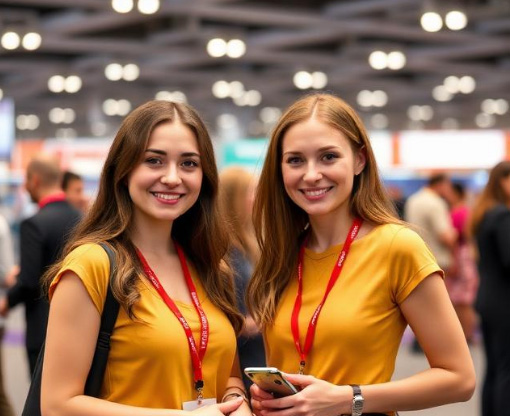
MOSCOW – The air is thick with the smell of jet fuel and high-grade aluminum composite. Outside the vast pavilions of Crocus Expo or the sprawling tarmac of Zhukovsky Airport, business jets gleam under the harsh Russian sun alongside prototype helicopters and next-generation avionics suites. Inside, the atmosphere is equally intense—but here, the battle is for contracts, partnerships, and market share.
Welcome to Moscow’s premier aircraft industry trade shows, including MAKS (International Aviation and Space Salon), HeliRussia, and the NAIS (National Aviation Infrastructure Show). While the stars of the show are the multimillion-dollar flying machines, the unsung heroes ensuring those machines actually sell are the specialized professionals working the booths: the Russian exhibition assistants.
For international exhibitors, these professionals are far more than receptionists. At an aerospace event where a mistranslated engine specification or a cultural faux pas can derail a deal worth millions of dollars, the “aviation hostess” has evolved into a highly technical, bilingual gatekeeper.
The “Aviation-Grade” Assistant
Unlike consumer trade shows where appearance may be the primary qualification, the aircraft industry demands a different caliber of staff. According to agencies specializing in exhibition talent, such as MoscowHostess.ru and Moscow Interpreters, the requirements for shows like HeliRussia and NAIS are exceptionally rigorous.
These assistants must possess three distinct skill sets simultaneously:
- Technical Lexicon: They must be fluent not just in English and Russian, but in the specific jargon of the industry. This includes terminology related to avionics, airframe maintenance, MRO (Maintenance, Repair, and Overhaul), UAVs (Unmanned Aerial Vehicles), and ground handling equipment.
- Diplomatic Polish: The audience at these events is elite. At NAIS, attendees include representatives from the Russian Ministry of Transport, Rosaviation (the Federal Air Transport Agency), and C-suite executives from major airlines. The assistant must navigate government protocol as easily as corporate negotiation.
- Industrial Stamina: These events are physically demanding. Whether standing on the concrete floor of Crocus Expo during the HeliRussia exhibition or working outdoors on the static display line at Zhukovsky during MAKS, endurance is essential.
More Than a Translator: A Cultural Bridge
At an event like the International Aviation and Space Salon (MAKS) , which ranks among the top 10 aviation forums globally alongside Le Bourget and Farnborough, the stakes are astronomical. With over 570,000 participants and delegations from countries including China, Saudi Arabia, Qatar, and Turkey, communication is the primary barrier to entry.
Here, the Russian hostess acts as a cultural mediator. As detailed by hiring agencies, their role extends well beyond interpretation:
- Real-Time Interpretation: Providing simultaneous translation during technical presentations about helicopter rotors or airport lighting systems.
- Lead Qualification: Filtering the general public (during public days) from legitimate buyers. For a booth showcasing VIP helicopters or airport security scanners, the hostess is the first filter, ensuring engineers only speak to genuine procurement officers.
- Logistics Management: For high-level delegations, the assistant often manages hospitality—arranging transportation from Moscow, booking accommodations, and ensuring adherence to strict Russian business etiquette.
“In this environment, a hostess must know the difference between a *MI-8* and a *MI-26* before they even step on the floor,” notes a profile from a Moscow-based service provider. “If they can explain the technical specs, they are worth triple the rate.”
Key Events on the Moscow Aerospace Calendar
The demand for these specialized professionals peaks during Russia’s major aviation exhibitions:
- NAIS (National Aviation Infrastructure Show): Held annually at Crocus Expo, this is the only Russian exhibition dedicated entirely to civil airport infrastructure, attracting over 10,000 visitors and 200+ manufacturers of ground handling equipment.
- HeliRussia: The country’s largest helicopter industry exhibition, taking place in May. It spans 25,000 square meters and features everything from drone systems to medical evacuation units.
- MAKS (International Aviation and Space Salon): Held bi-annually at Zhukovsky airport. This is the flagship event where Russian aerospace giants like Rostec unveil new combat and commercial aircraft to the world.
The Face of the Brand
In the high-stakes world of aerospace sales, first impressions are critical. The exhibition assistant is often the first face a potential buyer—perhaps from a cash-rich airline in the UAE or a government delegation from Latin America—sees.
“The investment in a polished, bilingual hostess is an investment in credibility,” explains a hiring coordinator from MoscowHostess.ru, referencing their experience staffing helicopter exhibitions. “You are trusting them to explain the safety record of your turbine or the warranty on your landing gear. They are not just a pretty face; they are the handshake that seals the deal.”
As Western sanctions reshape the Russian aviation market, alternative suppliers from China, Turkey, and the Middle East are flooding into Moscow. This influx of new players makes the role of the Russian exhibition assistant more vital than ever. They are the human software translating complex machinery into profitable relationships, one technical specification at a time.