Metal Expo 2026 is set to take place from November 10 to 13 at Expoforum in St. Petersburg, bringing together over 600 exhibitors and more than 25,000 industry professionals from Russia, China, India, Turkey, Iran, and beyond. For international exhibitors, particularly those from China and Turkey, the difference between a successful show and a missed opportunity often comes down to one critical asset: a skilled Russian booth assistant.
More Than a Smile: The Evolving Role of Booth Assistants
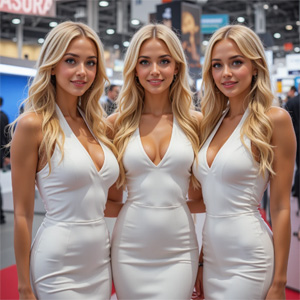
The days when exhibition hostesses were merely decorative presences handing out pens and candy are long gone. In 2026, the Russian booth assistant is a hybrid professional: part technical consultant, part cultural diplomat, and full-time lead qualifier.
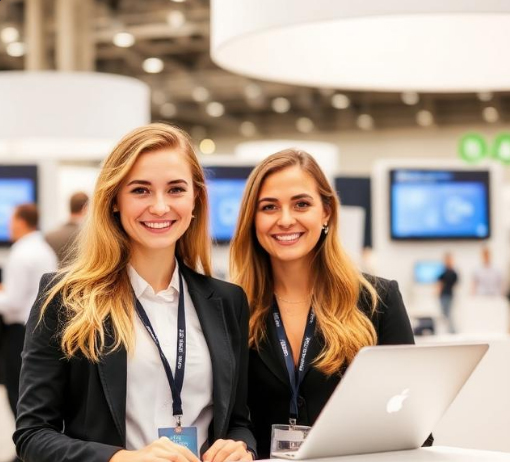
At Metal Expo, these assistants serve as the first point of contact for visitors at exhibition stands, managing foot traffic, distributing promotional materials, and creating a welcoming professional atmosphere. In an industry where technical credibility and precision are paramount, a polished assistant sets the tone for every visitor interaction and represents the exhibitor’s brand to an audience of serious buyers.
The visitor profile at Metal Expo is highly specialized and decision-driven. Attendees include representatives from machine-building enterprises, metalworking industries, government sectors, and professional business communities. With thousands of targeted professionals expected to attend, booth assistants must quickly distinguish between casual observers and high-value prospects—procurement directors, chief engineers, and technical managers seeking to upgrade or expand their capabilities. This filtering ensures that sales and technical teams can focus on meaningful commercial conversations with serious buyers.
What Russian Booth Assistants Actually Do at Metal Expo
Technical and Sales Support
A professional Russian booth assistant at a metallurgy exhibition must be fluent in industry-specific terminology—from CNC specifications and feed rates to tool geometry, tolerance levels, and metallurgical properties. They qualify leads, identify serious buyers, and can demonstrate equipment with accurate technical explanations.
One real-world example illustrates the depth of knowledge required. Maria Igorevna Zagorodneva, a master’s student in Intercultural Communication and Translation in the Oil and Gas Business at St. Petersburg State University, provided consecutive interpretation for the Taiyuan technology company “Zongheng Haiwei,” one of China’s leading manufacturers of heavy industrial equipment, including production lines for welded pipes and metalworking. Her role required not just language skills but the ability to navigate complex technical discussions between Chinese engineers and Russian buyers.
Bilingual Communication and Lead Qualification
Russian booth assistants at Metal Expo typically provide Russian/English/Chinese support as needed, overcoming language barriers with engineers and procurement teams. They handle negotiations on pricing, delivery terms, and after-sales service while managing exhibition logistics such as scheduling meetings with key visitors and organizing product demonstrations.
A Chinese company participating in a previous Metal-Expo hired Tatyana Mikhailova, an English teacher with seven years of experience, as their interpreter. She recalled that “the clients were experienced engineers and factory directors who started from worker positions and know everything about production.” Her role involved translating multi-million dollar contracts and corporate decisions, a responsibility she described as both flattering and challenging.
Cultural and Business Etiquette Guidance
Beyond language, skilled booth assistants help foreign exhibitors navigate Russian business customs. They advise on local decision-making processes and ensure professional representation of the brand. This cultural bridge is particularly critical in the Russian metallurgy market, where relationships and trust are built through personal interaction and demonstrated commitment.
The Three Tiers of Booth Assistants
Not all booth assistants are created equal. In the Moscow market, agencies classify staff into specific tiers based on technical ability and risk level:
The Basic Promoter (€80-100/day): Entry-level staff who manage crowd flow, scan badges, ensure the coffee machine is running, and keep the booth tidy. They are the “warm body” necessary for high-traffic flow but lack technical depth.
The Technical Specialist (€120-180/day): The “sweet spot” for most industrial exhibitors. These assistants often hold degrees from technical institutions and understand PLC systems, tolerance levels, and metallurgical properties. They can explain why your CNC machine outperforms a competitor’s without reading from a script.
The Business Negotiator (€200+/day): Reserved for closing deals with state corporations. These assistants are fluent in multiple languages and understand the legal labyrinth of EAC certification and customs exemptions. They don’t just translate words; they translate intent during high-level boardroom meetings.
The GOST Barrier: Why Technical Knowledge Matters
The single biggest hurdle for any foreign exhibitor in Russia is the regulatory environment. The Russian standards system (GOST) is dense, unforgiving, and often alien to Western or Asian engineers. A Russian buyer’s first question is rarely about price—it’s about certification: “Does it have an EAC Certificate?”
A skilled booth assistant knows the major certification bodies—EAC, GOST R, Rostechnadzor—and can steer a conversation away from a dangerous “no” toward a safer “let me connect you with our technical department.” This knowledge can mean the difference between losing a $200,000 deal and buying time for the sales team to address compliance concerns properly.
What Chinese Exhibitors Need to Know
For Chinese companies planning to exhibit at Metal Expo 2026, the demand for Russian-speaking booth assistants is significant. Moscow translation agencies note that Chinese exhibitors at Metal-Expo have substantial demand for Russian translation, with Russian-English, Russian-Turkish, and Russian-Chinese interpretation services being the most common.
A professional Russian-speaking stand assistant is crucial for maximizing lead generation and ensuring smooth communication with potential clients. Chinese exhibitors should look for assistants who can:
- Master metalworking terminology: Understanding tolerances, spindle speeds, tooling specifications, and metallurgical processes
- Provide bilingual communication: Russian/Chinese/English support to overcome language barriers with engineers and procurement teams
- Manage exhibition logistics: Scheduling meetings, organizing product demos, and assisting with documentation
- Navigate cultural business etiquette: Advising on Russian business customs and decision-making processes
Preparing Your Booth Assistant for Success
Professional agencies recommend that exhibitors take specific steps to maximize the effectiveness of their booth assistants:
Pre-Show Preparation: Provide booth briefings on your product lineup and key selling points, supply a technical glossary of industry-specific terminology, and train assistants on lead capture and visitor interaction optimization.
During the Exhibition: Have assistants welcome guests and qualify leads, support live demonstrations by explaining machine functions and benefits, and coordinate meetings and follow-ups with decision-makers.
Post-Show Follow-Up: Ensure assistants help organize lead databases by priority, provide detailed meeting summaries, and share market feedback on competitor activity and buyer trends.
The Strategic Value of a Russian Booth Assistant
One interpreter’s experience at Metal-Expo captures the essence of this role. Reflecting on her work at the exhibition, Tatyana Mikhailova noted: “For me, this exhibition became a big step forward in terms of personal and, of course, professional growth. I expected that I would be translating non-stop for all 8 hours, that I would get tired and my brain would simply dry up. But everything turned out to be simpler. In total, I worked about 4 hours; the rest of the time there were no negotiations.”
This insight reveals an important truth: a skilled booth assistant does not just translate words—they manage the rhythm of engagement, creating space for meaningful conversations while filtering out time-wasters. They are the strategic gatekeepers of your exhibition investment.
For international exhibitors at Metal Expo 2026, a Russian booth assistant is not an expense to minimize but an investment to optimize. The right assistant—technically competent, culturally fluent, and strategically minded—can transform a standard exhibition presence into a market-entry breakthrough.