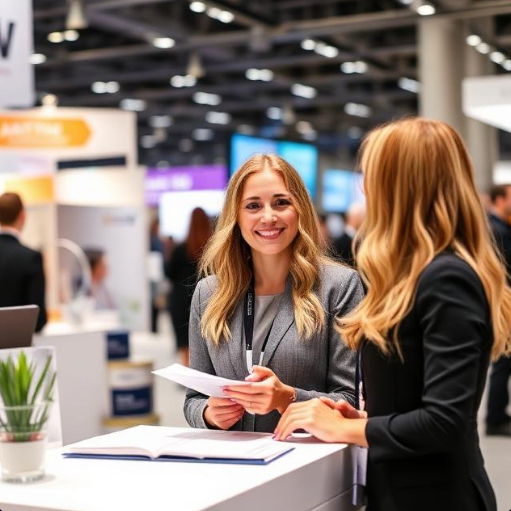
At the Moscow International Tool Expo (MITEX), the success of an exhibition stand depends on far more than the products on display. It depends on the people who greet visitors, answer questions, and create the first impression that shapes every conversation to follow. For international exhibitors—particularly those from China, Turkey, India, and other countries without a permanent Russian-speaking team—the Russian booth assistant is the indispensable human connection between their brand and the Russian market.
What Is a Booth Assistant?
A booth assistant is a professional hired to work at an exhibitor’s stand during a trade fair. The role combines reception duties, customer service, and basic interpretation. Unlike a full-time interpreter who might be engaged for formal negotiations, a booth assistant focuses on the front lines of the exhibition: welcoming visitors, gathering contact details, distributing marketing materials, and ensuring that every guest feels attended to.
At MITEX, booth assistants are typically bilingual or multilingual, with Russian as their native language and fluency in English, Chinese, Turkish, or another language relevant to the exhibitor’s target audience. Many are experienced in exhibition work, having staffed stands at multiple trade fairs across Moscow.
Why Booth Assistants Matter at MITEX
MITEX is not a passive exhibition. It is an active marketplace where thousands of professional visitors—retail buyers, industrial procurement managers, distributors, and government representatives—move through the halls with specific needs and limited time. The competition for their attention is intense.
A skilled booth assistant transforms a static display into a welcoming destination. They initiate conversations with passersby, qualify visitors by understanding their needs, and direct serious prospects toward the appropriate sales representative. For exhibitors who cannot personally engage every visitor in Russian, the booth assistant ensures that no opportunity slips away simply because of a language barrier.
Equally important, a booth assistant provides cultural navigation. Russian business culture has its own rhythms and expectations. A native assistant understands how to open a conversation appropriately, when to offer a business card, and how to read a visitor’s level of interest. These subtle cues can mean the difference between a fleeting visit and a substantive discussion.
The Daily Responsibilities
The work of a booth assistant at MITEX is varied and demanding. A typical day may include:
- Greeting visitors as they approach the stand, offering a warm welcome in Russian and assessing their language preference
- Explaining basic product information using materials provided by the exhibitor, or translating brief technical descriptions
- Collecting contact information from interested visitors through business cards, registration forms, or digital tools
- Distributing promotional materials such as catalogs, brochures, and samples
- Scheduling meetings between visitors and the exhibitor’s sales team
- Providing light interpretation during short conversations when no dedicated interpreter is available
- Maintaining the stand’s appearance and ensuring that materials are stocked and organized
- Reporting daily activity to the exhibitor, including visitor numbers and notable leads
For exhibitors participating in the business programme, booth assistants may also help with logistics: directing attendees, managing signage, and supporting presentations.
Language Skills and Qualifications
The language requirements for a booth assistant vary according to the exhibitor’s needs. English-Russian bilingual assistants remain the most commonly requested, reflecting the continued presence of European and international companies at MITEX. However, the exhibition’s changing demographics have created strong demand for Chinese-Russian and Turkish-Russian assistants, particularly given the large Chinese national exposition and the growing participation of Turkish manufacturers.
Beyond language, effective booth assistants bring a set of personal qualities that cannot be taught in a classroom:
- Approachability: The ability to make eye contact, smile, and initiate conversation with strangers
- Energy and stamina: Exhibition days are long, and stands can be busy from opening to close
- Product curiosity: A willingness to learn about tools and equipment, even without a technical background
- Reliability: Punctuality, professionalism, and consistency throughout the event
- Cultural awareness: Familiarity with Russian business etiquette and expectations
Many agencies in Moscow specialize in providing booth assistants for exhibitions, maintaining rosters of candidates who have proven themselves at previous events. Experienced assistants often work multiple fairs each year, developing expertise in specific industries.
Booth Assistant vs. Interpreter: Understanding the Difference
While the roles overlap, a booth assistant and an interpreter serve different functions. An interpreter is engaged primarily for accurate language transfer in formal settings—negotiations, contract discussions, technical presentations. A booth assistant is engaged primarily for hospitality and front-line communication, with interpretation as a secondary function.
For many exhibitors, the optimal arrangement involves both: booth assistants to manage the flow of visitors and interpreters to handle substantive business conversations. Smaller exhibitors with limited budgets may rely on a single bilingual assistant who can perform both roles, though this requires careful scheduling to avoid overloading one person.
How to Engage Booth Assistants for MITEX
Exhibitors typically arrange booth assistants through specialized agencies in Moscow that cater to the exhibition industry. The process generally involves:
- Defining requirements: Language pairs, number of assistants, working hours, and any industry-specific knowledge needed
- Providing materials: Product information, price lists, and key messages so that assistants can represent the brand accurately
- Briefing before the event: A session to explain the exhibitor’s goals, target audience, and expectations for visitor engagement
- On-site coordination: A point of contact who can address questions or issues during the exhibition
Early booking is strongly recommended. The most experienced booth assistants—those with proven track records at major exhibitions and fluency in high-demand language pairs—are typically reserved months in advance of MITEX.
The Return on Investment
The cost of hiring a professional booth assistant is modest compared to the overall expense of exhibiting at an international trade fair. Yet the impact can be disproportionately large. A single well-qualified lead, converted into a distributor agreement or a retail supply contract, can justify the entire cost of participation.
Without adequate staffing, exhibitors risk a range of negative outcomes: visitors left waiting, questions left unanswered, business cards collected but never followed up, and a general impression of disorganization. In a market where relationships matter and first impressions endure, the quality of a stand’s staffing is inseparable from the brand it represents.
For international exhibitors at the Moscow International Tool Expo, Russian booth assistants are more than support staff—they are the voice, the welcome, and often the memory that visitors carry away from the stand. They bridge languages, navigate cultures, and ensure that every visitor is treated as a potential partner. In the competitive environment of MITEX, where hundreds of stands compete for the attention of thousands of buyers, investing in skilled booth assistants is not a luxury. It is a practical decision that directly affects an exhibitor’s ability to turn a presence at the fair into real business in Russia.