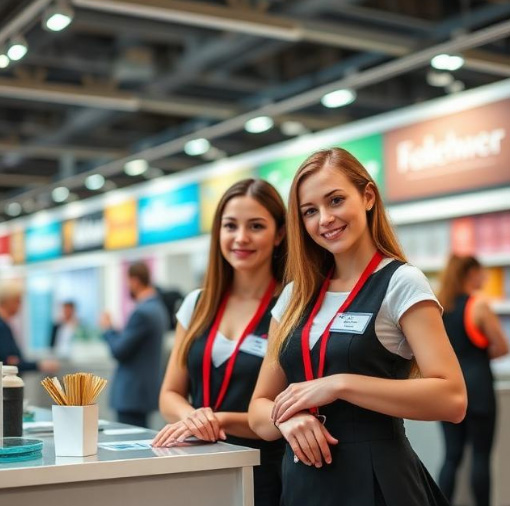
In the bustling, hands-on halls of Moscow’s Crocus Expo International Exhibition Center and the newly modernized Timiryazev Centre, the air carries the unmistakable scent of opportunity—fresh timber, industrial adhesives, powder-coated hardware, and the quiet rustle of product catalogs being flipped by serious buyers. This is the world of Russia’s premier DIY and home improvement events, a sector that has become a battlefield for market share in the wake of shifting supply chains and evolving consumer habits.
At the forefront of this industrial landscape is MosBuild, Eastern Europe’s largest construction and finishing materials exhibition, which serves as a sister event to MosHome. MosHome, the International Exhibition for Home & Garden, DIY, and Consumer Goods, attracted nearly 12,000 professional visitors in 2025, including retailers, DIY industry experts, wholesalers, distributors, and e-commerce platform representatives. Meanwhile, Skrepka Expo, the largest international multi-thematic exhibition for stationery, children’s goods, creativity products, and hobbies, occupies 18,000 square meters of exhibition space and draws thousands of manufacturers and wholesalers from across Russia and abroad.
Amidst discussions of drill bit specifications, paint formulations, garden tool ergonomics, and creative craft materials, one professional ensures that every visitor interaction builds a solid structure for commercial success: the Russian DIY exhibition assistant. In an industry where a single contract with a federal retailer like X5 Group, Lenta, or Ozon can be worth millions of rubles, these specialized staff members have become the indispensable human interface between international brands and the resilient Russian consumer market.
The “Toolbox” Professional: More Than a Greeter
Unlike luxury consumer fairs, Moscow’s DIY and home improvement events operate in a world of functional specificity, high-volume procurement, and direct B2B negotiation. The standard “booth model” or a simple brochure-greeter is not merely inadequate—it can actively damage a brand’s credibility in this value-driven, performance-focused sector .
According to Moscow-based agencies that specialize in exhibition staffing for industrial and retail events, the modern DIY exhibition assistant has evolved into a strategic asset. They function as a hybrid professional, combining the skills of a product specialist, a sales assistant, and a cultural negotiator.
The visitor profile at events like MosHome and Skrepka Expo demonstrates why this expertise is essential. Attendees include retail buyers from federal chains, DIY store category managers, procurement specialists from construction holding companies, e-commerce marketplace representatives, and wholesale distributors. These are not casual shoppers looking for a single hammer—they are decision-makers managing category assortments for stores across Russia’s 11 time zones.
The DIY-Specific Skillset: From Fasteners to Fabric
To understand the specific demands of a DIY booth assistant, one must look at the product categories dominating the exhibition floor. The DIY sector in Russia is vast and diverse, ranging from heavy construction materials to delicate craft supplies. According to Ozon marketplace data, seasonal DIY demand in Russia covers everything from painting supplies, gardening tools, and home organization products to handicraft items like jewelry-making kits, floral supplies, and sewing materials.
Key Product Categories at Russian DIY & Craft Events:
| Category | Specific Examples |
|---|---|
| Hand & Power Tools | Drills, saws, sanders, grinders, tool sets, accessories (bits, blades, abrasives) |
| Paint & Surface Finishing | Paints, varnishes, primers, brushes, rollers, spray equipment, wallpaper |
| Hardware & Fasteners | Screws, nails, anchors, bolts, hinges, cabinet hardware, shelving systems |
| Storage & Organization | Shelving, cabinets, toolboxes, garage storage systems, closet organizers |
| Electrical & Plumbing | Wiring devices, lighting fixtures, switches, sockets, pipes, fittings, bathroom fixtures |
| Gardening & Outdoor | Lawnmowers, trimmers, garden tools, hoses, planters, outdoor furniture |
| Creative & Craft Materials (at Skrepka Expo) | Drawing supplies, scrapbooking kits, textile crafts, modeling clay, jewelry findings, decorative materials |
| Stationery & Office (at Skrepka Expo) | Notebooks, pens, school supplies, office organization, gift wrap |
A booth assistant working this floor must be able to differentiate between product categories, understand basic application questions, and—crucially—know the difference between a retail buyer looking for mass-market appeal and a procurement specialist seeking industrial-grade durability.
Key Terminology for DIY Booth Assistants
To be effective, a Russian exhibition assistant must command a working vocabulary that spans product features, retail metrics, and sales terminology:
| Category | Key Terms (English/Russian) |
|---|---|
| Product Features | Cordless/corded (аккумуляторный/сетевой), torque (крутящий момент), brushless motor (бесщеточный двигатель), voltage (напряжение) |
| Retail Metrics | Unit price (цена за единицу), case pack (количество в коробке), MOQ (минимальный заказ), lead time (срок поставки), margin (наценка) |
| Materials | Stainless steel (нержавеющая сталь), carbon steel (углеродистая сталь), aluminum (алюминий), plastic (пластик), rubber grip (резиновая рукоятка) |
| Craft Specific (for Skrepka Expo) | Adhesive (клей), embellishment (украшение), stencil (трафарет), die-cut (вырубка), embossing (тиснение), polymer clay (полимерная глина) |
The Three Pillars of the DIY Booth Assistant
Based on the commercial density and diverse product range of events like MosHome and Skrepka Expo, the role of the DIY assistant rests on three critical pillars.
The Retail Buyer Concierge
At MosHome, the presence of major retail buyers is a primary draw for exhibitors. The exhibition serves as a platform where “manufacturers meet retail chains” and where “600+ pre-arranged face-to-face meetings” are organized between suppliers and buyers. The assistant plays a crucial role in managing these high-stakes interactions.
A skilled assistant engaging with a retail buyer knows to ask:
- “Which retail chain do you represent? X5, Lenta, Magnit, Auchan, or a regional player?”
- “What category are you managing—power tools, hand tools, storage, paint, or garden?”
- “Are you looking for private label manufacturing (OEM/ODM) or branded products?”
- “What is your target price point and required order volume?”
- “Do you require certification or testing for the Russian market?”
This qualification ensures that the buyer’s time is respected and that the manufacturer’s sales team focuses on opportunities that match their capabilities. According to post-show data, the SobMaExpo (Private Label Show) saw 94% of exhibitors satisfied with results and 92% renewing their participation—a testament to the value of professional engagement.
The Product Explainer and Demonstrator
DIY products often require demonstration. A power tool needs to be handled. A paint system needs to be explained. A craft kit needs to be visualized. The booth assistant serves as the hands-on ambassador who brings the product to life.
For a Chinese tool manufacturer, the assistant might demonstrate:
- The ergonomics of a drill handle
- The quick-change mechanism for bits
- The battery run-time and charging speed
For a Turkish paint supplier, the assistant might explain:
- Coverage rates (square meters per liter)
- Drying times between coats
- Color mixing options and custom tinting
For a craft material supplier at Skrepka Expo, the assistant might showcase finished project samples, explain adhesive properties, or demonstrate how different embellishments work together.
The assistant does not need to be an engineer—but they must be confident enough to handle the first wave of questions, build interest, and then seamlessly transition the visitor to the appropriate technical expert when needed.
The Cultural and Linguistic Bridge
Despite the shift in supply chains toward China, Turkey, Iran, and other friendly nations, the Russian buyer still prefers to conduct detailed negotiations in their native language. A Russian assistant provides this essential linguistic and cultural bridge.
At MosHome 2025, which attracted nearly 12,000 visitors, international exhibitors benefited significantly from local assistants who could navigate the nuances of Russian business etiquette. The assistant knows to:
- Use formal address (вы and patronymics) with senior buyers and officials
- Exchange business cards respectfully (presenting with two hands, reading the card before putting it away)
- Offer hospitality (tea, coffee, water) as a gesture of goodwill—a cultural expectation in Russian business settings
- Navigate the specific procurement cycles of Russian retail (which often begin with testing samples and quality audits before volume orders)
At Skrepka Expo, held at the Timiryazev Centre (a 40,000 square meter complex conveniently located 7 minutes from Petrovsko-Razumovskaya metro station and 20 minutes from Sheremetyevo Airport), the assistant is also the logistical anchor. They know the venue layout, the location of loading docks, the nearest cafes for impromptu meetings, and the quickest routes to the coat check.
The Russian DIY Market: Challenges and Opportunities
The DIY market in Russia is undergoing significant transformation, and understanding this context is essential for any exhibition assistant.
The Shift in Retail Landscape
According to INFOLine research, the number of DIY specialty retail stores in Russia declined by 11% over four years, from 187,000 to 166,000 stores. This contraction is driven by several factors:
- Softening consumer demand and reduced renovation spending
- The rise of e-commerce platforms (Wildberries, Ozon, Yandex Market)
- The growth of general merchandise retailers expanding into DIY categories
However, this shift does not signal a shrinking market—it signals a changing market. While specialty stores decline, online DIY sales are surging. Ozon reported that in March 2026, DIY craft material sales grew 1.3 times year-over-year, while home fragrance sales exploded by 14 times. The art and craft market is projected to grow at a CAGR of 7.41% through 2034.
For international exhibitors, this means that buyers are increasingly representing e-commerce platforms and omnichannel retailers, not just traditional brick-and-mortar chains. A professional assistant understands the different needs of an Ozon category manager versus a Lenta store buyer.
The Rise of DIY Craft and Hobby
One of the most dynamic segments within the broader DIY space is the creative and craft category. Events like Skrepka Expo have dedicated significant floor space to “products for creativity, education, and hobbies”. The ArtFlection craft festival, held multiple times annually in Moscow, gathers over 150 crafters and aims to popularize handmade artwork.
The growth of this segment is remarkable:
- Home decor items (artificial flowers, paintings, frames, candles) saw sales increases of 1 to 7 times during seasonal peaks
- Jewelry repair, floral design, and other handmade DIY materials grew 1.3 times
- Sewing and toy-making materials doubled in sales volume
For exhibitors in the craft space, the ideal assistant is not just a salesperson—they are a creative enthusiast who can speak authentically about the joy of making, the quality of materials, and the end results possible with the products on display.
The Hierarchy of DIY Booth Assistants
Given the diverse product range and varying needs of exhibitors, Moscow agencies typically offer a tiered staffing model for DIY and craft events:
| Role | Primary Function | Required Knowledge | Best For |
|---|---|---|---|
| Bilingual Hostess | Welcoming visitors, badge scanning, brochure distribution, traffic management | Professional presentation; basic Russian/English fluency; friendly demeanor | General visitor management and brand presence |
| Product Booth Assistant | Product presentations, basic Q&A, lead qualification, explaining product features and pricing | DIY/craft industry terminology; understanding of product categories (tools, paints, craft materials, etc.); sales awareness | Mid-sized exhibitors with standard product lines |
| Retail Specialist / Interpreter | VIP buyer engagement (retail chain representatives), complex negotiation support, private label (OEM) discussions | Deep understanding of retail metrics (MOQ, lead time, margins); knowledge of Russian certification requirements (EAC); multilingual skills | Manufacturers targeting federal retail chains or private label programs |
Agencies such as MoscowHostess specialize in providing stand assistants for industrial and retail exhibitions, ensuring that staff are pre-vetted and industry-appropriate.
The Venue Factor: Conquering Moscow’s Exhibition Spaces
Moscow’s DIY and craft events are hosted at two primary venues, each with distinct operational requirements.
Crocus Expo International Exhibition Center (home of MosHome, MosBuild, and SobMaExpo) is a sprawling complex located approximately 20 kilometers from central Moscow at the 65-66 km mark of the MKAD ring road. Traffic on the MKAD is notoriously unpredictable, particularly during the morning rush hour. Professional assistants know to arrive early—often before the 9:00 AM exhibition opening—to ensure the booth is pristine, product samples are displayed properly, and demonstration equipment is ready.
The Timiryazev Centre (home of Skrepka Expo) offers a more centralized location, just a 7-minute walk from Petrovsko-Razumovskaya metro station and 20 minutes from Sheremetyevo Airport. The venue boasts 18,000 square meters of dedicated exhibition space with modern infrastructure. Assistants working here must be familiar with this newer venue’s layout.
Why Your DIY Brand Cannot Afford a Novice
In the high-volume, margin-sensitive world of DIY and craft products—where a single contract with a federal retail chain can mean container loads of product and where product presentation directly impacts perceived quality—the margin for error in communication is significant.
A professional Russian exhibition assistant:
- Builds Retail Credibility: They speak the language of the buyer—units, pricing, packaging, logistics. A buyer from X5 Group or Lenta is immediately put at ease by an assistant who understands retail math.
- Filters Casual Visitors from Serious Buyers: At events like MosHome, which attracts a mix of wholesalers, retailers, distributors, and e-commerce operators, the assistant identifies the decision-makers quickly.
- Bridges the Language Gap: While many Russian buyers may understand basic English, negotiating pricing, delivery terms, and quality standards requires fluency and nuance that only a native speaker provides.
- Demonstrates Product Value: For craft products especially, the assistant can showcase finished projects and explain material quality in a way that resonates with the creative buyer.
- Collects Actionable Lead Data: Using tablets or lead capture systems, they note the buyer’s chain, category of interest, volume requirements, and follow-up timeline—enabling effective post-show sales outreach.
Conclusion: The Foundation for Market Entry
In the dynamic, fast-paced world of Moscow’s DIY and craft exhibitions, a gleaming display of tools or a colorful array of craft supplies is not enough. The difference between a successful market entry and an expensive lesson in silence often comes down to the person standing at the front of the booth.
The professional Russian exhibition assistant is the first handshake, the product explainer, and the lasting impression for thousands of potential buyers. They translate not just words, but torque specifications, coverage rates, retail terms, and creative possibilities. They ensure that a Chinese power tool manufacturer connects with a Russian federal retailer, that a Turkish paint supplier gains the trust of a Moscow DIY chain, and that a Polish craft material brand inspires the creativity of a Russian hobbyist buyer.
As Russia’s DIY market adapts to e-commerce growth and changing consumer habits—even as specialty stores contract—the opportunities for international brands willing to invest in professional representation remain substantial. The assistant is the essential tool in your exhibition strategy: reliable, precise, and indispensable.
For any international DIY, home improvement, craft, or creative product company looking to build a presence in the resilient and resourceful Russian market, investing in a professional Russian exhibition assistant is not an expense. It is the blueprint for success in one of the world’s most demanding consumer economies.