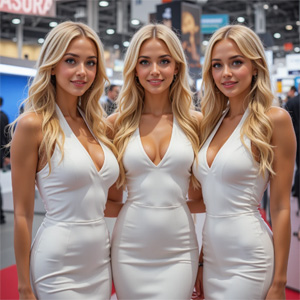
The Russian meat industry has undergone a remarkable transformation over the past two decades, evolving from a major importer to a global leader in poultry and pork production. This success story is showcased at Moscow’s premier industry exhibitions, most notably the Meat & Poultry Industry Russia (MAP Russia) exhibition, held annually at the Timiryazev Centre. Attracting thousands of professionals, from livestock farmers and feed producers to meat processors and cold chain logistics experts, these events serve as the undisputed center of gravity for the sector.
At these high-stakes B2B events, the Russian exhibition assistant plays a role that extends far beyond a welcoming smile. In an industry where a single conversation can lead to a major equipment purchase or a long-term supply agreement, these professionals are strategic assets, cultural bridges, and the embodiment of the brands they represent.
The Evolution: From Hostess to Industry Specialist
The role of the Russian exhibition assistant at meat industry shows has evolved dramatically. Gone are the days when a pleasant demeanor and basic English were sufficient. In 2026, the assistants working at MAP Russia, AGRAVIA, or WorldFood Moscow are often trained professionals who possess industry-specific knowledge.
Many hold degrees or backgrounds in food technology, veterinary science, or agricultural engineering. They can engage in informed conversations about everything from animal genetics and feed formulations to slaughterhouse equipment and cold storage solutions. This technical fluency is essential because Russian buyers—often represented by plant managers, procurement specialists, and engineers—approach exhibitions with intense scrutiny. They do not browse; they interrogate.
As one expert describes it, the modern assistant is a hybrid professional: “part engineer, part diplomat, and full-time crisis manager”.
Key Responsibilities at a Meat Industry Trade Show
The First Point of Contact and Brand Ambassador
The assistant is the “face” of the company. Her professional demeanor, often in a clinical white coat to emphasize hygiene—a critical value in the meat sector—immediately establishes a tone of quality, reliability, and professionalism. This visual guarantee of safety and order is vital for building trust with discerning Russian buyers.
The Technical Liaison and Lead Qualifier
A standard hostess hands out brochures. A professional meat-industry assistant qualifies leads. At MAP Russia, where up to 80% of exhibitors are international and many are new to the Russian market, the assistant’s ability to articulate technical specifications is crucial. They can accurately explain the throughput of a slaughterhouse line, the specifications of a refrigeration system, or the composition of a feed additive. By asking targeted questions, they filter visitors, ensuring that the sales team spends time with genuine decision-makers—a critical function given that 83% of visitors at major agricultural shows influence purchasing decisions.
The Cultural and Linguistic Bridge
Navigating Russian business culture is notoriously challenging for foreign companies. The assistant acts as a cultural diplomat. She understands the importance of formal protocols, the use of patronymic names, and the relationship-driven nature of Russian negotiations. Furthermore, with the Russian meat industry actively seeking new partners from countries like China, Turkey, India, and Brazil following the departure of some Western brands, multilingual assistants (fluent in Russian, English, Mandarin, and Turkish) are highly valued.
The Logistics and Regulatory Maestro
A trade show booth is a high-pressure environment. The assistant manages the chaos: coordinating product demonstrations, ensuring promotional materials are distributed, and keeping the stand tidy. She also performs a vital function in navigating the regulatory landscape. A Russian buyer’s first question often concerns certification: “Does it have an EAC Certificate?” A skilled assistant can pre-qualify visitors on this topic, gently steering the conversation away from a dangerous “no” and buying time for the technical team.
The Context: A Changing Industry
The Russian meat industry is in a state of dynamic change. Following geopolitical shifts, the market has become a battlefield for new alliances. While the government’s “import substitution” policy has boosted local producers, the demand for high-quality international technology and ingredients remains high.
Up to 60% of companies at MAP Russia are new to the Russian market, representing significant opportunities and equally significant challenges. The exhibition assistant has thus evolved into a supply chain consultant. She must be able to reassure buyers about logistics, delivery times in harsh Russian winters, and the availability of spare parts from a local warehouse.
Conclusion: A Strategic Investment
In the competitive and technically demanding environment of Moscow’s meat industry exhibitions, investing in a professional Russian assistant is not an expense—it is a strategic necessity. These professionals ensure that the specifications of a new processing line or the nutritional profile of a feed product are communicated with absolute clarity and cultural appropriateness. They are the human element that transforms a static booth into a deal-closing machine, building the foundation for the lasting partnerships vital in this essential industry.