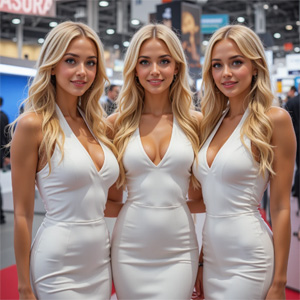
In the cavernous, brightly lit halls of Moscow’s premier exhibition venues—Crocus Expo, Timiryazev Centre, and Expocenter—the success of an international exhibitor often hinges on a single point of human contact. This is the role of the English-Russian staffing assistant, a professional who has evolved far beyond the traditional “booth hostess” into a strategic asset for companies seeking to navigate the complex Russian market.
The Evolving Role: From Greeter to Brand Ambassador
The modern Russian exhibition assistant is a hybrid professional, acting as a cultural diplomat, a technical expert, and a lead generation engine, all in one. While a professional appearance and a welcoming smile remain important, the primary selection criteria for top agencies are now professionalism, reliability, and industry knowledge. In 2026, a stand assistant is no longer merely decorative; they are the human interface between foreign engineering and Russian reality.
Bridging the Language and Culture Gap
The core function of an English-Russian assistant is to dismantle communication barriers, which are often the biggest obstacles to building essential business networks. This is particularly critical in B2B industrial exhibitions. Moscow’s trade fairs are frequented by decision-makers—category managers from federal retail chains, procurement specialists from massive holding companies, and C-suite executives. Engaging these buyers requires more than a basic translation service; it requires an assistant who can act as a cultural mediator, understanding local etiquette and navigating formal business protocols.
These professionals are trained to qualify leads by asking the right questions in Russian, effectively filtering casual browsers from genuine procurement officers. They understand the value of “cultural intelligence”—the instinct to offer tea or water during negotiations, a gesture that builds goodwill, or the knowledge of when to use a patronymic to show respect to senior executives.
Industry-Specific Expertise: A Tiered Approach
One of the greatest values of Moscow’s staffing agencies is their ability to provide industry-specific staff. The required skill level depends heavily on the sector:
- Technical vs. General Promoters: For industrial exhibitions like CTT Expo (construction), Weldex (welding), or electronics trade shows, the assistant needs a functional understanding of technical terminology—from hydraulics and semiconductor specifications to IEC and GOST standards. A basic promoter manages crowd flow and distributes materials, while a technical specialist can explain the duty cycle of a welding machine or the torque of a power tool.
- The “Hard Hat and Heel” Dynamic: In the heavy machinery and metalworking sectors, where visitors are often skeptical of foreign salespeople, a local assistant who can confidently explain technical specifications in Russian technical slang can be the decisive factor in holding a visitor’s attention.
- Regulatory Compliance: A key advantage of a local assistant is their familiarity with Russian market regulations. In sectors like construction and electrical equipment, buyers prioritize compliance with GOST and EAC certification above all else. A skilled assistant can steer the conversation toward compliant product features and explain where a product stands in the certification process, preventing a contract from derailing over regulatory questions.
Compensation and Market Trends
The compensation for trade show staff in Moscow reflects the high-stakes nature of the work. As of 2026, average daily rates for a standard freelance hostess range from 8,000 to 10,000 Rubles, while a bilingual technical interpreter commands between 10,000 and 12,000 Rubles. Due to shifting supply chains, the demand for assistants fluent in Mandarin Chinese or Turkish—alongside English and Russian—has skyrocketed, often commanding a salary premium of up to 60%.
For any international company looking to make a lasting impact at a Moscow trade fair, investing in a professional English-Russian staffing assistant is not an expense—it is a strategic necessity. They are the key to turning foot traffic into concrete revenue, ensuring that contracts are signed, cultural barriers are dismantled, and the brand’s message is understood with the precision required to succeed in one of the world’s most competitive commercial arenas.