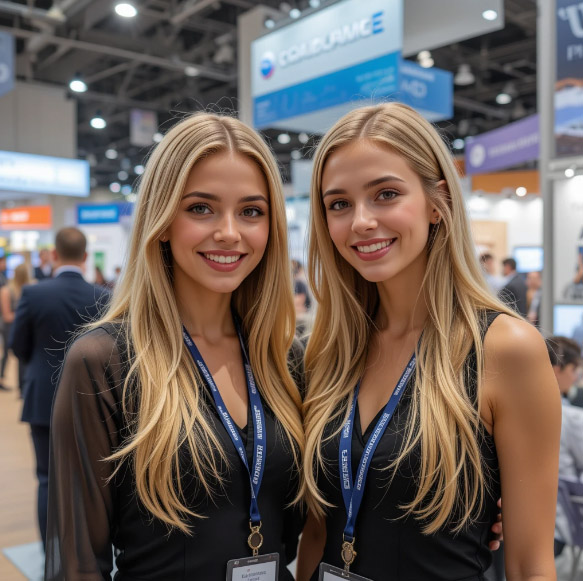
A trade show hostess can be your brand’s most powerful asset—or a missed opportunity. The difference? Training.
Even the most professional hostesses need clear guidance, product knowledge, and engagement strategies to drive real results. A well-trained team can:
✔ Increase booth traffic by 50%+
✔ Generate 3x more qualified leads
✔ Create lasting brand impressions
Here’s your step-by-step guide to training hostesses for maximum impact at your next event.
Step 1: Define Your Goals & Booth Strategy
Before training begins, align your hostesses with your trade show objectives:
- Lead generation? Train them on qualifying questions.
- Product demos? Ensure hands-on practice.
- Brand awareness? Focus on storytelling.
Example:
- A tech startup launching a new app might prioritize demo conversions.
- A luxury brand may focus on VIP guest engagement.
Step 2: Teach Your Brand’s Story
Hostesses should articulate your brand’s value in 30 seconds or less.
Key Training Points:
✔ Elevator pitch (Who you are, what you solve, why it matters)
✔ Key differentiators (What sets you apart from competitors)
✔ Tone of voice (Formal, playful, or tech-savvy?)
Exercise:
Have hostesses practice pitches in pairs and refine based on feedback.
Step 3: Train on Product/Service Basics
Hostesses don’t need to be experts, but they must answer FAQs confidently.
Cover:
✔ Top 3 product benefits
✔ Pricing tiers (if public)
✔ Common objections (and how to route them to sales reps)
Pro Tip:
- Use role-playing to simulate attendee questions.
- Provide cheat sheets with technical specs for reference.
Step 4: Master Engagement Techniques
Great hostesses draw people in—and keep them there.
Tactics to Teach:
✔ The “Hook”
- “Have you seen our solution for [industry pain point]?”
- “We’re giving away [incentive]—let me show you how!”
✔ Open-Ended Questions
- “What’s your biggest challenge with [relevant topic]?”
- “How does your company currently handle [problem]?”
✔ Body Language
- Smiling, uncrossed arms, eye contact
- Slightly leaning forward to appear approachable
Red Flag: Hostesses who stand passively or wait for visitors to speak first.
Step 5: Lead Capture & Handoff Protocols
A hostess’s #1 job? Turn conversations into leads.
Best Practices:
✔ Badge Scanning
- Train on your lead retrieval system (e.g., QR codes, event apps).
- Confirm data accuracy (misspelled emails = lost leads).
✔ Lead Qualification
- “Should we connect you with a specialist today?”
- Tag hot leads for immediate follow-up.
✔ Seamless Handoffs
- “Let me introduce you to our [expert] who can dive deeper!”
Data Point:
- Booths with trained lead handoffs see 40% higher conversion rates.
Step 6: Handle Difficult Situations
Prepare hostesses for:
- Overcrowding (how to politely manage lines)
- Competitor spies (what to share vs. deflect)
- Angry visitors (de-escalation phrases)
Script Example:
“I completely understand your concern. Let me get our manager to assist you right away.”
Step 7: Dress Rehearsal & Feedback
Before the event:
✔ Mock booth setup (practice in a similar environment)
✔ Time trials (can they explain key points in <1 minute?)
✔ Feedback session (record rehearsals for improvement)
Pro Tip:
- Bring in someone unfamiliar with your product to play an attendee.
Bonus: Post-Show Debrief
After the event:
✔ Review lead quality (did hostesses qualify effectively?)
✔ Discuss challenges (what surprised them?)
✔ Refine for next time (adjust scripts, techniques)
Key Takeaways
- Align training with booth goals (leads, demos, or branding).
- Practice pitches until they’re natural (no robotic delivery).
- Role-play objections and handoffs (smooth transitions = more sales).
- Rehearse in realistic conditions (no winging it on show day).
Need a ready-trained hostess team? Contact us for professionally coached staff who deliver measurable booth impact.