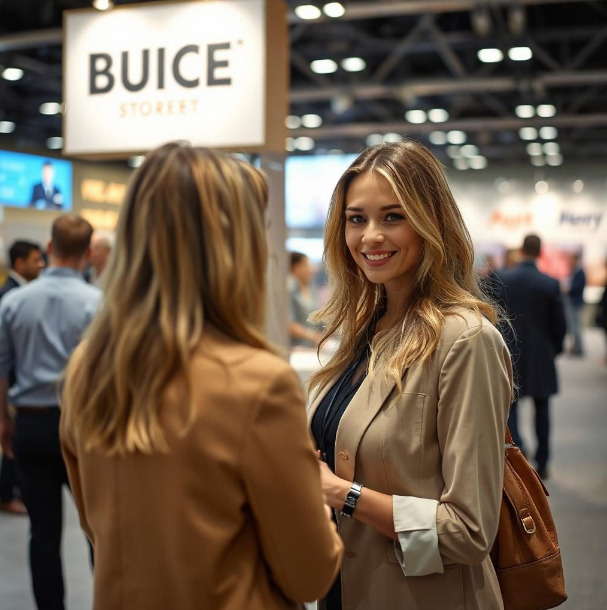
Expograd Yug, the largest exhibition complex in southern Russia, occupies a strategic position in Krasnodar—a city that serves as the commercial capital of the Kuban region and a natural meeting point for Russian, Turkish, Chinese, and Central Asian business interests. With four indoor pavilions, two open exhibition areas, and a calendar anchored by YugAgro, UMIDS, and InterFood Krasnodar, the venue hosts a steady stream of international exhibitors whose success depends on more than product quality. Behind the stands, a specialised workforce of hostesses, booth assistants, and promotional models forms the human interface between brands and the buyers they seek to reach.
The Krasnodar Staffing Market: Local Agencies and Rates
The professional infrastructure serving Expograd Yug is rooted in Krasnodar’s local agency market. Agencies such as CLEVER Marketing maintain databases of promotional personnel, hostesses, models, and booth assistants for exhibitions, presentations, and conferences across the region. Their service model reflects the specific demands of trade fair work: advance briefing on products and scripts, on-site coordination and supervision, and photographic reporting for clients after the event.
Published rates provide a baseline for budgeting. CLEVER lists hostesses and promotional models at approximately 1,000 RUB per hour for exhibition work, with minimum engagements of ten hours, or 6,000 RUB for a full day. Models working shorter formats—two-hour appearances, for instance—are priced from 3,500 RUB. Uniform tailoring is available from 3,000 RUB per set, recognising that coordinated appearance is part of the brand presentation.
A Moscow-based agency operating in Krasnodar, Prommo, offers exhibition stand assistants at rates starting from 559 RUB per hour, rising to 1,249 RUB per hour for more experienced personnel, with volume discounts for larger bookings. Their stated value proposition is conversion: they claim that trained stand assistants raise booth conversion rates by 20 to 40 percent, attributing this to scripted communication and active engagement rather than passive presence.
The Hostess: First Filter and Brand Representative
At Expograd Yug, the hostess function is more layered than simple reception. A hostess positioned at the front of a booth serves as the initial filter, welcoming guests, distributing materials, and drawing qualified visitors toward the stand. At exhibitions of scale—InterFood Krasnodar alone draws over 5,400 visitors, overwhelmingly business decision-makers—first impressions form in seconds, and the quality of the greeting determines whether a procurement manager stops or walks past.
The role demands more than a welcoming presence. Professional hostesses at Expograd Yug handle visitor registration and initial qualification, asking preliminary questions to determine whether a visitor represents a retail chain, a HoReCa enterprise, a wholesale distributor, or a casual attendee. This triage function saves valuable time for sales managers who need to focus on qualified leads. For international exhibitors, local Russian hostesses offer distinct advantages: they understand Russian business culture, speak the language natively, and can navigate the social nuances that shape interactions with regional buyers.
Language capability commands a premium and is frequently specified in recruitment. A posting for UMIDS, the furniture and woodworking exhibition, sought hostesses with Turkish language skills and explicitly stated “translator level preferred.” The distinction matters: at Expograd Yug, the person managing a reception desk may also be the person clarifying a technical specification or negotiating delivery terms in a second language.
Booth Assistants: Triage and Escalation
The booth assistant role has diverged sharply from the hostess function. At technical and food exhibitions, the demand is for personnel who combine hospitality with enough product literacy to function as a preliminary filter. Visitors arrive with commercial objectives—finding suppliers, negotiating terms, updating product ranges—and expect efficient engagement.
In this environment, the stand assistant functions as a triage specialist. A visitor approaching a booth may be a category manager from a federal retail chain, a restaurant owner seeking local ingredients, or a distributor looking for exclusive regional products. The assistant must assess the visitor’s purpose, answer basic inquiries, and determine when to escalate to the company’s senior representatives. At the Negotiation Center during InterFood Krasnodar, where producers meet directly with representatives from major retail chains, stand assistants coordinate meeting schedules and manage the flow of participants—operational work that determines whether high-stakes negotiations proceed smoothly.
The agency model supports this with training. Prommo’s approach includes teaching speech scripts before the exhibition, covering how to initiate conversations with potential clients, explain the core offer, and ensure the brand is remembered. Their cost structure reflects complexity: castings based on appearance add 30 percent, work with specialised products such as tobacco or alcohol adds 20 percent, and urgent recruitment of more than ten staff within two days adds another 20 percent.
Models: Visual Impact and Engagement
While the line between hostesses and models can blur, models at Expograd Yug serve a distinct function: active engagement with the broader exhibition floor. Promotional models may move through pavilions in themed attire, attract attention to a brand through striking imagery, and direct visitors toward specific stands. In industrial contexts, where booths showcase heavy equipment, models create a visual focal point and draw crowds that might otherwise pass by.
Krasnodar’s local model agencies supply personnel for exhibitions and presentations alongside fashion shows and photo shoots. Base Models, a Krasnodar agency, lists exhibitions and presentations among the events its models participate in, alongside corporate hosting roles. Fashion, an international modelling agency with a Krasnodar presence, similarly lists participation in exhibitions and presentations as a standard service, alongside promotional actions and corporate hosting.
The practical distinction between a model and a booth assistant lies primarily in emphasis. Models focus on visual presentation and promotional engagement; assistants handle informational and logistical tasks. In practice, individuals working in these roles frequently possess overlapping skills, and the boundaries shift depending on the event’s needs. For a furniture exhibition like UMIDS, a model may draw attention to a new collection; for a food exhibition like InterFood, a hostess may manage tasting samples and visitor qualification.
Sector-Specific Demands: Agriculture, Furniture, and Food
The specific exhibitions at Expograd Yug shape staffing requirements in ways that general agencies must accommodate. YugAgro, the largest agricultural machinery exhibition in Russia, brings together producers and regional agroholdings. Booth assistants working for machinery manufacturers need enough familiarity to direct a procurement director to the correct technical specialist, distinguishing inquiries about seeding equipment from those about irrigation systems or grain storage.
UMIDS, the furniture and woodworking exhibition, features national pavilions from Uzbekistan and participation from Chinese and Turkish manufacturers offering automated production lines. Hostesses and assistants with Turkish or Chinese language capability are in consistent demand, and familiarity with furniture industry terminology—edge-banding, CNC routing, material specifications—adds significant value.
InterFood Krasnodar, held alongside FoodTech and KubanProdExpo, covers meat and dairy products, confectionery, beverages, and food ingredients. The 2026 edition drew over 140 companies, and the audience was composed overwhelmingly of business decision-makers. For food and beverage brands, hostesses managing tasting stations and assistants qualifying retail buyers must understand the difference between a federal chain representative and a regional distributor—a distinction that determines the appropriate follow-up.
Practical Considerations for Exhibitors
For companies planning to exhibit at Expograd Yug, several practical considerations apply. Staffing should match booth scale and event type: a standard booth typically requires one to two assistants, while larger stands with demonstration or tasting areas may need three to five staff with differentiated roles.
Product training matters. Agencies that provide briefing on products, scripts, and qualification criteria produce measurably better outcomes than those that supply personnel with no preparation. For technical exhibitions, separating interpretation from operational functions produces better results than expecting one person to handle everything. And booking early is advised: Krasnodar’s agency market is smaller than Moscow’s, and demand for experienced bilingual staff peaks during major events like YugAgro and UMIDS.
The human infrastructure of Expograd Yug—the hostesses managing reception, the assistants qualifying leads, the models drawing crowds—is not incidental to the exhibition economy. It is the layer through which brands become legible to regional buyers, and through which the venue’s trade fairs become productive commercial encounters rather than mere displays of products.