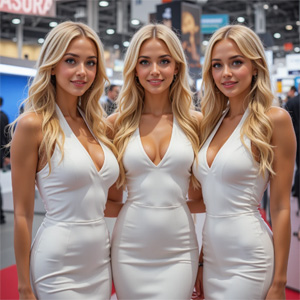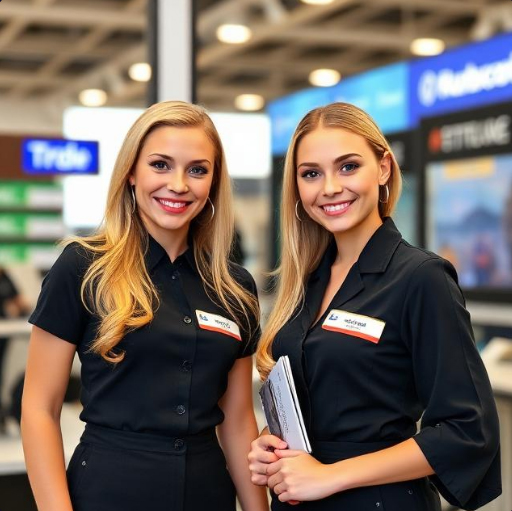
In the rapidly evolving world of urban transport, where electric buses replace diesel fleets and digital systems manage millions of daily passenger journeys, professional presentation plays a vital role in business success. At Russian Urban Mobility Week — Moscow’s premier international congress and exhibition event for public transport and urban mobility — the exhibition hostess serves as an essential link between global manufacturers and the thousands of industry professionals who attend each year.
Russian Urban Mobility Week 2026 will take place from June 9 to 11, 2026, at VDNH Exhibition Centre in Moscow. The event comprises three specialised exhibitions running concurrently: ElectroTrans (electric transport and technologies), CityBus (buses and components), and Electronica-Transport (transport IT and electronics). In 2025, the combined exposition attracted over 3,500 experts from more than 1,000 companies representing Russia, Belarus, Kazakhstan, China, South Korea, India, and other countries. Supported by the Russian Ministry of Transport and the Ministry of Trade and Industry, the event serves as a strategic contracting platform for Russia’s transport sector. In this technically sophisticated and commercially critical environment, the hostess is far more than a decorative presence — she is the gateway to Russia’s urban mobility market.
Beyond the Welcome Smile: The Strategic Role
At Russian Urban Mobility Week, hostesses fulfil responsibilities that extend far beyond basic greeting functions. They serve as urban mobility ambassadors, representing brands to a sophisticated professional audience that includes public and private transport operators, municipal authorities, urban mobility experts, ministry representatives, and engineering professionals.
The Essential Support Team: Hostesses, interpreters, and booth assistants are the backbone of the on-the-ground experience at the event. They serve as the first point of contact for visitors at exhibition stands, managing foot traffic, distributing promotional materials, and creating a welcoming professional atmosphere. In an industry where technological reliability and integration capabilities are paramount, a polished hostess helps exhibitors maintain a professional image that directly reflects on the brand. Their professionalism sets the tone for every visitor interaction and directly influences brand perception.
Qualifying the Professional Audience: The visitor profile at Russian Urban Mobility Week is highly commercial and decision-driven. The exhibition attracts public and private transport companies, municipal authorities, urban mobility experts, ministry representatives, and university professors and students. With Russia’s extensive public transport infrastructure and ambitious government targets, the potential for business is substantial. Hostesses must quickly distinguish between casual observers and high-value prospects — procurement directors, transport authority representatives, and infrastructure project managers seeking to modernise their fleets. This qualification process ensures that sales and technical teams can focus on meaningful commercial conversations with serious buyers.
Navigating the Urban Mobility Landscape: The exhibition covers the complete spectrum of urban transport technology across its three pillars. ElectroTrans showcases electric vehicles of all types, charging infrastructure, power storage devices, railway and tram infrastructure, and components and services. CityBus highlights buses for urban, suburban, and intercity routes, with a focus on low-floor accessibility, climate control systems, and the durability of rolling stock. Electronica-Transport features solutions for passenger transport automation, fare payment systems, security and video surveillance, navigation systems, and diagnostic instruments for the transport industry. A hostess must understand this landscape to direct visitors efficiently — whether they are seeking electric buses, charging solutions, fare payment terminals, or digital traffic management systems.
Supporting the Business Programme: The event features a comprehensive business programme including conferences, seminars, round tables, technical visits to Moscow’s transport infrastructure facilities, and a Youth Forum. Key sessions include the “Smart City Technologies” conference hosted by RUT MIIT, discussions on digitalisation of fare payment and public transport, and round tables on alternative energy adoption and passenger service development. The programme brings together municipal authorities, transport operators, research institutions, and the private sector to discuss policy developments, industry standards, and practical challenges. Hostesses assist with these events, managing audience flow, directing delegates, and ensuring smooth transitions between the exhibition floor and conference rooms.
Cross-Cultural Communication: With participants from Russia, Belarus, Kazakhstan, China, South Korea, India, and other countries, multilingual hostesses serve as critical links between international exhibitors and Russian-speaking buyers. The event has become a primary gateway for Asian manufacturers — particularly from China, India, and South Korea — to enter the Russian and CIS markets, offering a chance to demonstrate cold-climate battery thermal management systems and high-capacity bus chassis. Hostesses facilitate the technical negotiations, product presentations, and partnership discussions that underpin this expanding trade relationship.
The Unique Demands of the Urban Mobility Sector
The hostess at Russian Urban Mobility Week must navigate a landscape unlike any other exhibition. The products combine advanced technology with critical urban infrastructure, and the sector operates at the intersection of public policy, environmental sustainability, and commercial innovation.
Technical and Urban Transport Literacy: A successful hostess should understand the vocabulary of public transport — from vehicle categories and passenger capacity to EV charging standards, battery technologies, and fare payment systems. Modern urban buses require dynamic performance, smooth ride quality, high environmental standards, low-floor construction, wide doorways, and productive climate control systems. Additional requirements include floor covering resistance to wear, body protection from road reagents, passenger flow-adapted fare systems, onboard information systems, video surveillance, and telematics devices. The exhibition’s focus areas include electric mobility, import substitution in transport instrumentation, and digitalisation of public transport. Hostesses who understand these specifications can better connect with procurement specialists and fleet managers.
Supporting the “Green Transit” Mission: The event’s core mission is to promote the development of public urban and suburban transport, as well as innovative types of urban mobility. A major theme is the expansion of alternative fuel use, particularly electric propulsion and gas motor fuel. Hostesses who understand the environmental and policy context of green transport can better engage with visitors seeking to modernise their fleets with cleaner technologies.
Managing the High-Volume Environment: With thousands of experts, numerous exhibiting companies, and a full conference programme over three days, the show floor is intense. Hostesses manage visitor flow, coordinate with exhibitors, and ensure smooth operations across the exhibition halls and conference rooms. Experience with the specific demands of transport technology trade shows — navigating the VDNH venue, understanding the exhibition’s thematic structure, and managing the intense schedule — sets professionals apart.
Supporting Technical Demonstrations: The exhibition features live vehicle demonstrations, with electric buses, trams, and other transport technology on display for visitors to inspect and evaluate. Hostesses assist with these demonstrations, coordinating with technical teams and ensuring visitors can experience the vehicles and equipment in action. This hands-on engagement is crucial for transport buyers who need to evaluate accessibility, passenger capacity, and operational features before making fleet procurement decisions.
The Import Substitution Context: The 2026 event is heavily influenced by the rapid transformation of the Russian transport sector. With many Western manufacturers having exited or reduced their presence, there is an accelerated push for domestic production and import substitution. This creates substantial demand for new rolling stock, charging infrastructure, and maintenance software from suppliers in China, India, South Korea, and CIS nations like Belarus and Kazakhstan. Hostesses who understand this context can better serve visitors seeking to navigate the changing market landscape.
Essential Qualifications for Success
The demanding environment of a major urban mobility exhibition requires specific qualifications:
- Industry Curiosity: A genuine willingness to learn about public transport, electric vehicles, charging infrastructure, transport IT, and urban mobility technologies — from bus chassis and battery storage to fare collection and traffic management systems.
- Language Skills: Fluency in Russian and English is essential; knowledge of Chinese, Korean, or languages of other participating nations provides significant advantages given the international participation.
- Professional Demeanour: Appearance and demeanour must project technical sophistication and reliability — qualities highly valued in the public transport sector. Physical stamina is essential for long exhibition hours across a large venue. Russian trade fair hostesses must maintain a calm, composed, and respectful demeanour — qualities perceived as signs of competence and trustworthiness.
- Cultural Intelligence: Understanding Russian business etiquette and the transport industry culture helps build rapport with visitors and buyers. The importance of public transport in Russia — with millions of daily passenger journeys and extensive metro, tram, and bus networks — makes relationship-building in this sector particularly significant.
- Strategic Awareness: The ability to identify key decision-makers among transport operators, municipal authorities, and procurement specialists, and to direct them to the appropriate sales or technical staff.
The Strategic Investment for Exhibitors
For exhibitors at Russian Urban Mobility Week, selecting a hostess is a strategic investment. The exhibition serves as Russia’s and Eurasia’s primary platform for urban mobility procurement, where purchasing decisions are made and new business partnerships are established across the entire transport supply chain. A professional hostess can significantly increase lead generation by engaging visitors whom sales managers would otherwise miss. Professional hostesses contribute to:
- Qualified Lead Generation: By identifying key decision-makers among transport operators, municipal authorities, infrastructure developers, and procurement specialists.
- Professional Brand Presentation: In a competitive B2B environment, professional representation communicates brand reliability and technical sophistication.
- International Reach: With exhibitors from multiple countries, multilingual hostesses facilitate communication and help navigate cross-cultural business interactions.
- Event Support: Hostesses assist with the broader event infrastructure, managing visitor flow and supporting the conference programme and technical demonstrations.
At Russian Urban Mobility Week, the hostess is the ultimate urban mobility ambassador. She facilitates the professional connections that drive the public transport industry, embodies the brand’s commitment to quality and innovation, and navigates the complex logistics of Eurasia’s premier urban mobility event. For vehicle manufacturers, charging infrastructure suppliers, IT providers, component producers, and transport operators alike, the hostess is an indispensable component of the Russian Urban Mobility Week ecosystem — not merely a greeter, but a strategic asset in the world of public transport and sustainable urban mobility. While the event showcases the best of the global transport industry, from electric buses and charging stations to digital fare systems and smart city technologies, it is the hostesses, interpreters, and booth assistants who ensure that exhibitors and visitors can connect, communicate, and conduct business effectively across the vast Russian-speaking market and beyond.