In the high-tech halls of Moscow’s Crocus Expo and Timiryazev Centre, the air is alive with the invisible architecture of modern connectivity—the promise of 5G, the potential of IoT, and the seamless integration of cloud-based solutions. This is the world of SVIAZ, Russia’s largest and most influential telecommunications and information technology exhibition, which celebrated its 38th edition in April 2026.
Spanning 15,000+ square meters and bringing together 360+ exhibitors from Russia, Belarus, and China—including a dedicated Chinese national pavilion—SVIAZ is not merely a trade fair. It is the nerve center of the Eurasian communications industry, attracting over 16,000 professional visitors, including CTOs, network engineers, procurement directors, and government officials.
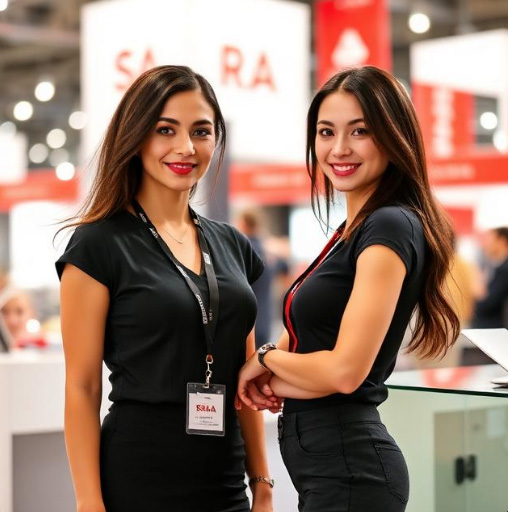
Amidst the dense discussions of network latency, fiber optics, and cybersecurity protocols, one professional ensures that the critical signal of your brand is not lost in the noise: the communications industry booth assistant. In an environment where a single contract can span the vast territory from Kaliningrad to Vladivostok, these specialists have become the indispensable human link between international technology and the Russian market.
The “High-Bandwidth” Professional
Unlike general consumer trade fairs, Moscow’s communications events operate on a razor’s edge of technical specificity and high-stakes B2B negotiation. The standard “booth model” or a simple greeter is not just inadequate—it can actively damage a brand’s credibility in this sector.
According to Moscow-based agencies that specialize in exhibition staffing, the modern booth assistant for the communications industry has evolved into a strategic asset. The role is no longer about passive attraction but about active facilitation and expert engagement. As the Russian exhibition services market has matured, these professionals are now understood as a tripartite resource: a language expert, a business assistant, and an operations manager rolled into one. However, for the telecommunications sector, a fourth, critical element is required: technical literacy.
The Telecom-Specific Skillset: From Fiber Optics to Firewalls
To understand the specific demands of a communications booth assistant, one must look at the exhibit categories at SVIAZ 2026:
- Telecommunications Infrastructure: Cables, IP telephony, microwave communications, and satellite technology.
- Wireless & Mobile Communications: 5G infrastructure, radio communications, and mobile network systems.
- Data Centers & Cloud Services: Equipment, software, and solutions for data processing and storage.
- Cybersecurity Solutions: A growing focus in 2026, including software and hardware for network protection.
- Navigation & IoT: High-precision satellite navigation, fleet management, and smart transport systems.
A booth assistant working this floor must be able to differentiate between a service router and a core network switch, understand the basics of fiber-optic vs. copper transmission, and explain the function of a firewall in simple terms. As one industry briefing notes, they are not required to design the system, but they must be fluent enough to handle the 80% of basic technical inquiries that do not require a senior engineer, ensuring that the CTO or network architect can focus on the deep conversations.
The Three-Tier Hierarchy of Communications Assistants
Given the technical density and high stakes of events like SVIAZ, agencies typically deploy a tiered staffing model specifically for the ICT sector:
| Role | Primary Function | Required Knowledge | Typical Daily Rate (RUB) |
|---|---|---|---|
| Basic Greeter/Hostess | Welcoming VIPs, checking badges, managing foot traffic, distributing brochures. | Standard logistics; professional presentation; friendly demeanor. | ~15,000 |
| Technical Booth Assistant | Explaining product specs, running demo loops, filtering casual visitors from serious buyers. | Industry terminology (latency, codec, cloud infrastructure); ability to answer FAQs. | ~20,000 |
| Senior Business Assistant | Facilitating complex negotiations (contracts, systems integration), managing VIP delegations (e.g., government officials). | Advanced technical vocabulary + negotiation experience + rare language skills (Mandarin/Turkish) -1. | ~30,000 |
Note: Rates are market averages. Specialized roles or high-demand languages often command premiums.
Beyond Translation: The Cultural “Protocol Officer”
In the world of Russian telecommunications, technology is only half the conversation. The other half is trust and compliance. The Russian market is increasingly focused on “technological sovereignty,” with the SVIAZ 2026 plenary session specifically dedicated to “Telecommunications as the Basis of Technological Sovereignty”.
A local booth assistant serves as the essential cultural protocol officer. They do more than translate words; they interpret the intricate landscape of local business etiquette. They know that a Russian official or a procurement manager from a state-owned enterprise (like Rostec, which had a prominent presence at SVIAZ 2026) expects a formal greeting, the exchange of business cards with both hands, and a respectful acknowledgment of their title.
Furthermore, in the wake of shifting global trade policies, the Russian ICT market has seen a significant influx of equipment from China, Turkey, and domestic Russian manufacturers. At SVIAZ 2026, the Chinese national pavilion featured prominent exhibitors like Hefei Topwave Telecom, Shenzhen Inrico Electronics, and Jiangsu Hengtong Optic-Electric. For these international exhibitors, a trilingual assistant (Russian, English, Mandarin) who can bridge the gap between a Chinese engineer and a Russian buyer is worth a significant premium.
The Technical Demonstrator: The New Archetype
In the specific context of high-tech B2B exhibitions, the traditional “booth babe” archetype is not just outdated; it is a strategic liability. The most successful companies at SVIAZ are moving toward a new model: the Technical Demonstrator.
This individual is less a “model” and more a product specialist. They are trained to:
- Run live, compelling demos of your software dashboard.
- Simulate a network monitoring alert.
- Showcase the user interface of a new router or IoT device.
Their value lies in making the complex simple and visually engaging, buying time for your senior engineers to engage in deeper, more profitable conversations with qualified leads.
The Venue Factor: Conquering Expocentre and Timiryazev Centre
Moscow’s premier communications events are hosted at two primary venues, each presenting distinct challenges.
Expocentre (on Krasnopresnenskaya Naberezhnaya) is the traditional home of SVIAZ, a historic and sprawling complex located near the Moscow City business district. Assistants working here must navigate a multi-building layout with confidence.
The Timiryazev Centre has also emerged as a key venue, hosting SVIAZ 2026 alongside the Russian Week of High Technologies. Located further from the city center, it demands logistical discipline; a professional assistant knows to arrive early (often before the 9:00 AM security check) to ensure demo screens are powered on and the booth is pristine before the first attendee walks in.
Why Your Communications Brand Cannot Afford a Novice
In the fast-paced, high-trust world of telecommunications, first impressions are everything. If a potential buyer—a network engineer or a CTO—approaches a booth and is greeted by a staff member who cannot answer basic questions about network latency or cloud infrastructure, the brand loses credibility instantly.
A professional communications booth assistant:
- Builds Credibility: By answering technical questions accurately and confidently, they signal that your brand is serious and competent.
- Filters Lookie-loos: They identify serious procurement decision-makers from the thousands of attendees, ensuring your sales team focuses only on high-value prospects.
- Bridges the Language Gap: They navigate the complex realities of Russian engineering and procurement, where fluency in the native language is a sign of respect and reliability.
- Collects Intel: Using tablets and CRMs, they capture data that is the lifeblood of post-show sales success.
- Navigates Russian Business Culture: They understand that relationship-building comes before contract signing and facilitate the trust-building conversations that lead to deals.
Conclusion: The Critical Connection
In the high-stakes, hyper-technical world of Moscow’s communications exhibitions, a gleaming fiber-optic display or a stack of datasheets is not enough. The difference between a successful market entry and an expensive lesson in silence often comes down to the person standing in front of the booth.
The professional exhibition booth assistant is the first handshake, the trusted technical guide, and the lasting impression for thousands of potential buyers. They translate not just words, but latency rates, compliance standards, and cultural expectations. They ensure that a Chinese telecom component finds its way into a Russian data center, and that a Russian telecom giant trusts a foreign software solution.
For any international company looking to connect with the dynamic, demanding, and opportunity-rich Russian communications market—a market actively pursuing technological sovereignty—investing in a specialized booth assistant is not an expense. It is the most critical piece of hardware you will bring to the show floor.
As one seasoned telecom exhibitor at SVIAZ noted: “Your signal can be the strongest in the world. But without the right assistant to tune the receiver, no one will hear it.”