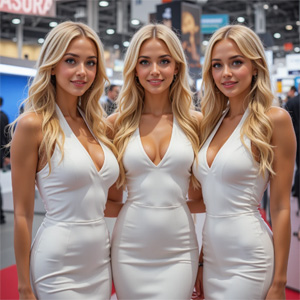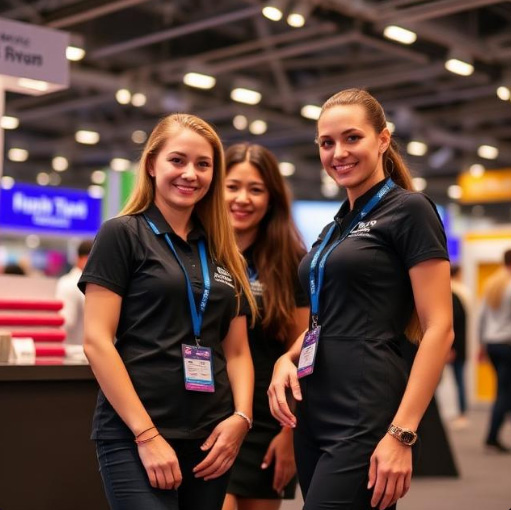
In the aromatic, bustling halls of Moscow’s premier exhibition venues, the air carries a very specific and comforting scent: the rich, complex fragrance of freshly roasted coffee beans. This is the world of PIR EXPO, WorldFood Moscow, and specialized coffee events, where roasters, baristas, equipment manufacturers, and café owners converge from across Russia and the world to shape the future of the coffee industry.
Amidst the hiss of professional espresso machines and the clink of tasting cups, one professional ensures that every interaction brews commercial success: the coffee industry booth assistant. In a market where Russia has developed a sophisticated coffee culture that rivals any in Europe, these specialized staff members have become indispensable ambassadors for international brands seeking to make their mark.
The “Specialty Grade” Professional
Unlike general trade fairs, Moscow’s coffee events operate in a world of nuance and precision. The modern coffee industry is not just about beans and water—it encompasses specialty coffee sourcing, professional espresso equipment, pour-over techniques, cold brew innovations, sustainable packaging, and café design . The visitors to these events are not casual consumers. They are café owners, roastery managers, HoReCa purchasing directors, distributors, and barista champions.
A standard booth greeter—even a polished one—cannot navigate this environment. According to Moscow-based agencies specializing in exhibition staffing, a professional booth assistant for the coffee sector must function as a hybrid professional: part product specialist, part hospitality expert, and part cultural liaison.
“When a Moscow café owner asks about extraction yield or water hardness for a €20,000 espresso machine, the assistant cannot look confused,” explains one industry briefing. “They must answer basic technical questions confidently and know exactly when to bring in the engineer” .
The Coffee-Specific Skillset: From Bean to Cup
To understand the specific demands of a coffee industry booth assistant, one must look at the product categories on the exhibition floor. At events like PIR EXPO’s Gastronomic Showroom and WorldFood Moscow’s beverage sections, these categories include:
- Coffee Beans & Sourcing: Single-origin offerings, blends, organic certifications, direct trade relationships, and seasonal micro-lots
- Professional Equipment: Espresso machines, grinders, brewers (pour-over, batch, cold drip), water filtration systems, and roasting equipment
- Café Supplies: Cups, lids, stirrers, sugar, plant-based milks, syrups, and takeaway packaging
- Barista Tools: Tamper, scales, thermometers, milk pitchers, and cleaning supplies
- Services: Equipment maintenance, barista training, café consulting, and software solutions
A professional booth assistant working this sector must be able to intelligently discuss these categories, demonstrate basic equipment operation, and—crucially—understand the vocabulary that distinguishes a serious buyer from a curious passerby.
Key Terminology for Coffee Booth Assistants
To be effective, a coffee industry booth assistant must have a working knowledge of the following terms, often switching seamlessly between Russian and English:
| Category | Key Terms |
|---|---|
| Bean & Roast | Single-origin, blend, roast profile (light/medium/dark), processing method (washed/natural/honey), specialty grade, defect count |
| Espresso | Extraction yield, brew ratio, dose, yield, time, pressure profiling, pre-infusion, temperature stability |
| Grinding | Burr grinder, particle size distribution, clumping, static, retention, stepless adjustment |
| Brewing | Pour-over, immersion, percolation, TDS (Total Dissolved Solids), extraction percentage, brew recipe |
| Milk & Alternatives | Microfoam, stretching, texturing, latte art, oat milk, almond milk, soy milk, coconut milk |
| Equipment | Group head, boiler, pump (rotary vs. vibratory), PID controller, pressure gauge, backflushing, descaling |
The Three Pillars of the Coffee Booth Assistant
Based on the high-touch, high-expertise nature of events like PIR EXPO and WorldFood Moscow, the role of the coffee booth assistant rests on three critical pillars.
The Sensory Guide & Product Demonstrator
Coffee is a sensory product. A successful sale often depends on a visitor tasting, smelling, and experiencing the product firsthand. The booth assistant is the sensory guide who orchestrates this experience.
At a coffee exhibition, this means:
- Managing tasting flights of different roasts or origins, ensuring each cup is served at the correct temperature
- Demonstrating equipment operation—pulling shots on an espresso machine, grinding beans to spec, or performing a pour-over ritual
- Describing flavor notes accurately and engagingly (“chocolate and dried fruit,” “citrus and jasmine,” “nutty and smooth”)
- Maintaining hygiene standards—cleaning portafilters, wiping steam wands, and refreshing tasting cups between visitors
“When a barista or café owner tastes your coffee, they are evaluating every variable,” notes a Moscow staffing agency. “The assistant must present the product flawlessly, because any inconsistency reflects on the brand”.
The Lead Qualification Engine
At major exhibitions like PIR EXPO—which attracted 48,785 visitors in 2025—the volume of foot traffic can be overwhelming. A skilled assistant qualifies visitors quickly and efficiently, asking targeted questions such as:
- “What type of coffee program do you run? Espresso-focused? Filter-focused? A mix?”
- “How many kilograms of coffee do you go through per week/month?”
- “Are you looking for a single-origin, a blend, or both?”
- “Do you need equipment, beans, supplies, or full-service support?”
- “What is your target price point per kilogram/cup?”
This filtering ensures that senior sales personnel focus only on high-value prospects, maximizing ROI from the exhibition.
The Hospitality Ambassador
The coffee industry sits at the intersection of food service and hospitality. A booth assistant at a coffee event must embody the warmth, professionalism, and attention to detail that defines great coffee service.
This includes:
- Welcoming visitors with genuine warmth and offering tasting samples proactively
- Managing visitor flow to prevent crowding around busy equipment demonstration areas
- Coordinating with baristas and technical staff to ensure smooth transitions between demos
- Handling high-pressure moments gracefully—including impatient visitors, equipment hiccups, and language barriers
- Offering hospitality basics like water, comfortable seating, and clear directions
“The Russian visitor expects professionalism,” explains one industry source. “They want to be treated like a guest in a great café—welcomed, informed, and respected”.
The Cultural and Linguistic Bridge
Moscow’s coffee events are increasingly international. PIR EXPO features exhibitors and visitors from across Russia and Eurasia, while WorldFood Moscow boasts over 1,110 exhibitors from 75 countries -1. This international character creates significant demand for multilingual assistants.
Language Requirements
According to Moscow staffing agencies, the most sought-after language combinations for coffee events include:
- Russian-English: Essential for most international business
- Russian-Italian: Highly valued for equipment brands (espresso machine manufacturers)
- Russian-French: Important for pastry and café culture crossovers
- Russian-Spanish: Growing demand with the influence of Latin American coffee culture
Beyond language, the assistant serves as a cultural bridge. Russian business culture values relationship-building and face-to-face interaction before deals are concluded. A professional assistant knows to invite visitors for coffee, introduce them using correct titles and patronymics (formal name and patronymic), and facilitate the trust-building conversations that precede commercial agreements.
Understanding the Local Market
A local assistant brings invaluable insight into the unique characteristics of the Russian coffee market:
- Preferences for roast profiles: Russian palates historically favored darker roasts, though specialty light roasts are gaining ground in Moscow and St. Petersburg
- Seasonal fluctuations: Coffee consumption patterns vary across Russia’s long winters and short summers
- Distribution realities: Understanding the logistics of getting beans or equipment to regions like Siberia or the Far East
- Regulatory awareness: Basic familiarity with customs requirements, certification needs, and sanitary regulations for food products
The Venue Factor: Navigating Moscow’s Exhibition Landscape
Moscow’s coffee industry events take place at several major venues, each with distinct characteristics.
Crocus Expo International Exhibition Center —home to PIR EXPO and WorldFood Moscow—is a sprawling complex located approximately 20 kilometers from the city center. Traffic on the MKAD ring road is notoriously unpredictable. Professional assistants know to arrive early—often before the 9:00 AM opening—to ensure the booth is ready and coffee equipment is preheated before the first visitor arrives.
The Timiryazev Moscow Exhibition Centre also hosts agricultural and food-focused events, including some coffee industry gatherings. Assistants working here need to be familiar with this venue’s specific layout and operations.
The Hierarchy of Coffee Booth Assistants
Given the technical demands and varying needs of exhibitors, Moscow agencies typically offer a tiered staffing model for coffee and HoReCa events:
| Role | Primary Function | Required Knowledge | Best For |
|---|---|---|---|
| Standard Booth Hostess | Welcoming visitors, badge scanning, brochure distribution, traffic management | Basic hospitality awareness; professional appearance | General visitor management and brand presence |
| Coffee Promoter | Product sampling, basic Q&A, lead capture, explaining bean origins and flavor notes | Coffee terminology; ability to pull a basic shot or brew a pour-over; engaging personality | Roasters and bean suppliers |
| Technical Product Specialist | Equipment demonstrations, in-depth technical Q&A, VIP buyer engagement, sales support | Advanced espresso equipment knowledge; understanding of grinders, water systems, and maintenance; multilingual skills | Premium equipment manufacturers |
According to Moscow staffing agencies, daily rates for experienced coffee booth assistants typically range from 10,000 to 18,000 rubles, with technical specialists and those with rare language combinations commanding premium rates.
Why Your Coffee Brand Cannot Afford a Novice
In the high-stakes world of coffee industry exhibitions—where a single contract with a major café chain or distributor can be worth millions of rubles—the margin for error in product presentation and communication is zero.
A professional coffee booth assistant:
- Builds credibility by answering technical questions about extraction, grind size, water chemistry, and equipment specifications accurately
- Filters serious buyers from hobbyists and students—ensuring that sales staff focus only on qualified leads
- Bridges the language gap with Russian café owners, roasters, and distributors who prefer to work in their native language
- Elevates the sensory experience by serving espresso, pour-over, or cold brew correctly and consistently
- Navigates Russian business culture—understanding that trust is built through demonstrated competence and genuine hospitality
- Collects precise lead data—noting volume requirements, equipment needs, and follow-up timelines for effective post-show outreach
- Creates brand loyalty through authentic, professional interactions that leave a lasting positive impression
The Growing Importance of the Russian Coffee Market
Several factors make the Russian coffee market particularly dynamic—and particularly demanding for exhibition staff.
The Specialty Coffee Evolution
Russia has experienced a remarkable coffee revolution over the past decade. Moscow and St. Petersburg now boast third-wave coffee shops that rival those in London, Melbourne, or Seoul. This sophistication means that visitors to coffee exhibitions come with high expectations and deep knowledge. A booth assistant must match that sophistication.
The HoReCa Connection
Coffee exhibitions in Moscow are often integrated with larger HoReCa (Hotel/Restaurant/Café) events like PIR EXPO. This means booth assistants interact not only with pure coffee professionals but also with hotel managers, restaurant owners, and catering directors who are integrating coffee programs into their operations. Each segment has different priorities and requires different communication approaches.
The Import Opportunity
With evolving trade dynamics, the Russian market is actively seeking new coffee suppliers and equipment partners. International roasters and manufacturers from Italy, Germany, Turkey, China, and Brazil are increasingly visible at Moscow exhibitions. These international exhibitors have a particularly acute need for professional local assistants who can bridge language, culture, and market knowledge.
Finding Qualified Coffee Booth Assistants
The most successful exhibitors source their assistants through specialized Moscow agencies that maintain rosters of pre-vetted professionals with HoReCa and food & beverage experience. These agencies can provide:
- Pre-show preparation including product line briefings, sensory training (tasting notes and serving protocols), technical glossary creation, and lead capture training
- During-show support including visitor engagement, live demo assistance, sample management, and meeting coordination
- Post-show follow-up including lead database organization and visitor feedback analysis
For exhibitors seeking a more targeted approach, agencies with specific experience in PIR EXPO or WorldFood Moscow are particularly valuable, as they understand the rhythms and expectations of these specific events.
Conclusion: The Perfect Shot
In the aromatic, fast-paced, and increasingly sophisticated world of Moscow’s coffee industry exhibitions, a beautiful bag of beans or a gleaming espresso machine is not enough. The difference between a successful market entry and an expensive lesson in silence often comes down to the person standing in front of the booth, offering a tasting cup and answering the first questions.
The professional coffee booth assistant is the first welcome, the trusted guide, and the lasting impression for thousands of potential buyers. They translate not just words, but flavor notes, technical specifications, and cultural expectations. They ensure that an Italian espresso machine finds its way to a Moscow café, that a Colombian single-origin roast gains the trust of a Russian roastery, and that a Turkish coffee brand connects with a St. Petersburg distributor.
For any international coffee company looking to break into the dynamic, sophisticated, and opportunity-rich Russian market—a market of over 140 million consumers with a rapidly evolving coffee culture—investing in a specialized booth assistant is not an expense. It is the essential ingredient in your exhibition strategy.
As one seasoned HoReCa exhibitor at PIR EXPO noted: “Your coffee can be the best in the world. But without the right assistant to serve it, explain it, and connect with the buyer—it is just beans in a bag.”