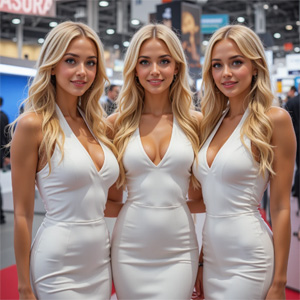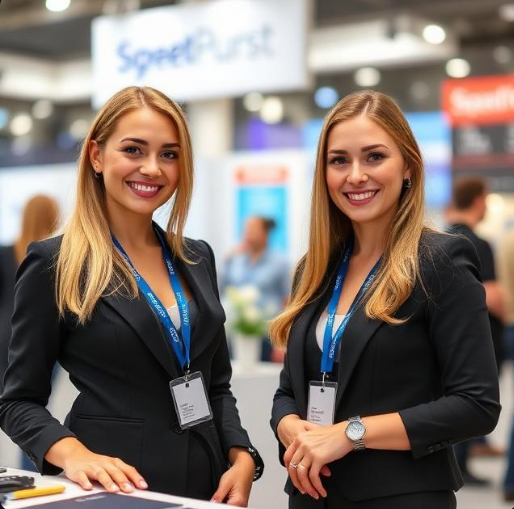
In the glittering, fast-paced halls of Crocus Expo and the expansive Expocentre Fairgrounds, the air is alive with the rustle of premium fabrics and the hum of intense business negotiations. This is Moscow during peak exhibition season—home to global giants like Collection Première Moscow (CPM) , InterFashion, and LeShow.
For international brands looking to crack the Russian market, the difference between a successful entry and a forgotten booth often comes down to a single asset: the Booth Assistant. Gone are the days of the silent “exhibition girl” who simply hands out brochures. In today’s climate, these professionals have evolved into strategic brand ambassadors, cultural bridges, and lead-generation engines.
Here is a look at how these professionals operate on the ground in Moscow.
More Than a Pretty Face: The Three Tiers of Talent
The days of hiring based solely on appearance (often stereotyped as the tall, 170cm+ model) are fading. While a polished look is still standard for premium events, Moscow’s staffing agencies now offer a tiered hierarchy of support to match specific business goals.
1. The Bilingual Hostess (Traffic Management)
This is the operational anchor. Their primary goal is volume—greeting foot traffic, scanning badges, and distributing lookbooks. Crucially, they act as the first filter, ensuring that only qualified leads progress to the sales team. For a busy booth at InterFashion, a hostess might handle 200 visitors an hour, directing the “lookers” away from the “buyers”.
2. The Product Demonstrator (The Technical Expert)
In the textile and clothing sector, “seeing” isn’t enough; customers need to feel. A Product Booth Assistant is trained to handle technical questions that a standard hostess cannot.
- For Garments: They discuss fabric composition (e.g., the difference between modal and viscose), thread count, and shrinkage rates.
- For Manufacturing: They explain OEM (Original Equipment Manufacturer) minimums and lead times. They bring the catalog to life, demonstrating durability and “hand feel” without requiring the senior sales manager for every interaction.
3. The Retail Negotiator & Interpreter (The Closer)
This is the highest strategic tier. These are trilingual specialists who understand retail metrics like MOQ (Minimum Order Quantity), EAC (Eurasian Conformity) certification, and logistics. At LeShow or CPM, these staff members are deployed specifically to manage VIP buyers from Russian giants like Bosco di Ciliegie or Stockmann. They ensure that when a contract worth millions of rubles is on the table, no nuance is lost in translation.
The Cultural Bridge: Why Local Knowledge Matters
Moscow is not a one-size-fits-all market. The Russian consumer has distinct preferences regarding color palettes, sizing (often shifting to Turkish or local standards post-sanctions), and quality expectations.
A local Russian assistant does more than just translate Russian to English; they provide cultural intelligence. They know that a Moscow buyer values durability for harsh winters, or that a specific phrase is needed to assure a retailer about swift customs clearance. They understand the local business etiquette—direct eye contact, a firm handshake, and patience during negotiations are paramount.
For brands coming from Italy or Turkey, having a Russian-speaking assistant who can navigate the complexities of local registration and build rapport is often the deciding factor in closing a sale.
The Business Impact: ROI on the Floor
Hiring a booth assistant in Moscow is a direct investment in lead generation. Unstaffed booths or those staffed by untrained novices see significantly lower engagement.
Professional agencies report that trained staff generate three times more qualified leads than unattended displays. They are skilled in the art of the “soft sell”—inviting a visitor to touch a cashmere sweater, offering a coffee while explaining a supply chain solution, or scanning a badge to capture data for post-show follow-ups.
For a clothing exhibition lasting three days, the cost of a professional assistant typically ranges from €100 to €150 per day depending on language skills and experience—a minimal cost compared to the potential value of a single retail contract.
Navigating the Logistics: The Moscow Context
Working a trade show in Moscow is physically demanding. The major venues, such as Crocus Expo (located about 20km from the city center) and VDNKh, are massive. An assistant may walk over 15 kilometers a day traversing the floors.
Agencies like MoscowHostess, Lite Models, and others specialize in preparing staff for this grueling environment. They handle the wardrobe (often matching the brand’s color scheme), the logistics, and the contingency plans (replacement staff for illness) that international brands require to operate smoothly in a foreign capital.
The Future: High-Tech Meets High-Touch
As the Russian fashion market pivots towards domestic production and imports from friendly nations (China, Turkey, India, Belarus), the role of the assistant is evolving. They are now being trained to use digital tools—tablets for instant lookbooks, QR codes for size charts, and CRM software for on-the-spot order entry.
However, the human touch remains irreplaceable. In an industry built on aesthetics and texture, the ability of a Moscow-based booth assistant to smile, engage, and articulate a brand’s story remains the most powerful tool on the exhibition floor.
The Bottom Line: For any international clothing brand exhibiting in Moscow, the booth assistant is not a line item to minimize. They are the human interface of your brand—and in the competitive landscape of Russian fashion, they are your best investment.