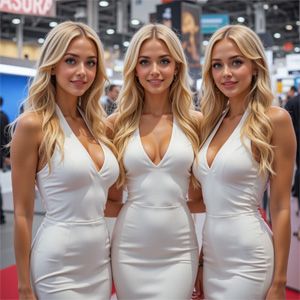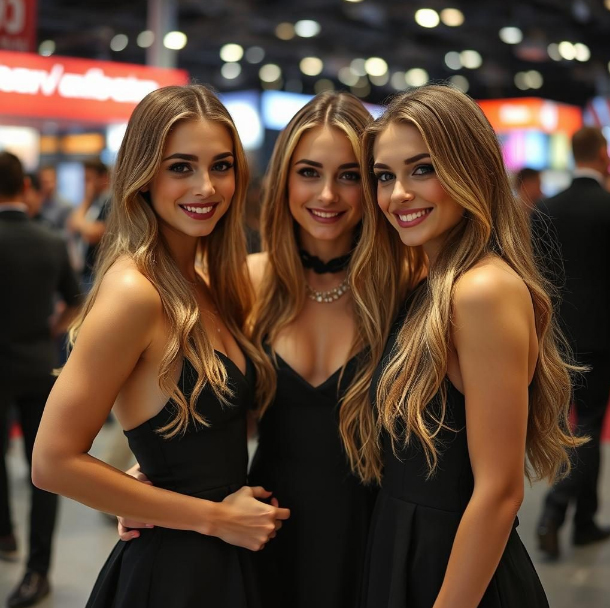
At the All-Russian Exhibition Centre (VDNH), millions of visitors annually pass through its historic pavilions and sprawling grounds. While the architecture and exhibits capture the spotlight, an often-overlooked workforce ensures the machinery of these massive events runs smoothly: the exhibition assistants. From navigating crowds at international trade fairs to managing the interactive chaos of robotics displays, these professionals serve as the crucial interface between the exhibitor and the public.
A Spectrum of Roles
The term “exhibition assistant” at VDNH encompasses a surprisingly diverse range of responsibilities. According to industry insiders, the roles of hostess, stand assistant, and promotional model are often distinct, though the boundaries can blur depending on the event’s needs. A hostess typically manages general navigation and registration, while a stand assistant focuses on the operational side within a specific booth—demonstrating products, serving refreshments, or collecting visitor data.
At specialized trade fairs like OBUV. MIR KOZHI (Shoes. World of Leather) held in Pavilion 57, the stand assistant’s role is highly technical. They must guide buyers through product ranges, explain materials, and connect them with the right company representatives, all while maintaining the polished image essential to the fashion industry. Similarly, at events like RAAPA EXPO for amusement equipment, assistants must be prepared to operate complex demonstrations, such as VR technology or arcade systems, and engage with a diverse audience of park owners and operators.
The “Robostation” Experience
Nowhere is the interactive nature of the job more evident than at “Robostation” in Pavilion 2. Here, the role of the “demonstrator” (a specific title used for these assistants) merges customer service with technical operation. The job description is as engaging as it is demanding: greeting guests, guiding them through the exhibition, explaining how the robots work, and even managing the robots themselves during quests and master classes.
This position is particularly popular among students, as it offers a flexible schedule that can be balanced with studies and requires no prior experience—only “competent speech” and the ability to hold the attention of both adults and children. The work environment, situated in the heart of VDNH, offers a unique blend of education and entertainment, where assistants essentially become performers and educators simultaneously.
The Economics and Agency Ecosystem
The demand for such personnel has spawned a specialized staffing ecosystem. Moscow agencies like Worldpromo, Stendistka, and Krasota-ONLINE have operated for decades, supplying not just manpower but also training, uniforms, and on-site supervision for major venues like VDNH and Crocus Expo.
The pay scale for these roles varies wildly based on experience, event prestige, and the specific tasks required. While a basic promotional role might start at around 1,500 to 2,000 rubles per day, experienced stand assistants or those working high-stakes international forums can command significantly higher rates. For instance, recent listings for support specialists at multi-day forums at VDNH have advertised rates of 17,500 rubles for the duration of the event, reflecting the intensity and responsibility of the work. These professionals are not just greeters; they are the logistics managers of the exhibition floor, responsible for crowd control, program consultation, and immediate problem-solving.
Beyond the Booth: The Volunteer Dimension
The staffing model at VDNH also heavily incorporates volunteerism. The “Ambassadors of VDNH” volunteer corps, comprising hundreds of members, plays a vital role in hospitality and cultural events. These volunteers assist in museum operations, help visitors navigate the vast territory, and participate in the preservation of cultural heritage. For many young people, this serves as a stepping stone to paid roles within the exhibition industry, providing free access to museums and training in exchange for their time and energy.
The Future: Robots as Colleagues
A fascinating twist in the story of VDNH’s assistants is the growing presence of their robotic counterparts. The exhibition center has become a testing ground for automated guides. In the Cinema Museum, a robot named “Arkasha” has conducted over 700 tours and quests in a single year. Similarly, the “Cosmos” pavilion features robot guide “Yuri,” and the “Robostation” itself employs robots like “Thespian” and “Boris” to entertain guests.
For human assistants, this does not necessarily signal replacement but rather a shift in focus. As robots handle repetitive informational tasks or simple interactions, human assistants are freed to manage complex logistics, handle emergencies, and provide the emotional intelligence and nuanced communication that machines still lack. The assistant of today must be tech-savvy enough to manage the robotic displays, yet personable enough to resolve a conflict or guide a confused VIP through a crowded pavilion.
Working as an exhibition assistant at VDNH is far from a passive job. It requires a unique mix of stamina, intelligence, and theatrical flair. Whether one is demonstrating a robot to a group of schoolchildren, negotiating the logistics of an international shoe expo, or simply directing a tourist to the correct pavilion, these individuals are the human infrastructure that transforms a collection of buildings and exhibits into a living, functioning event. As VDNH continues to evolve as a premier cultural and business hub, the demand for these skilled communicators—capable of bridging the gap between complex products and curious audiences—remains as strong as ever.