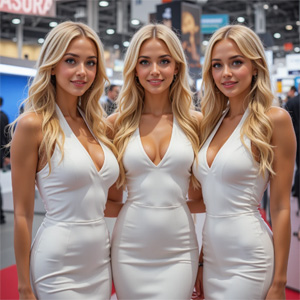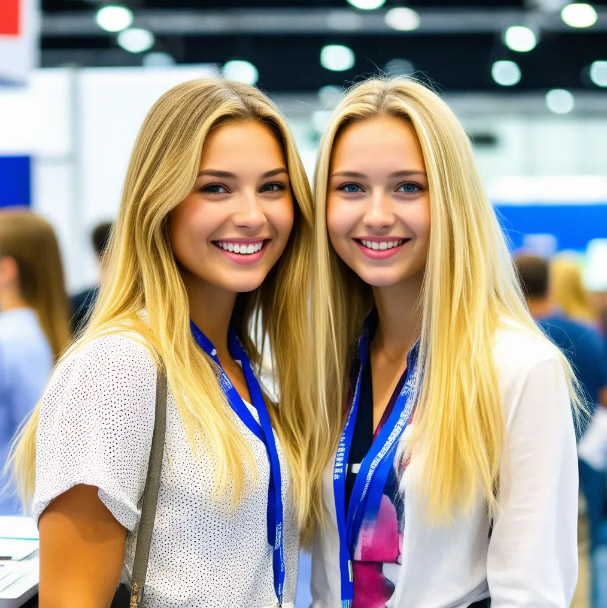
Your trade show hostesses are the face of your brand—and their appearance sets the tone before they even speak. But should they dress for universal professionalism or bold brand alignment? The right balance can increase booth traffic by 30%, while the wrong choice may alienate your audience.
This guide breaks down the pros, cons, and best practices for dressing hostesses to maximize engagement without sacrificing credibility.
Option 1: Traditional Professional Attire
The Look:
- Women: Blazer with slacks/skirt, neutral blouse, closed-toe heels (1-2″)
- Men: Suit or dress slacks with button-down, tie optional
- Colors: Navy, black, gray, or white
Best For:
✔ Financial/legal industries
✔ Conservative markets (Middle East, Japan)
✔ B2B events with C-suite attendees
Pros:
✅ Projects authority and trust
✅ Safe for regulated industries (healthcare, finance)
✅ Avoids cultural missteps
Cons:
❌ Can appear cold or impersonal in creative industries
❌ Blends in at crowded trade shows
Option 2: On-Brand/Thematic Outfits
The Look:
- Branded dresses/shirts in company colors
- Thematic pieces (e.g., lab coats for medical, tech vests for CES)
- Stylish yet functional (e.g., dresses with pockets for lead scanners)
Best For:
✔ Consumer brands (food, fashion, gaming)
✔ Tech startups at CES/SXSW
✔ Markets valuing creativity (US, Brazil, Spain)
Pros:
✅ Instant brand recognition across a busy show floor
✅ Encourages approachability (especially for younger demographics)
✅ Great for social media content
Cons:
❌ Risk of appearing unprofessional in formal industries
❌ May limit individual hostess comfort (e.g., tight uniforms)
Example:
Red Bull’s hostesses wear branded athletic gear—reinforcing their energy-driven image while staying mobile.
Hybrid Approach: Professional + Brand Accents
The Winning Formula:
- Base: Professional neutral (black slacks, blazer)
- Pop: Brand-color accessories (scarves, ties, sashes)
- Tech-friendly: Tablets on branded lanyards
Why It Works:
✔ Balances credibility and visibility
✔ Allows flexibility across industries
✔ Easy to scale for large teams
Pro Tip:
Use color psychology—e.g., blue for trust (finance), orange for energy (consumer tech).
5 Dress Code Rules Every Team Should Follow
- Prioritize Comfort
- Avoid restrictive clothing (hostesses walk 5+ miles/day)
- Provide break-friendly shoes (no stilettos for 8-hour shifts)
- Match Attendee Expectations
- Medical trade show? Scrubs or smart lab coats.
- Car expo? Branded polo shirts with slacks.
- Cultural Adaptation
- Dubai: Cover shoulders/knees
- Germany: Lean formal
- California: Smart casual accepted
- Brand Consistency
- If using logos, ensure high-quality embroidery/printing
- Avoid clashing patterns that distract from messaging
- Weather & Logistics
- Layer for cold convention centers
- Dark colors hide coffee spills and wrinkles
What Not to Do
🚫 Over-sexualized outfits (harms credibility, per 72% of attendees – Exhibitor Magazine)
🚫 Wrinkled or ill-fitting clothes (suggests poor attention to detail)
🚫 Over-accessorizing (jingling jewelry distracts from demos)
Fail Example:
A crypto startup dressed hostesses in skimpy “blockchain bikinis”—resulting in viral ridicule and zero qualified leads.
Key Takeaways
- Professional attire = Best for conservative industries/regions
- On-brand looks = Ideal for creative/consumer-facing shows
- Hybrid style = Safest choice for most B2B events