At the sprawling Crocus Expo International Exhibition Center in Moscow, the air smells of rubber, exhaust, and opportunity. Over 500 industry players gather across 30,000+ square meters of exhibition space, showcasing everything from EV batteries and diagnostic systems to commercial trucks and luxury sedans. A dedicated 10,000-square-meter outdoor test drive area roars to life as buyers put commercial vehicles through their paces.
This is the stage for Russia’s premier automotive cluster—InterAutoMechanica, ComAutoTrans, and AutoBusExpo—events that attract over 20,000 professionals from across the industry. Amidst the gleaming chrome and high-tech diagnostics, one professional ensures that the engine of commerce runs smoothly: the automotive trade show assistant.
The Evolution: From Decoration to Direction
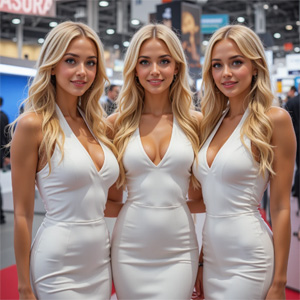
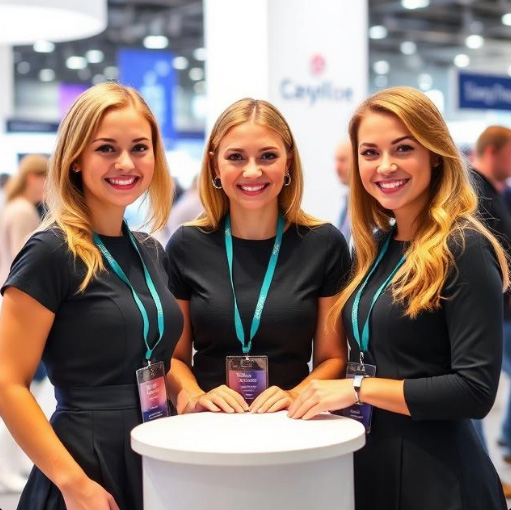
The days when a booth assistant was merely a “pretty face” handing out brochures are long over. In the modern Russian automotive exhibition landscape, the assistant is a strategic asset—a hybrid of technical ambassador, cultural translator, and lead generation engine.
The scale of Moscow’s automotive events demands this evolution. Visitors at shows like InterAutoMechanica are not casual browsers. They are decision-makers: wholesalers, fleet owners, service station managers, and purchasing directors for major distributors. These visitors come with specific technical questions about cold-weather performance, parts compatibility, and supply chain reliability. A generalist greeter simply cannot meet these demands.
The “Automotive-Grade” Skillset
What distinguishes a top-tier automotive trade show assistant from a standard promotional model is their command of industry-specific knowledge.
According to Moscow-based agencies that specialize in these placements, the modern assistant must be able to intelligently discuss topics such as:
- Engine & Drivetrain: Turbocharging systems, torque specifications, EV battery technology, and drivetrain components
- Diagnostics & Repair: ADAS calibration, diagnostic software, garage equipment, and collision repair tools
- Parts & Aftermarket: OE/OEM part distinctions, lubricant grades, tire specifications, and filtration systems
- Commercial Vehicles: Fleet management solutions, telematics, commercial transport regulations, and cold-weather operational requirements
A senior project manager explains: “The assistant doesn’t need to engineer the vehicle. But when a service station owner asks about compatibility with Lada models, the assistant must answer instantly or know exactly which engineer to call”.
The Three-Tier Hierarchy of Automotive Assistants
Given the technical complexity of these events, agencies typically deploy a tiered staffing model:
| Role | Primary Function | Required Knowledge | Typical Daily Rate |
|---|---|---|---|
| Standard Booth Hostess | Welcoming visitors, badge scanning, brochure distribution, traffic management | Basic logistics; professional appearance; friendly demeanor | $150 |
| Technical Automotive Assistant | Product demonstrations, technical Q&A, lead qualification, explaining specifications | Automotive terminology; ability to operate demo displays; parts knowledge | $200 |
| VIP/Hybrid Assistant | Managing VIP delegations, facilitating complex negotiations, technical interpretation | Multilingual (Russian + English + Mandarin/Turkish often); advanced product knowledge; sales experience | $400 (team rate) |
*Note: Rates are market averages for 2025–2026 and typically require 3-day minimum bookings during major shows*.
Beyond Words: The Cultural Bridge
Moscow’s automotive market has unique characteristics that directly impact the assistant’s role.
The Cold-Weather Factor
Russian buyers prioritize durability, after-sales support, and cold-weather performance above nearly all other factors. A professional assistant knows to highlight features like winter tire compatibility, extended warranties, and corrosion resistance without being prompted. They understand that what sells in Dubai or Shanghai may not resonate with a fleet manager from Siberia.
The Shifting Linguistic Landscape
With the evolution of Russia’s automotive supply chains, the most sought-after assistants now speak more than just Russian and English. The rising demand for Mandarin Chinese and Turkish speakers reflects the influx of components and vehicles from these markets. A trilingual assistant who can welcome a visitor in Russian, explain technical specs in English, and then negotiate delivery terms in Mandarin is worth a significant premium.
Russian Business Etiquette
Russian commercial culture relies heavily on trust and relationship-building. A skilled assistant knows to offer tea or coffee, engage in polite conversation about Moscow traffic or the visitor’s journey, and only then pivot to business. They understand the proper use of formal address and the importance of business card presentation. These seemingly small gestures can make the difference between a closed deal and a lost opportunity.
The Crocus Expo Factor: Logistics as a Skill
The physical environment of Crocus Expo IEC—Russia’s largest and most prestigious exhibition venue—adds another layer to the assistant’s responsibilities.
The venue is located approximately 20 kilometers from central Moscow, and traffic on the MKAD ring road is notoriously unpredictable. Professional assistants know to arrive early—often before the 8:00 AM load-in time—to ensure that demo vehicles are positioned, diagnostic tools are powered on, and promotional materials are stocked before the first visitor arrives.
Furthermore, with multiple pavilions hosting simultaneous events, an assistant who can quickly direct a lost attendee to Pavilion 2, Hall 8 is the unsung hero of the show floor.
The ROI of Professional Assistance
For international exhibitors considering entry into the Russian market, the investment in professional trade show assistants delivers measurable returns.
A study of Russian exhibition performance indicates that professional assistants can:
- Reduce operational costs by approximately 30%
- Increase visitor engagement efficiency by as much as 50%
- Generate three times more qualified leads than an unattended or understaffed booth
More importantly, a knowledgeable assistant protects your brand’s credibility. In an industry where precision and reliability are paramount, a visitor who asks a technical question and receives a blank stare will not return—and will tell others to stay away as well.
The New Frontier: Technology Integration
Moscow’s automotive events are embracing new technologies, and the assistants are evolving alongside them.
Modern assistants are increasingly expected to:
- Operate tablets and lead capture systems with speed and accuracy
- Guide visitors through augmented reality (AR) demonstrations that show 3D component breakdowns
- Appear in live social media streams and create behind-the-scenes content for brand amplification
- Manage digital lead scoring that prioritizes follow-up based on visitor engagement
This technological fluency has become a non-negotiable requirement for top-tier automotive assistants.
Where to Find Qualified Talent
The most successful exhibitors source their assistants through specialized Moscow agencies that maintain rosters of pre-vetted professionals. These agencies can also tap into:
- Automotive University Students from institutions like Moscow Automobile and Road Construction University (MADI) and Moscow State Engineering University (MAMI) —cost-effective candidates with genuine industry interest
- Freelance Professionals with proven exhibition experience (though these require careful vetting)
Crucially, exhibitors should book their assistants 1–2 months in advance of major shows, as the most qualified professionals are often reserved early.
Conclusion: The Human Engine
In the high-stakes, high-torque world of Moscow’s automotive trade shows, a gleaming vehicle display or a stack of glossy brochures is not enough. The difference between a successful market entry and an expensive lesson in silence often comes down to the person standing at the front of the booth.
The professional automotive trade show assistant is the first handshake, the trusted explainer, and the last impression for thousands of potential buyers. They translate not just words, but cultural expectations and technical specifications. They ensure that a Chinese part finds its way into a Russian truck, and that a Turkish lubricant gains the trust of a Siberian fleet manager.
For any international company looking to navigate the dynamic, demanding, and opportunity-rich Russian automotive market, investing in a specialized trade show assistant is not an expense. It is the most critical component of your exhibition strategy—the human engine that drives success forward.
As one seasoned exhibitor noted: “Your product can have the best torque in the world. But without the right assistant, no one will ever turn the key.”