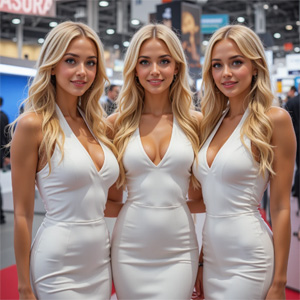
MOSCOW – The lights are calibrated to a warm, flattering glow. The air smells of fresh flowers, expensive coffee, and the faint, clean scent of linen tablecloths. It is the opening morning of PIR EXPO or WorldFood Moscow, and the convention hall is a battlefield of commerce.
At the center of every successful booth, standing with perfect posture and a welcoming gaze, is a figure often dismissed as merely decorative: the Russian hospitality exhibition hostess.
But in the high-stakes world of Moscow’s trade fairs, this professional is anything but ornamental. She is a strategic asset, a cultural diplomat, and often the difference between a handshake that leads to a contract and a brochure that ends up in the recycling bin.
More Than a “Pretty Face”
The Western stereotype of the “booth babe” is stubborn, but in the Russian context, it is profoundly inaccurate. While aesthetics and presentation are highly valued—agencies like MoscowHostess.ru maintain databases of approximately 3,000 vetted women—the modern Russian hostess is selected primarily for her mind.
“Representative appearance, pleasant demeanor, independence, professionalism, reliability, knowledge of world languages—these are the minimum requirements,” states a leading Moscow staffing agency. “We know all our hostesses on a personal level and provide real recommendations”.
At major events catering to the hospitality sector—such as PIR EXPO (the largest international trade fair for hospitality, food, and beverages in Russia) and WorldFood Moscow—the hostess must be fluent in the language of business, not just Russian and English.
She is often a university student or graduate, trained to manage advanced guest relations, strategic lead generation, and crowd flow optimization. She isn’t just scanning badges; she is qualifying whether the person standing in front of her is a category manager from Magnit, a boutique hotel owner from Sochi, or a distributor from Kazakhstan.
The Three Pillars of Hospitality Exhibition Staffing
The modern exhibition assistant operates across three distinct zones, each requiring a different skillset:
1. The Ambassador (Welcome & Information Desk)
This role focuses on pure hospitality: greeting attendees, providing show schedules, answering general queries, and creating a warm, efficient entry point to the exhibition. These hostesses set the emotional tone for the entire event.
2. The Promoter (Product Demonstration Stand)
In the bustling food and beverage halls of WorldFood Moscow, this is a high-energy role. The hostess is responsible for product sampling, explaining features to hungry (and skeptical) buyers, and generating buzz. She must know the difference between a parmesan and a pecorino, or the specific brewing temperature for a new line of single-origin coffee.
3. The VIP Concierge (Lounge & High-Level Negotiation)
This is the highest tier. Reserved for private lounges and executive meetings, these hostesses manage champagne service, coordinate private chef tastings, and ensure that VIP buyers feel exclusive and respected. Their demeanor is not about attracting a crowd, but about managing silence and high-level comfort.
Cultural Intelligence: The Russian Advantage
Why hire a local rather than fly in your own staff? The answer lies in cultural nuance. Russian business culture is formal, hierarchical, and values personal connection.
“You never say ‘sign today for a discount’,” explains a veteran assistant who works with international brands at Wedding Fashion Moscow, a lesson that applies equally to hospitality expos. “You say, ‘I have a special offer for my favourite clients’ and let them feel special.”
A Russian hostess navigates this landscape instinctively. She knows when to use a client’s patronymic name to show respect. She understands that refusing a proffered cup of tea during negotiations can be interpreted as an insult. She is also a master of logistical survival—navigating Moscow’s notorious traffic to ensure the booth is staffed and pristine by 10:00 AM sharp.
The Ecosystem: Agencies and Costs
The market for these services in Moscow is mature and professional. Agencies like MoscowHostess.ru offer full-service packages.
According to local rate cards, the cost of hiring a promoter in Moscow starts at approximately 10,000 Rubles per day for a standard 8-hour shift for a presenter with a pleasant appearance. Premium rates (12,000–15,000 Rubles) apply for staff with model looks, specific language skills (Chinese, Turkish, Arabic, or German), or technical expertise. This fee typically includes the agency’s vetting, training, and a “no-show guarantee” with backup staff available within 1-2 hours.
Return on Investment
For an international food company or hotel chain spending tens of thousands of euros to exhibit in Moscow, cutting corners on staffing is a false economy.
A professional hostess service frees the internal sales team to focus on closing high-value deals rather than pouring water or finding the nearest restroom. She handles the “time-consuming and exhausting onsite management,” allowing the core team to concentrate on deep-dive negotiations.
In the competitive, relationship-driven world of Russian hospitality exhibitions, the hostess is the human interface between a product and a potential partner. She is not just the face of the brand. She is its voice, its manners, and frequently, its winning argument.
As Moscow prepares for its autumn 2026 exhibition season, the smart money is not just on what is being displayed, but on who is doing the displaying. The Russian exhibition hostess has evolved—and she is ready to do business.