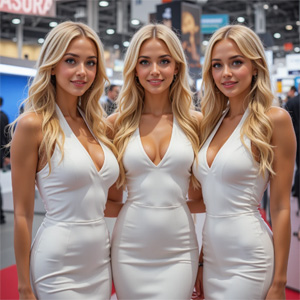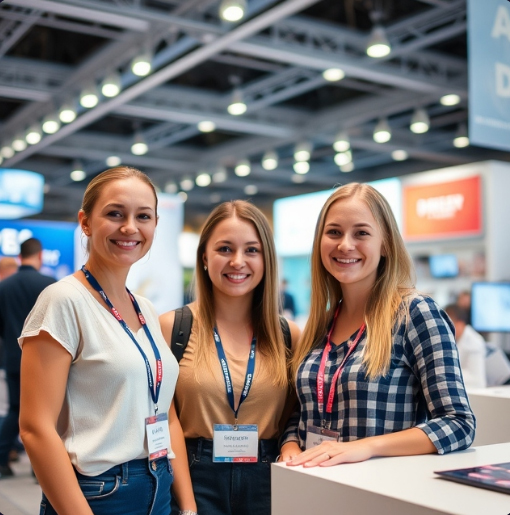
For international exhibitors at Mebel, a Russian booth assistant is often the difference between a stand that attracts visitors and one that converts them into customers. These on-site professionals handle far more than greeting—they manage lead capture, navigate cultural expectations, and keep a busy stand running smoothly across four demanding days at Crocus Expo.
What Is a Booth Assistant?
A booth assistant (sometimes called a stand assistant, hostess, or exhibition promoter) is an on-site support professional hired to work directly at an exhibitor’s stand. Unlike interpreters, whose primary role is language mediation, booth assistants focus on the operational and hospitality side of the exhibition: welcoming visitors, collecting contact information, distributing materials, and supporting the sales team.
At Russian trade shows, this role is well established and professionally organised. Moscow agencies supply trained booth staff specifically for major exhibitions, and the 2026 Mebel edition—running 23–26 November at Crocus Expo—will see strong demand for Russian-speaking assistants across all pavilions.
Why Mebel Exhibitors Need Them
Mebel is Russia’s largest furniture trade fair. The previous edition drew 741 exhibitors from 8 countries and 39,000 visitors across 50,000 square meters. For a foreign exhibitor, that volume creates a practical problem: a small team cannot simultaneously present products, negotiate, collect leads, and manage the flow of visitors.
A Russian booth assistant addresses this gap directly:
Language and first contact. Even when an exhibitor brings an interpreter, the sheer number of walk-up visitors means someone must handle initial greetings, qualifying questions, and basic product introductions in Russian. Booth assistants absorb this load.
Lead capture. The commercial value of a trade show lives in its contact list. Assistants collect business cards, record visitor details, note product interests, and flag serious buyers for follow-up. Poor lead capture is one of the most common failures at international exhibitions—and one of the easiest to prevent.
Hospitality and stand presence. A well-staffed stand feels active and professional. Assistants welcome visitors, offer materials, manage seating and meeting areas, and keep the stand tidy and presentable throughout the day.
Cultural fluency. Russian booth assistants understand local business etiquette—how to address visitors formally, when to offer coffee, how to read whether someone is a genuine buyer or a browser. This subtle knowledge shapes how visitors perceive the brand.
What Booth Assistants Actually Do
The role varies by exhibitor, but common responsibilities include:
- Greeting visitors in Russian and directing them to the appropriate representative
- Collecting business cards and recording lead information in a CRM or spreadsheet
- Distributing brochures, catalogues, price lists, and promotional materials
- Explaining basic product information and answering routine questions
- Managing the meeting area—scheduling appointments, offering refreshments, keeping the space orderly
- Supporting the sales team with administrative tasks during negotiations
- Tracking visitor traffic and reporting daily summaries to the exhibitor
- Assisting with setup and breakdown at the beginning and end of the show
Some exhibitors combine the booth assistant and interpreter role into a single hire. This can work well for smaller stands, but larger exhibitors typically separate the functions—interpreters handle technical and commercial conversations, while assistants manage flow and logistics.
Language Requirements
Russian booth assistants should speak fluent Russian as a native or near-native speaker. Beyond that, language requirements depend on the exhibitor’s needs:
Russian–English is the most common combination. Many Russian trade show visitors have some English, but a bilingual assistant ensures smooth communication with both local and international guests.
Russian–Chinese is increasingly valuable. China is Russia’s primary furniture supplier, and Chinese exhibitors form a significant share of Mebel’s international participation.
Russian–Turkish is also in steady demand, reflecting Turkey’s strong presence in the Russian furniture market.
Additional languages—German, Italian, Arabic—are available through Moscow agencies but may require earlier booking and higher rates.
Rates and Booking
Booth assistant pricing in Moscow follows a fairly predictable range. General exhibition hostess and assistant services typically start around 8,000–12,000 RUB per day, with rates rising for bilingual candidates, technical knowledge, or specialised language pairs.
Shifts at major exhibitions like Mebel usually run the full show day—often 10 to 12 hours including setup and closing. Some agencies charge by the hour with a minimum booking of four to six hours; others quote flat daily rates.
Several practical factors affect cost:
- Language combination. Rare or in-demand pairs cost more.
- Industry experience. Assistants with furniture or interior design background command higher rates.
- Duration. Multi-day bookings often receive discounted rates.
- Overtime. Evening events or extended hours are charged separately.
For Mebel 2026, exhibitors should begin recruiting at least three to four weeks in advance. The best candidates—particularly those with furniture industry experience and strong language skills—are booked early.
How to Hire
Exhibitors have three main routes:
Through Crocus Expo’s official services. The venue provides hostess and assistant services directly, with standardised rates listed in its service guide. This is convenient and reliable but offers less control over selecting specific candidates.
Through Moscow exhibition staffing agencies. A well-developed market of agencies specialises in trade show personnel. Many advertise Mebel coverage specifically and can match assistants to exhibitor requirements—language, industry background, experience level. This route offers the most flexibility.
Through freelancers and networks. Some exhibitors hire directly through professional networks, university contacts, or referrals from previous shows. This can be cost-effective but requires more vetting on the exhibitor’s side.
What to Look For
Russian fluency is non-negotiable. The assistant’s primary function is communicating with local visitors. Test Russian proficiency directly, even if the candidate claims native fluency.
Relevant language pairs. If you need Chinese or Turkish in addition to Russian, verify actual proficiency—not just a resume line.
Presentation and professionalism. Booth assistants represent your brand. Assess how candidates present themselves, how they speak, and how they handle simulated visitor interactions.
Industry familiarity. A background in furniture, interior design, retail, or B2B sales helps an assistant understand what visitors are asking and what information matters.
Reliability and stamina. Trade shows are physically demanding. Four consecutive days on a stand, on your feet, managing constant interaction requires energy and discipline. Ask about previous exhibition experience and check references where possible.
Preparing Assistants for Success
Like interpreters, booth assistants perform far better when properly briefed. Before the show, provide:
- A company profile and product overview in Russian
- A clear explanation of what counts as a qualified lead
- Scripts or talking points for common visitor questions
- Instructions on lead capture—CRM access, forms, or business card collection
- A daily schedule, including meeting times and team responsibilities
- Brand guidelines—dress code, tone, and hospitality standards
A short pre-show briefing, whether in person or online, dramatically improves performance on day one.
The Bottom Line
For international exhibitors at Mebel, Russian booth assistants are the operational layer that keeps a stand functioning under pressure. They greet, qualify, capture, and organise—freeing interpreters and sales staff to focus on the conversations that actually close deals. The cost of a qualified assistant is modest relative to the value of the leads they help secure. In a market where relationships and first impressions matter, a strong booth team is not overhead—it is infrastructure.