In the technologically advanced halls of Moscow’s Crocus Expo International Exhibition Center, the air hums with the future of materials science. Here, carbon fiber meets aerospace engineering, glass-reinforced plastics transform automotive design, and bio-based composites promise a sustainable industrial revolution. This is the world of Composite-Expo, Russia’s only international specialized exhibition for composite materials, and Technotextile / Techcomposite, the premier event for technical textiles and advanced composites.
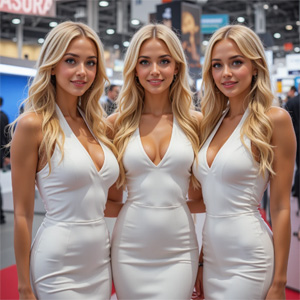
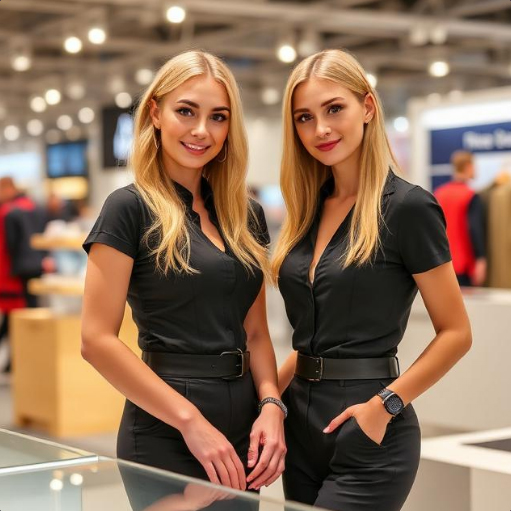
Amidst the dense discussions of resin systems, fiber reinforcements, and autoclave curing cycles, one professional ensures that every visitor interaction cures into a solid commercial bond: the Russian exhibition booth assistant. In an industry where a single contract for carbon fiber prepregs or an automated filament winding machine can reach millions of dollars, these specialized professionals have become the indispensable human interface between international technology and the Russian market.
The Scale of the Stakes
The composites industry in Russia is undergoing a significant transformation, driven by import substitution and the need for technological self-sufficiency. This is reflected in the scale of major events. Composite-Expo 2026, the 18th edition of this flagship event, took place from April 22–24, 2026, spanning approximately 15,000 square meters and hosting 270 exhibitors from nearly 20 countries, including China, Turkey, Germany, Italy, the United States, and Brazil.
The event attracted over 7,500 professional visitors, 90% of whom were industry specialists with direct purchasing authority. This is not a casual browsing crowd; these are development managers, engineers, consultants, and decision-makers from critical sectors like aeronautics, automotive, ship-building, the military-industrial complex, and oil and gas.
The concurrent Technotextile | Techcomposite 2026 (June 16-19), part of a larger industrial ecosystem alongside Rosplast and Rosmould, further expanded the scale, with a combined expected audience of over 18,000 professionals. This interconnected environment creates significant pressure for exhibitors to present a polished, knowledgeable front—a task that falls squarely on the booth assistant.
The “Advanced Material” Professional
Unlike consumer trade fairs, Moscow’s composites events operate in a world of high technical specificity, rigorous certification requirements, and multi-industry application knowledge. The standard “booth model” or a simple greeter is not merely inadequate—it can actively damage a brand’s credibility in this precision-driven sector.
According to Moscow-based agencies that specialize in industrial exhibition staffing, the modern composites booth assistant has evolved into a strategic asset—a multifunctional specialist who combines language fluency, cultural intelligence, and materials science literacy. The role encompasses three critical functions: technical communicator, lead qualification specialist, and cultural protocol officer.
The Composites-Specific Skillset
To be effective, a Russian booth assistant must master a vocabulary that spans materials science, manufacturing engineering, and quality control. This includes understanding:
- Resin Systems: Differentiating between epoxy (high performance, aerospace), polyester (cost-effective, general purpose), vinyl ester (corrosion resistance), and phenolic (fire resistance).
- Reinforcement Types: Distinguishing between carbon fiber (high stiffness, lightweight), glass fiber (cost-effective), aramid (impact resistance), and basalt fiber.
- Manufacturing Processes: Knowing the difference between hand lay-up, filament winding, pultrusion, and Resin Transfer Molding (RTM).
- Testing and Properties: Recognizing terms like Tg (glass transition temperature), fiber volume fraction, and interlaminar shear strength.
Key Terminology for Booth Assistants
A quick reference of terms a composites booth assistant must know includes:
| Category | Key Terms (English/Russian) |
|---|---|
| Resins | Epoxy (эпоксидная смола), Polyester (полиэфирная смола), Curing agent (отвердитель) |
| Fibers | Carbon fiber (углеродное волокно), Glass fiber (стекловолокно), Aramid (арамид) |
| Processes | Filament winding (намотка), Pultrusion (пултрузия), Autoclave (автоклав), Prepreg (препрег) |
| Properties | Tensile strength (прочность на растяжение), Impact resistance (ударопрочность) |
| Applications | Aerospace (аэрокосмическая), Automotive (автомобильная), Wind energy (ветроэнергетика) |
The Technical Filter and Lead Qualifier
With 90% of Composite-Expo visitors being industry specialists, the assistant’s first and most critical job is to filter and qualify these visitors rapidly. A skilled assistant engages visitors with strategic questions to identify their position in the supply chain and their purchasing authority:
- “What industry sector do you work in? Aerospace, automotive, construction, or oil & gas?”
- “What type of composites do you currently use—carbon fiber, glass fiber, or other reinforcements?”
- “What manufacturing processes are you running—hand lay-up, filament winding, or pultrusion?”
- “Are you looking for raw materials, processing equipment, or finished components?”
This qualification ensures that senior technical staff and sales engineers focus only on high-value prospects, maximizing the return on investment from the exhibition. As the Composite-Expo organizers note, the event is specifically designed to “promote exhibitors in establishing new business contacts and partner relations”.
The Cultural Bridge and Strategic Asset
In the Russian industrial sector, relationships matter as much as technical specifications. A professional Russian booth assistant knows that:
- Formal address is expected: Using correct titles and patronymics signals respect.
- Hospitality builds trust: Offering tea or coffee is culturally expected and facilitates commercial conversations.
- Documentation matters: Russian buyers expect detailed technical data sheets and compliance documentation to be readily available.
For international exhibitors—particularly from China, Turkey, and other non-Russian markets—this local expertise is invaluable. The assistant serves as the exhibitor’s cultural guide, navigating these expectations so that the international team can focus on the technical conversation.
The Venue Factor: Conquering Crocus Expo
Moscow’s composites events are held primarily at Crocus Expo International Exhibition Center, one of Europe’s largest exhibition complexes. Located approximately 20 kilometers from central Moscow, traffic on the surrounding MKAD ring road is notoriously unpredictable. Professional booth assistants are valued for their logistical reliability—arriving early, managing registration systems, and ensuring that material samples and promotional materials are restocked throughout the event.
As Russia’s composites industry pivots toward technological self-sufficiency, exhibitions like Composite-Expo and Technotextile have become critical battlegrounds for market share. For international exhibitors, the booth assistant is no longer an accessory, but a translator of technology, a guardian of ROI, and a strategic asset that bridges the gap between advanced materials and the Russian market. In the halls of Crocus Expo, the future of composites is being negotiated—and the assistant handing you a badge or pouring a coffee is likely the first filter in a million-dollar deal.