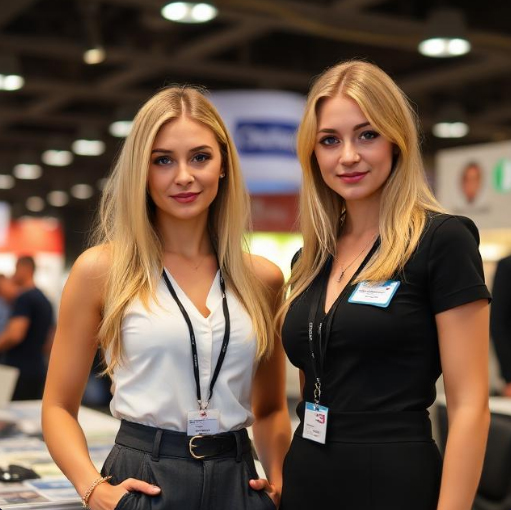
Moscow has established itself as a critical hub for the water management industry, hosting major events that shape the sector across Russia and beyond. From the engineering-focused ECWATECH and AquaFlame exhibitions at Crocus Expo to the prestigious VODEXPO at Gostiny Dvor, these trade fairs draw thousands of professionals seeking cutting-edge solutions for water supply, treatment, and infrastructure. In this technically demanding environment, the role of a booth assistant transcends conventional hospitality—these professionals serve as essential bridges between complex engineering solutions and the decision-makers who need them.
The Landscape of Moscow Water Management Exhibitions
The water sector in Russia is undergoing significant transformation, driven by federal infrastructure programs and import substitution initiatives. ECWATECH 2025 featured over 470 manufacturers from 39 Russian regions alongside international participants from China, Belarus, India, and Turkey. The exhibition attracted 12,000 specialists, with 83% of visitors playing a role in purchasing decisions. Meanwhile, AquaFlame 2025 drew more than 27,800 visitors from 85 Russian regions and 32 countries, with 93% of attendees influencing procurement choices.
Major industry players including AWT, BWT, Haier, Midea, and leading Russian manufacturers such as Geyser, Aquaphor, and Rifar regularly participate. This concentration of technical expertise and commercial opportunity places immense responsibility on booth staff to perform at the highest level.
Beyond Traditional Hospitality: Specialized Roles
The technical nature of water management exhibitions demands booth assistants who understand far more than standard customer service. At the AquaFlame Moscow Exhibition, a stand assistant functions as a strategic asset who can enhance visitor engagement, improve efficiency, and leave a lasting impression on attendees. Their responsibilities extend across several specialized domains.
Technical Communication and Product Demonstration
Water management equipment—from pumping stations and membrane filtration systems to ductile iron pipes and chemical reagents—requires precise explanation. A skilled booth assistant can guide visitors through product demonstrations, explain technical features, and answer questions about specifications. Given that 64% of AquaFlame visitors attend no other similar exhibitions, the booth assistant’s ability to communicate technical value is critical.
Professional Representation and Compliance
In the conservative Russian business environment, professionalism carries particular weight. A booth assistant’s professional demeanor, appearance, and communication skills directly reflect on the exhibiting company. This is especially important in the B2B context of water management exhibitions, where 48% of AquaFlame attendees are wholesalers and retailers, and 21% are engineering and construction companies.
B2B Coordination and Lead Generation
Modern water management exhibitions increasingly emphasize structured B2B engagement. ECWATECH 2025 introduced the “ECWATECH Connect” program, a dedicated negotiation zone where suppliers and buyers could schedule pre-arranged meetings. Booth assistants play a vital role in coordinating these meetings, managing schedules, and ensuring that visitors are directed to the right decision-makers. They collect visitor information and inquiries, building databases of potential leads for post-event follow-up.
Cultural Intelligence and Language Capabilities
The audience at Moscow water management fairs is diverse yet predominantly Russian-speaking. While international companies from China, Turkey, India, and Belarus participate, the core decision-makers are Russian professionals from water utilities and industrial enterprises. A booth assistant fluent in both Russian and English provides a critical cultural bridge. They help international exhibitors navigate Russian business etiquette—which values direct communication, detailed technical documentation, and evidence-based claims—while ensuring that Russian visitors feel understood and respected.
Technical Familiarity as a Competitive Advantage
Basic knowledge of water technology makes a significant difference in exhibition performance. Booth assistants who understand the difference between pressure pumps and circulation pumps, who can explain membrane filtration principles, or who know the applications of ductile iron versus PVC piping can engage visitors far more effectively than those limited to scripted responses. This technical awareness allows them to filter casual browsers from serious buyers and facilitate meaningful conversations with qualified prospects.
Conclusion: An Essential Investment
In the competitive environment of Moscow’s water management trade fairs, where thousands of visitors evaluate hundreds of exhibitors, the booth assistant serves as the human face of technical excellence. These professionals are not merely support staff—they are integral to exhibition strategy, helping brands stand out in a crowded marketplace and achieve their business objectives. For any company seeking to capture a share of Russia’s expanding water infrastructure market, investing in professional, technically-aware booth assistants is not an optional extra but a strategic necessity.