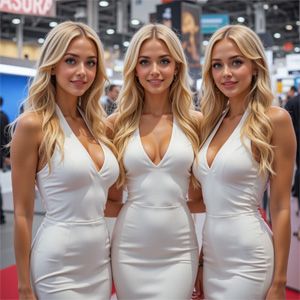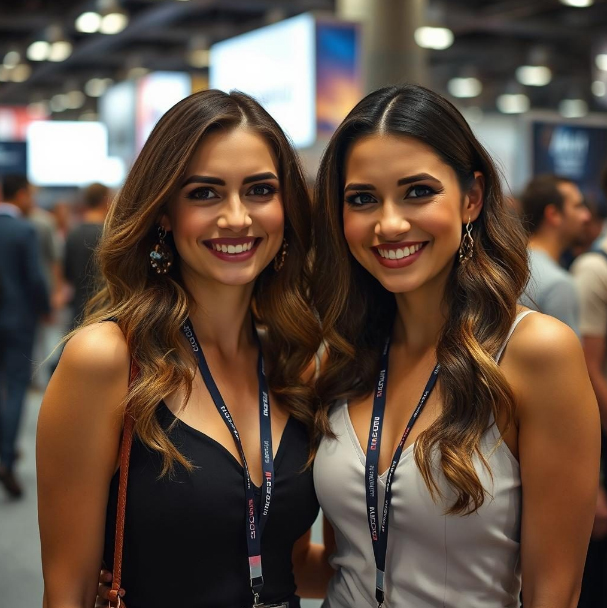
At Moscow’s sprawling exhibition venues, particularly Crocus Expo and Expocentre, a specialized workforce keeps the commercial machinery running behind the stands and product displays. The exhibition hostess—increasingly called a “booth assistant” or “stand hostess” in professional circles—has evolved far beyond the decorative stereotype into a frontline role combining presentation, qualification, and operational support.
The Evolution of the Role
The terminology shift reflects a change in expectations. At consumer-oriented events, hostesses may focus on engagement and sample distribution. At B2B technical exhibitions like ProdExpo or Mebel, the emphasis shifts toward crowd management, information provision, and visitor qualification. The modern hostess acts as an initial filter: greeting attendees and quickly assessing whether the person approaching is a curious student or a high-potential procurement director. By qualifying visitors through predefined questions, they ensure that technical staff time is optimized for maximum return on investment.
A typical day involves receiving and coordinating visitors, preparing tea and coffee, answering questions about the company and its products, recording contact information left at the stand, and directing serious prospects to sales managers. At larger events, hostesses also manage product displays, support demonstrations, and ensure the booth runs efficiently throughout the event.
Language Skills Command a Premium
For events with significant international participation, language capability is a major differentiator. Official Crocus Expo staffing rates for 2025–2026 list stand attendants without foreign languages at approximately 7,000 RUB per day, and those with a basic foreign language at approximately 8,000 RUB per day. Agency rates for exhibition hostesses in Moscow start from 10,000 RUB per person for an up-to-8-hour shift at the standard level, rising to 12,000 RUB for premium model appearance and 14,000–18,000 RUB for top-tier or exclusive staff.
English is standard for international events, with other languages available according to exhibitor needs. Some agencies specialize in multilingual exhibition hostesses covering English, Chinese, German, French, Spanish, Italian, Turkish, and Czech, among others. For food industry events like WorldFood Moscow or Agroprodmash, agencies provide combined teams of Russian-English interpreters and exhibition hostesses to greet and qualify visitors.
The Agency Ecosystem
Exhibitors at Crocus Expo have two primary routes for sourcing this workforce. The official venue route offers standardized, published rates and a regulated safety net, but comes with rigidity. The agency route offers greater flexibility and access to specialized personnel—models with specific looks, assistants with technical backgrounds, or multilingual staff—but requires more vetting and coordination.
Moscow-based agencies serving the exhibition calendar maintain databases of models, hostesses, and booth assistants with experience across the venue’s events. Some providers offer combined services, including interpreters for exhibitions, promotional models, and stand assistants, recognizing that different exhibitors require different configurations of skills. For companies seeking a more hands-on approach, freelance coordinators—such as Anna Kobrinskaya, who has worked in exhibitions and business events for over nine years—assemble their own vetted teams of stand attendants, promo staff, and translators with experience at venues including Crocus Expo and Expocentre.
Practical Considerations for Exhibitors
Staffing should match booth scale and event type. A standard booth typically requires one to two assistants handling reception and information gathering, while larger custom booths with demonstration areas may need three to five staff members with differentiated roles.
Product training matters. Booth assistants and models who understand the basics of what they are presenting perform measurably better than those who receive only a script. Advance briefing on key products, target visitor profiles, and qualification criteria improves lead quality. At food exhibitions, for instance, a booth assistant working for a beverage company may need to answer questions about preservatives and acid content; one working for a dairy producer may need to discuss pasteurization methods and shelf-life specifications.
Booking early is advised. Crocus Expo’s calendar is crowded, and the most experienced hostesses with language skills and industry-specific knowledge are in demand during major trade fairs. For exhibitors planning to participate in events like ProdExpo, Mebel, or WorldFood Moscow, securing staffing several weeks in advance ensures access to the best candidates and allows time for proper briefing on products and messaging.