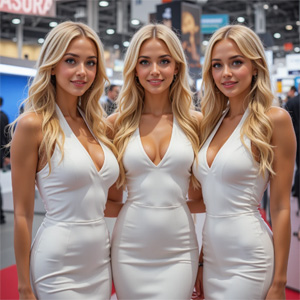
In the cavernous halls of Moscow’s major exhibition centers, where vast exhibition spaces host hundreds of companies from Russia, China, and beyond at events like ExpoElectronica, a specialized professional operates at the sharp edge of technology and human interaction. The electronics industry trade show assistant in Moscow is not a simple greeter or promotional model. In an industry defined by cold precision, defence contracts, and industrial automation, she is a technical liaison, a cultural diplomat, and a gatekeeper of trust—all while wearing an antistatic wrist strap and a precisely calibrated smile.
Defining the Electronics Trade Show Assistant
The electronics industry assistant in Moscow is fundamentally different from her counterpart in consumer goods exhibitions. At premier events that have been running for decades and are the largest electronics exhibitions in Russia and the EAEU, these professionals are carefully selected for their ability to represent brands credibly to a demanding B2B audience of engineers, procurement managers, and government officials.
Professionals in this field serve under various titles: stand assistants, technical booth assistants, brand ambassadors, and promo-hostesses. The role is often filled by students from technical universities such as Moscow State Technical University or the National Research Technical University, who possess theoretical knowledge of radio-frequency identification, embedded systems, and industrial processes.
The Technical Hierarchy: Three Levels of Support
Unlike general trade fairs, Moscow’s electronics events operate on a razor’s edge of technical specificity. Agencies typically deploy a tiered staffing model based on technical capability and risk responsibility.
Level One: Basic Reception Assistant
The entry-level role focuses on managing registration, welcoming VIPs, distributing brochures, and ensuring the booth remains presentable. Basic English communication is typically required, but technical knowledge is not expected.
Level Two: Technical Booth Assistant
This is the “sweet spot” for most electronics exhibitors. These assistants can explain product specifications, demonstrate simple user interfaces, and filter casual visitors from serious buyers. They understand industry terminology—materials, tolerances, and basic principles of operation—and can recite technical ratings. Technical literacy is the core requirement.
Level Three: Senior Business Assistant
Reserved for high-stakes negotiations with Russian state corporations or major industrial groups. These assistants are fluent in Russian and English (or Chinese) and are familiar with complex regulatory requirements including EAC certification and customs regulations. They operate in executive meeting rooms, translating not just language but business strategy and intent.
More Than a Smile: The Technical Literacy Factor
The electronics exhibition floor is different from any other industry expo in Moscow. The standard “booth model” or simple greeter will not survive here. In an industry where a single spark from a cheap power supply can ruin an expensive prototype, the hostess must project reliability—the visual promise that the components on display will not fail in harsh conditions.
Hostesses are trained to identify technical details, explain specifications, and discuss industry concepts. As one radio-physics student working her third electronics exhibition explains: “We are not selling yogurt. We are selling defence contracts and industrial automation. You cannot look soft. You must look like you know how to short a capacitor.”
The Cultural “Codec”: Bridging East and West
One of the most undervalued aspects of the booth assistant is their role as a cultural mediator—decoding Russian business culture for foreign exhibitors and encoding foreign sales tactics into a format palatable to local buyers.
In the wake of shifting supply chains, the Russian electronics market has seen a significant influx of equipment from China, Turkey, and domestic Russian manufacturers. A Chinese manufacturer of electronics components might speak perfect technical English, but the Russian buyer—often a systems integrator from Siberia or St. Petersburg—prefers to negotiate in Russian. The booth assistant bridges this gap.
Russian business culture relies heavily on trust and relationship-building. A booth assistant who can offer tea, engage in small talk about Moscow traffic, and then pivot to discussing technical specifications is worth their weight in gold. She humanizes the technology.
The Anti-Sparkle Uniform: Aesthetic and Safety
The aesthetic in electronics exhibitions is utilitarian. Polo shirts, antistatic wrist straps (sometimes worn for show), and safety glasses are common. Skirts are often forbidden due to safety concerns. Hair must be tied back. The goal is to project reliability—the visual promise that the components on display will function correctly in demanding environments.
Makeup is professional and neutral. Nails are practical. The focus is on projecting competence and technical credibility.
The Gatekeeper Function: Security and Espionage Prevention
Half the booths at major electronics exhibitions are surrounded by discreet barriers. Visitors must show identification or corporate credentials before approaching a sample tray. The hostess is the first line of defense.
“You learn to spot the ‘tourists’—people who touch everything but ask nothing,” says a veteran of multiple electronics shows. “They take photos of the back of a circuit board, not the front. I have confiscated phones this year.”
She is trained to deflect espionage with grace. When a stranger asks for a “small sample” of a chip, she responds professionally but firmly. When a visitor pushes for technical specs not on the brochure, she knows when to redirect or shut down the inquiry.
The “All-in-One” Role at Major Exhibition Centers
Exhibiting at Russia’s largest exhibition complexes involves layers of logistics from cargo delivery to customs clearance. A typical job listing for an exhibition assistant outlines duties that go beyond engaging visitors:
- Logistics and Setup: Meeting contractors, accepting deliveries, distributing heavy product samples to stands, and managing empty containers during build-up and teardown.
- Operational Management: Keeping the booth clean, managing refreshment zones by restocking consumables and monitoring supplies.
- Security and Compliance: Policing the exhibition zone for unauthorised individuals or competitors distributing materials, maintaining order.
This “all-in-one” nature means the Russian booth assistant often acts as a security guard, cleaner, hostess, and logistics manager simultaneously.
Compensation and Market Demand
The specialized nature of electronics industry hosting is reflected in compensation structures. Rates vary by role, with technical demonstrators and bilingual assistants commanding premium rates. Agencies recommend advance booking for major fairs, with full briefings and product training provided before the event.
The electronics industry trade show assistant in Moscow has become an indispensable strategic asset in Russia’s dynamic technology landscape. As Russian electronics pivots toward import substitution—replacing Western chips with domestic processors—the role of the hostess is evolving. She is no longer just a greeter. She is a brand ambassador for Russian technological sovereignty.
Far from the decorative figures of past decades, today’s electronics hostess is a trained professional who blends technical awareness, multilingual capability, and cultural diplomacy. She is the human connection that transforms an exhibition stand from a passive display into an active engine for sales and brand development. In an industry where precision is paramount and first impressions are everything, these professionals ensure that the conversation is always clear—no matter what language is being spoken.