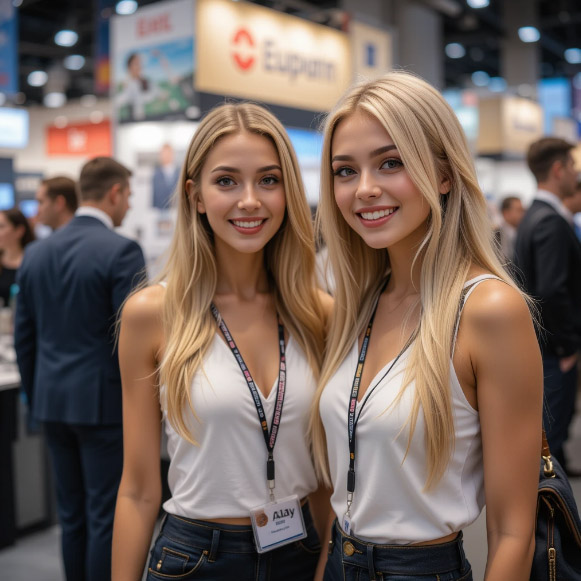
In the bustling, sensory-rich environment of a major textile trade fair in Moscow—such as Textilexpo or Inlegmash—the competition is not just about who has the most innovative fabric. It is about which exhibitor can most effectively capture the imagination of designers, manufacturers, and buyers in a crowded marketplace. While the term “Trade Show Girls” belongs to a bygone era, the modern Textile Brand Ambassadors who have replaced them are strategic assets, essential for translating the tangible qualities of fabric into compelling business opportunities.
The textile industry is a sophisticated B2B environment where decisions are based on technical specifications, quality, touch, and application. The audience—fashion designers, upholstery manufacturers, procurement managers for major brands—are there to source materials they can trust for their own products. In this context, the professionals in the booth must be credible, knowledgeable, and capable of facilitating serious conversations about weaves, weights, durability, and dye lots.
The Modern Role: From Decoration to Demonstration
The function of these ambassadors has strategically evolved into a multi-faceted role critical for success:
- Sensory Guides and Product Evangelists: Their primary role is to guide the client’s experience of the product. They are trained to articulate the unique selling points of a fabric through demonstration—draping a silk to show its fall, rubbing a performance textile to demonstrate its durability, or handing a swatch to a buyer to feel the weight and texture. They translate technical data sheets into tangible, sensory benefits.
- Lead Qualification and Expert Triage: They act as the first and most important filter on the floor. A skilled ambassador can quickly discern a serious buyer for a garment factory from a student or a competitor. By asking targeted questions about production volume or intended use, they ensure that the company’s textile experts and sales directors are connected only with high-value, qualified leads, maximizing efficiency and ROI.
- Brand Embodiment and Trust Building: The textile business is built on relationships and reliability. The ambassador’s professionalism, deep product knowledge, and demeanor directly reflect the mill’s or brand’s reputation for quality and integrity. They build immediate trust, assuring buyers that they are dealing with a serious and knowledgeable partner.
- Linguistic and Cultural Interpreters: For international exhibitors, this is a critical function. An ambassador fluent in Russian and English can seamlessly discuss technical specifications like thread count (плотность ткани), composition (состав), and colorfastness (устойчивость окраски) with local manufacturers. They bridge cultural business gaps, build rapport, and ensure nothing is lost in translation—especially crucial when discussing complex orders and quality standards.
- Trend Narrators and Application Specialists: They are briefed on how the fabrics are being used in current collections and emerging trends. They can suggest applications, from haute couture to technical wear, helping buyers visualize the potential of the material in their own product lines.
Why the “Trade Show Girl” Model is Obsolete
In today’s market, the traditional concept is not only outdated but damaging. It:
- Undermines Technical Credibility: It creates a disconnect between the sophisticated product and a superficial promotion method, alienating a professional audience that makes decisions based on technical merit.
- Fails to Generate Quality Leads: Without product knowledge, staff cannot qualify leads or answer basic technical questions, resulting in a weak sales pipeline and wasted marketing spend.
- Misaligns with Professional Culture: The Moscow textile industry, from designers to factory managers, values expertise and professionalism. A superficial approach is seen as out of touch and disrespectful of their professional acumen.
The Moscow-Specific Advantage
Hiring professional brand ambassadors, particularly those sourced locally in Moscow or with CIS market experience, provides a decisive strategic advantage. They offer:
- Market Intelligence: Insight into local manufacturing capabilities, key buyers, and competitor activity.
- Cultural Fluency: An innate understanding of how to build relationships and conduct business with Russian and CIS partners.
- Logistical Efficiency: Local agencies handle recruitment, training, and management, reducing the operational burden on the exhibiting company.
Investing in Expertise: The True ROI
For textile companies investing heavily in a Moscow trade show, staffing the booth with professional, knowledgeable ambassadors is a direct investment in ROI. It is an investment in:
- Higher Quality Leads: Through effective qualification and engagement.
- Enhanced Brand Perception: Presenting an image of authority and reliability.
- Competitive Advantage: Creating a more engaging and effective booth experience than competitors who may still rely on outdated methods.
Conclusion: Weaving Relationships with Expertise
The most successful exhibitors at Moscow’s textile fairs understand that their people are as important as their products. The modern textile brand ambassador is a skilled professional who bridges the gap between the tactile quality of a fabric and the client’s business needs. By investing in articulate, knowledgeable, and professional staff, companies ensure their significant investment translates into tangible business results: a robust pipeline of qualified leads, solidified partnerships, and a stronger position in the demanding and lucrative Russian textile market. In the end, while the fabric may be the product, the ambassador is the crucial thread that weaves the deal together.