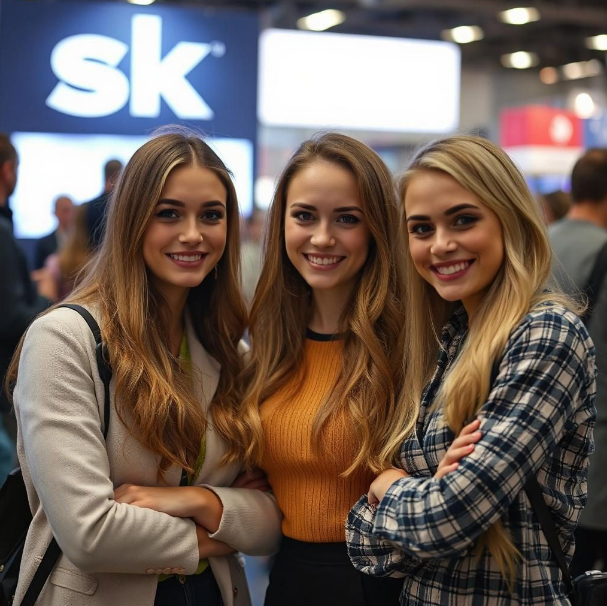
Moscow has re-emerged as one of Europe’s busiest trade-show capitals, and behind every polished stand at venues like VDNH, Crocus Expo, and the newer Timiryazev Centre stands a workforce that visitors rarely notice but exhibitors cannot do without: the booth assistant. No longer merely a smiling greeter in a branded suit, the modern Moscow booth assistant is a hybrid of receptionist, lead qualifier, technical demonstrator, and cultural intermediary. Their evolution reflects both the maturing of Russia’s exhibition industry and the specific demands of doing business in the Russian capital.
From “Hostess” to Operational Backbone
The terminology itself tells a story. In professional circles, the old word “hostess” has gradually given way to “booth assistant” or “stand assistant,” a shift that mirrors a change in expectations. At the Timiryazev Centre, which opened in late 2024 and now hosts over sixty events annually, the booth assistant is described as the “operational backbone” of any stand. The job begins before the first visitor arrives: checking displays, stocking catalogues, and ensuring the booth is pristine. Once the doors open, the assistant manages foot traffic, distributes technical documentation, and—critically—distinguishes between casual visitors collecting free pens and procurement managers worth a sales manager’s time.
This filtering function has direct commercial value. At industry-specific shows like Testing&Control, the country’s leading exhibition for testing and measurement equipment, assistants must navigate terminology spanning metrology, non-destructive testing, and quality control to connect the right visitor with the right technical expert. At RAAPA EXPO, the amusement industry’s premier event in the CIS, assistants coordinate live demonstrations of VR attractions and arcade systems, explaining safety certifications and delivery terms to park owners evaluating serious purchases.
The Language and Culture Bridge
For international exhibitors, the Moscow booth assistant often doubles as an interpreter and cultural guide. Chinese manufacturers have a particularly strong presence at events like RAAPA EXPO and Mir Stekla, making bilingual or trilingual staff essential for bridging the gap between suppliers and Russian buyers. But language is only part of the equation. Russian business culture places a heavy premium on relationship-building, formal greetings, and proper business card exchange. Experienced assistants understand that offering tea or coffee is not a courtesy but an expected practice that encourages prospects to linger, and that casual attire on a stand can lead Russian visitors to conclude the company is “informal” or “financially unstable.”
This cultural fluency extends to the delicate matter of hospitality. Industry guides note that offering vodka at exhibition stands—unthinkable in most Western contexts—has historically served as a precursor to commercial agreement in Russian business culture. Skilled staff navigate this tradition carefully, using hospitality to build trust without letting the conversation lose its professional edge.
The Economics of Staffing
Exhibitors in Moscow face a wide range of staffing options, from individual freelancers to specialized agencies. Daily rates for standard booth assistants and hostesses typically range from 8,000 to 12,000 rubles, while technical interpreters with industry-specific knowledge command 12,000 to 20,000 rubles or more. Premium rates apply for specialists in luxury or automotive sectors, and uniform rental is often arranged through agencies for an additional fee. For many exhibitors, the calculation is straightforward: a poorly deployed assistant who simply smiles and hands out pens contributes little, while a trained one who qualifies leads and understands basic product features can mean the difference between a productive show and a wasted investment.
The demand has spawned a professional ecosystem of agencies—firms like YSM, Worldpromo, and Moscow Interpreters—that supply trained personnel to venues across the capital. These agencies increasingly emphasize specialization. An assistant working a children’s goods fair like Mir Detstva needs a different vocabulary and approach than one at a glass industry exhibition like Mir Stekla, where visitors range from production engineers to architects and procurement specialists.
The Venue Factor
Moscow’s exhibition geography shapes the work itself. VDNH, with its historic pavilions and sprawling grounds, demands assistants who can navigate complex logistics and arrive early enough to manage the inevitable pre-opening chaos. Crocus Expo, one of the largest exhibition centres in the world, presents a different challenge: sheer scale. At Testing&Control, held in Crocus Expo’s Pavilion 1, assistants must manage a three-day schedule with doors open from 10:00 to 18:00, maintaining energy and professionalism through the final hours of the last day. The newer Timiryazev Centre, located on the grounds of the Russian State Agrarian University, has quickly become one of the city’s most active venues, hosting everything from franchise expos to textile fairs and glass industry showcases, each with its own staffing demands.
The Unseen Infrastructure
What unites booth assistants across Moscow’s exhibition halls is their role as the human interface between a brand and its market. They are the first impression, the navigator, and often the last conversation a visitor has before leaving a stand. In a city where trade shows remain a primary channel for B2B networking and international partnership, their professionalism—or lack of it—carries commercial weight. As one industry guide puts it, the difference between a successful event and a wasted investment often comes down to the people standing at the booth. In Moscow’s competitive exhibition landscape, that lesson is being learned by exhibitors from China, Europe, and across Russia alike.