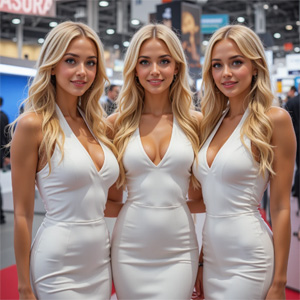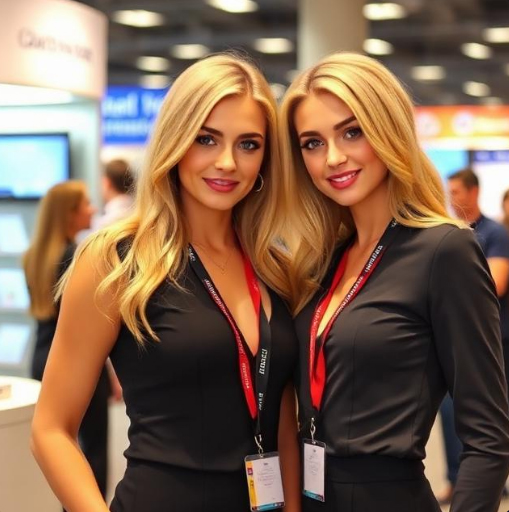
In the cavernous, humming halls of Moscow’s Crocus Expo and the Expocentre Fairgrounds, the future of global energy is on display. Towering drilling rigs, complex pipeline schematics, and sophisticated control systems dominate the floor at major events like NEFTEGAZ—one of the top ten oil and gas exhibitions in the world, attracting over 38,000 professionals from nearly 60 countries.
Amidst the heavy machinery and intense B2B negotiations, a different kind of professional works the room. Poised, multilingual, and impeccably dressed, they are the exhibition hostesses. However, the industry is quick to clarify that these individuals are far from the “booth babes” of tech trade shows past. In the high-stakes, relationship-driven world of Russian energy, they have evolved into strategic brand assets, technical facilitators, and cultural bridges.
The Evolution from Decoration to Asset
Historically, the role of a trade show hostess was largely superficial: to draw foot traffic with a friendly face. But at an event like NEFTEGAZ, where 74% of attendees hold purchasing decision authority, the stakes are too high for mere decoration.
Today, these professionals are more accurately described as Brand Ambassadors or Stand Assistants. The role demands a rigorous skill set that blends hospitality with industrial acumen. In a sector defined by sanctions, shifting supply chains, and technical complexity, these hostesses are often the critical first point of contact for multinational delegations.
More Than Just a Pretty Face: Core Competencies
To function effectively in the Russian energy sector, a hostess must possess a unique combination of traits that go far beyond a “welcoming smile.”
Technical Literacy
A top-tier hostess at the NEFTEGAZ exhibition cannot simply point to a brochure. They are expected to understand the basics of drilling equipment, pipeline technology, automation systems, and energy storage solutions. While they are not petroleum engineers, they must be fluent enough in the product to qualify leads and know which technical expert to summon for a deep dive.
Multilingual Capability
Moscow remains a hub for international energy dialogue despite geopolitical tensions. English is mandatory, but the most sought-after hostesses speak Chinese, German, French, or Arabic. As Chinese manufacturers increase their presence in Russian energy shows, hostesses serve as essential cultural intermediaries, bridging the gap between Eastern manufacturing and Russian operational rigor.
Cultural Ambassadorship
Russian business culture is characterized by direct communication, detailed documentation, and relationship-focused interactions. For international exhibitors unfamiliar with these nuances, the hostess acts as a guide. They help navigate local customs, manage protocol with Russian delegates, and ensure that foreign guests are treated with the correct level of formality and respect.
The Face of Russian Hospitality
Visitors to the Expocentre often note the distinct elegance of the Russian Stand Hostess. Dressed in attire that balances modern corporate aesthetics with traditional Russian sophistication, they embody the nation’s reputation for hospitality.
Their duties are meticulously coordinated. They manage VIP registration, control the flow of crowds at popular booths, and handle logistical crises with a calm demeanor. In an environment where millions of dollars in contracts are negotiated over handshakes, the hostess ensures that the machinery of commerce runs smoothly—from offering a hot drink to a freezing delegate to troubleshooting a last-minute scheduling conflict.
The New Face of the Industry
The industry is consciously shifting away from gendered titles like “Trade Show Girls” toward professional designations such as Brand Specialists, Exhibit Hosts, or Lead Generation Associates.
This shift reflects the reality of the modern Moscow exhibition floor. The role is increasingly inclusive, with sharp-suited men and diverse teams taking their place alongside female colleagues. The job is no longer about appearance alone; it is a career stepping stone for students of international relations, marketing professionals, and linguists looking to break into the energy sector.
Conclusion
At the LNG Congress Russia or the NEFTEGAZ exhibition, the deals signed may be about steel, gas, and trillion-ruble infrastructure projects. But the relationships that enable those deals are built by people. As the energy landscape grows more complex, the humble exhibition hostess has become an indispensable strategic asset—the human face of a high-tech industry, and often the difference between a missed connection and a multi-million dollar partnership.