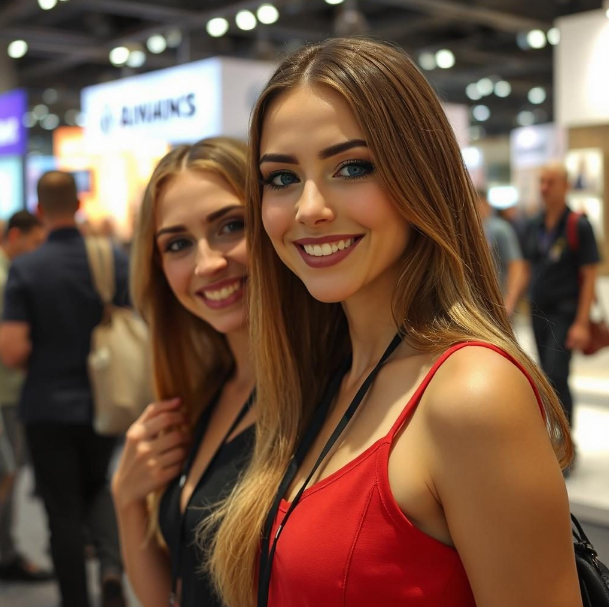
At Crocus Expo, Eastern Europe’s largest exhibition centre, the success of an exhibitor’s participation often hinges not on the stand design or the promotional giveaways, but on the person standing at the front desk. The booth assistant—sometimes still called a hostess, increasingly referred to as a stand host or promotional consultant—has evolved from a decorative presence into the operational core of modern exhibition work.
The role is deceptively demanding. A typical day involves receiving visitors, managing the flow of attendees, preparing and serving refreshments, answering foundational questions about the company and its products, recording contact information, and crucially, distinguishing a curious passerby from a high-value procurement prospect before directing them to the appropriate sales manager. At B2B technical exhibitions, this filtering function is particularly vital: technical staff time is expensive, and a skilled assistant ensures that it is spent only on qualified leads.
Language and Specialisation Command a Premium
Crocus Expo hosts a dense calendar of international trade fairs, from ProdExpo and InterCHARM to Testing&Control and DairyTech. For exhibitors with foreign participation, the booth assistant often serves a dual function, combining reception duties with basic interpretation. Official staffing rates for 2025–2026 reflect this: stand attendants without foreign language skills command approximately 7,000 RUB per day, while those with basic foreign language capability earn around 8,000 RUB.
Beyond language, sector-specific knowledge is increasingly sought after. At food industry events like ProdExpo, assistants working for beverage or dairy brands may need to discuss preservatives, acid content, or pasteurisation methods. Agencies specialising in food exhibition staffing often recruit candidates with backgrounds in food technology or chemistry, enabling them to engage substantively rather than simply deflecting inquiries. At technical exhibitions such as Testing&Control, assistants benefit from familiarity with terminology related to metrology, non-destructive testing, and quality control.
Beyond the Greeting: Models and Helpers
The line between booth assistants and promotional models blurs in practice, but the emphasis differs. Models at Crocus Expo focus on active engagement with the broader exhibition floor: intercepting foot traffic in the aisles, distributing samples, posing for photographs, and drawing visual attention to a brand in the vast pavilions. Casting rates for model work at events like InterCHARM have ranged from 6,000 to 7,000 RUB per day, with some listings including a lunch allowance.
A separate category of support staff—helpers—handles the logistical backbone. At a recent Kastamonu flooring exhibition at Crocus Expo, hostesses and helpers worked in tandem: hostesses created the polished first impression, while helpers provided operational support to keep the stand running at pace throughout the day. Helpers may be tasked with receiving deliveries, moving materials, replenishing supplies, or managing the coffee-break zones that keep visitors lingering.
What Separates a Good Assistant from a Great One
Agency guidance consistently emphasises that the most effective booth assistants understand the boundary of their role. They are not salespeople and should not attempt complex negotiations or discuss contract terms. What they must do is grasp the company’s core offering, recognise the profile of a genuine prospect, and hand that person over smoothly. The best assistants possess an intuitive sense of when to engage and when to step back, allowing conversations to develop organically rather than forcing interaction.
Preparation matters. Before the event, professional staff receive briefings covering the brand, stand layout, activity schedule, communication guidelines, and the contact person for escalation. For multi-day exhibitions, maintaining a consistent team is preferable: assistants grow more confident with the product and more efficient at navigating the venue as the event progresses. On the floor, coordinators or supervisors may manage shifts, breaks, and replacements, ensuring the exhibitor is never left searching for staff or resolving scheduling issues mid-show.
For exhibitors planning their next Crocus Expo engagement, the calculation is straightforward. The booth assistant is the first human contact a visitor has with the brand—the initial filter, the navigator, and often the difference between a lead that converts and one that walks past.