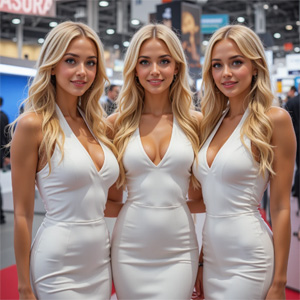
Russia’s shipping industry exhibitions, particularly the renowned NEVA exhibition in St. Petersburg and major logistics events in Moscow, represent some of the most significant maritime gatherings in the world. These events attract over 35,000 participants from Russia and more than 30 countries, spanning over 40,000 square meters of exhibition space. Within this dynamic environment, exhibition hostesses have evolved far beyond their traditional role as greeters. They are now strategic assets—professional ambassadors who navigate complex technical content, bridge cultural and linguistic gaps, and directly contribute to their companies’ return on investment.
The Evolution of a Strategic Role
The modern exhibition hostess at Russian shipping and logistics exhibitions serves as the “first point of contact” for potential clients and partners. The scale of these events demands a sophisticated approach. At Logistika Expo in Moscow, which welcomed over 20,000 professional visitors from 42 countries, the sheer volume of attendees requires effective traffic management and lead qualification.
A hostess’s responsibilities go far beyond a welcoming smile. She acts as:
- A traffic controller and flow manager who directs visitors to the appropriate product managers or technical experts, ensuring smooth and efficient movement through the booth.
- A linguistic and cultural gateway fluent in Russian and English—Russian is essential for building trust with local professionals, while English ensures international delegates from Chinese shipping firms, investors from the Middle East, and port authorities from Northern Europe can all be engaged.
- A brand ambassador whose professional demeanor and appearance embody the company’s identity, whether high-tech and modern or robust and reliable.
- A lead generator trained to qualify visitors with targeted questions, ensuring that highly specialized experts invest their time only in conversations with genuine decision-makers.
Key Skills and Qualifications
The most effective hostesses in the shipping industry possess a combination of skills beyond linguistic ability:
| Skill/Attribute | Why It Matters |
|---|---|
| Fluent Russian & English | Essential for communication; other languages are highly valued. |
| Industry Knowledge | Understanding of shipping terms (FCL, freight forwarding, Incoterms, port operations) is critical for explaining complex services. |
| Sales & Networking Skills | Ability to identify serious buyers and nurture connections. |
| Professional & Approachable | Makes clients comfortable discussing their needs and builds trust. |
Given the technical nature of the industry, hostesses are typically briefed thoroughly before the event on their company’s products, whether it’s a new automated stacking crane, a logistics software platform, or a shipbuilding project. They must understand basic concepts to answer questions and direct visitors appropriately.
The Moscow and St. Petersburg Context
The Moscow Logistics Scene
Moscow’s logistics exhibitions are pivotal events for showcasing ambition in global trade corridors, including the Northern Sea Route. At major events like TransRussia, Logistika Expo, and CeMAT Russia, the environment is a unique blend of industrial might and global networking. Attendees include ministers of transport, port CEOs, international investors, and heads of logistics giants, creating a high-stakes environment that demands professionalism and discretion from hostesses.
NEVA in St. Petersburg
The NEVA exhibition, held biennially in St. Petersburg, is the largest of its kind in Russia and ranks among the top ten maritime industry exhibitions worldwide. The event covers all aspects of the maritime industry—from shipbuilding and shipping to ocean and offshore development. It features a comprehensive business programme including plenary sessions, conferences, and strategic sessions on topics such as the development of the Northern Sea Route, international cooperation with countries like India, and import substitution in shipbuilding.
The high-profile nature of NEVA means that hostesses must be trained in professional protocol and cultural nuance, ensuring all guests, domestic and foreign, are engaged appropriately.
Hiring and Sourcing
Companies seeking to maximize their exhibition presence typically source hostesses through specialized staffing agencies with experience in B2B trade shows. It is advisable to begin the search 2-3 weeks before an event. Rates in Moscow vary depending on experience:
| Experience Level | Hourly Rate, Rubles | Daily Rate (8h), Rubles |
|---|---|---|
| Student/Entry-Level | 1,000–1,500 | 8,000–12,000 |
| Experienced Hostess | 1,500–2,000 | 10,000–12,000 |
| Industry Specialist | 3,000–4,000 | 10,000–15,000 |
For companies investing heavily in booth construction and travel for technical teams, professional hostesses are a vital component of the return on investment. They transform cold sales pitches into professional conversations and ensure that no potential partner or client is lost in the crowd.
In the business of moving the world’s goods, efficiency and clarity are paramount. Exhibition hostesses in Russia’s shipping industry are living embodiments of those principles. They are the human face of complex, multi-million dollar projects and technologies—strategic assets whose skills in communication, lead generation, and cultural mediation make them indispensable for success at major maritime and logistics exhibitions.