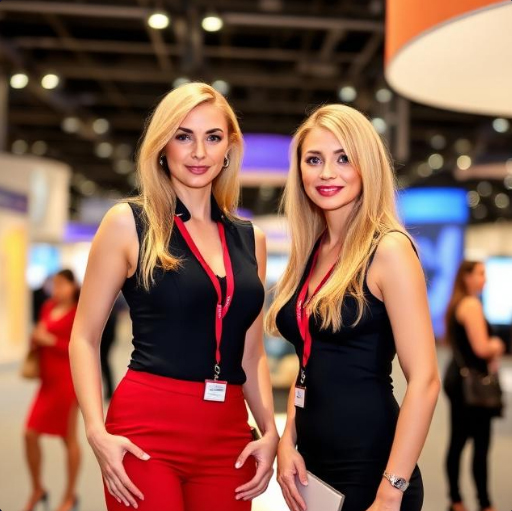
As global sanctions and shifting supply chains reshape Russia’s technology landscape, one group of professionals has emerged as indispensable to international business events: exhibition interpreters. Nowhere is this more evident than at Moscow’s premier communications industry trade fairs, where language experts have become the essential link between Russian buyers and the international vendors seeking access to this vast market.
The Epicenter: Sviaz Moscow Exhibition
Since 1975, the Sviaz exhibition has stood as Russia’s largest telecommunications and information technology event, drawing thousands of industry professionals to Moscow’s Timiryazev Centre each spring. As part of “Russian High Technology Week,” this four-day gathering covers everything from 5G infrastructure and data centers to artificial intelligence and smart city solutions.
For international exhibitors—particularly the growing contingent of Chinese technology firms—navigating this event without professional interpretation support is virtually impossible.
Beyond Basic Translation: A Strategic Role
At a communications industry exhibition, interpreters do far more than convert words from one language to another. According to Moscow-based staffing agencies, the modern exhibition interpreter functions as a business facilitator, cultural bridge, and technical consultant rolled into one.
The distinction between general interpreters and specialized communications industry interpreters is critical. While a hostess or brand ambassador might greet visitors and distribute brochures, a qualified interpreter must handle the complex technical terminology of fiber optics, network infrastructure, and software-defined radio.
The Language of Technology: Mandarin-Chinese Demand
A review of exhibitor lists for Sviaz 2026 reveals a striking trend: Chinese technology companies dominate the international presence. Major Chinese exhibitors include:
- Huawei-affiliated technology firms
- Shenzhen-based telecommunications equipment manufacturers
- Fiber optic cable producers from Jiangsu and Zhejiang provinces
- Network infrastructure solution providers from Chengdu and Nanjing
This concentration of Chinese exhibitors has created intense demand for Chinese-Russian interpretation services. One freelance platform recently listed a project specifically seeking a “Chinese & Russian Exhibition Interpreter” for a Moscow trade show, describing the role as standing with the exhibitor and smoothly rendering conversations between Mandarin and Russian.
What Makes a Communications Industry Interpreter?
The skill set required for this niche is demanding and specific:
Technical Vocabulary Mastery
Interpreters must understand terms like “optical time-domain reflectometer,” “passive optical networks,” and “session initiation protocol” in both working languages. This is not vocabulary acquired through general language study.
Real-Time Processing
Exhibition interpreting is predominantly consecutive interpretation, though some situations require whispered simultaneous interpretation (“chuchotage”) during technical presentations or negotiation sessions.
Cultural Intelligence
Russian business culture values relationship-building, while Chinese negotiations often follow different protocols. A skilled interpreter navigates these differences, sometimes offering subtle guidance to ensure smooth communication.
Discretion and Professionalism
Many booth conversations involve pricing, delivery terms, and proprietary technology specifications. Interpreters must handle this sensitive information with absolute confidentiality.
The Service Ecosystem Supporting Exhibitors
Moscow has developed a robust infrastructure to support international exhibitors. The Language Support Service Center, with over 15 years of experience in the Russian market, offers comprehensive interpretation services including booth staffing, equipment provision, and emergency interpreter deployment.
Similarly, the Business-Bureau of the Association of Interpreters in Ekaterinburg has operated since 1994, maintaining a school for developing what they term “Interpretation special forces”—interpreters prepared for high-stakes business environments.
From B2B Booths to Industry Forums
The interpreter’s role extends beyond the exhibition floor. At industry forums and panel discussions held concurrently with exhibitions like Sviaz and PRO Integration Tech, interpreters facilitate multi-speaker sessions where Russian and international experts analyze technology trends and forecast market developments.
These forums require interpreters capable of handling rapid-fire exchanges, managing speaker transitions, and conveying nuanced technical arguments without losing precision.
A Day in the Life
A typical day for a communications exhibition interpreter in Moscow begins before the doors open. Interpreters review exhibitor product materials, familiarize themselves with new terminology, and coordinate with booth staff on the day’s meeting schedule.
Throughout the day, they rotate between brief product explanations, extended technical discussions, and occasional negotiation sessions. One interpreter described the work as “standing with the exhibitor, listening to each side, and rendering the conversation smoothly in the other language”.
When a Russian engineer asks about signal attenuation specifications for a Chinese fiber optic cable, the interpreter must convey not just the numbers but the context—what the Russian buyer actually needs to know, and what the Chinese manufacturer can genuinely deliver.
The Economic Reality: What Interpreters Earn
For those considering this career path, compensation reflects the specialized skill set required. Freelance platforms show exhibition interpreting projects typically ranging from $100 to $150 USD per day, with rates varying based on language pair, technical complexity, and interpreter experience.
Experienced interpreters with proven track records in telecommunications events command premium rates, particularly for Chinese-Russian or Japanese-Russian language pairs where qualified professionals remain relatively scarce.
The Challenges of the Current Climate
Operating as an exhibition interpreter in Moscow today comes with unique pressures. International payment processing has become complicated. Travel arrangements for foreign exhibitors face additional scrutiny. And the geopolitical climate means that some technical discussions touch on sensitive topics regarding sanctioned technologies.
Yet demand remains strong. Russian companies continue seeking international technology partners, and Chinese manufacturers see the Russian market as strategically vital. The interpreter, neutral and professional, facilitates these connections while navigating a complex political landscape.
Looking Ahead: The Future of the Profession
As Russia accelerates its domestic technology development—with events like Sviaz increasingly highlighting “Russian Software” and import substitution initiatives—the interpreter’s role may evolve. International exhibitors may need interpreters who can help them understand new Russian certification requirements, technical standards, and procurement procedures.
Similarly, as Russian companies seek to export their own communications technologies to Asian markets, interpreters who can work in both directions—Russian to Chinese, Chinese to Russian—will become increasingly valuable.
The communications industry exhibition interpreter in Moscow is far more than a linguistic convenience. In an era of geopolitical complexity and technological transformation, these professionals enable the conversations that shape Russia’s digital future. Whether standing beside a Shenzhen fiber optics manufacturer at the Timiryazev Centre or whispering interpretation during a 5G standards discussion, they bridge not just languages, but markets, technologies, and opportunities.
For international exhibitors serious about succeeding in the Russian market, hiring a qualified interpreter isn’t an expense—it’s an investment in clear communication, professional relationships, and ultimately, business results.