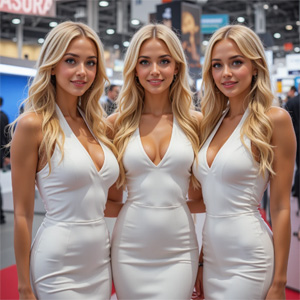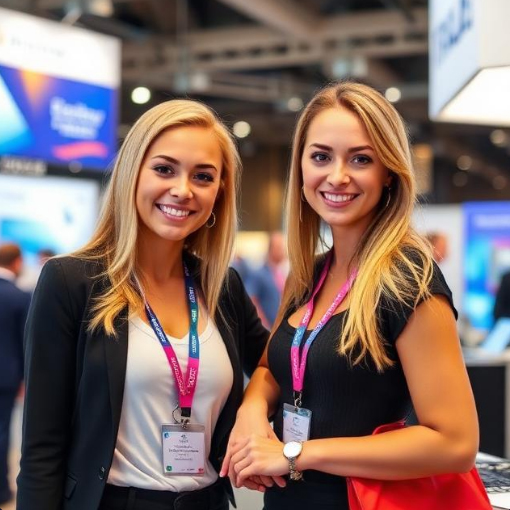
MOSCOW – In Halls 8 and 13 of the Crocus Expo International Exhibition Center, the hum of injection molding machines blends with the rapid-fire exchange of technical specifications. Here, at RUPLASTICA 2026 (January 27-30) and the upcoming Rosplast 2026 (June 16-19), the global plastics industry meets the Russian market. Amidst the extrusion lines and polymer granules, a specific breed of professional is proving to be the difference between a crowded booth and a signed contract: the specialized exhibition booth assistant.
Gone are the days when the primary requirement for a trade show model was a “pretty smile.” In the contemporary Russian industrial landscape—where Western sanctions have accelerated the need for domestic supply chains and Asian partnerships are booming—the booth assistant has transformed into a strategic technical asset.
“The standard ‘booth model’ or a simple greeter is not merely inadequate; it can actively damage a brand’s credibility in this precision-driven sector,” notes a 2026 industry analysis of the composites sector, a logic that applies equally to the plastics industry.
At major polymer events like RUPLASTICA, which spans Pavilions 1 and 2 at Crocus Expo, the stakes are exceptionally high. With over 12,000 professional visitors expected at Rosplast alone—engineers, procurement directors, and raw material specialists—exhibitors are no longer hiring hostesses; they are hiring technical communicators.
The Three Pillars of the Modern Assistant
To function effectively in the Russian capital, a booth professional must master three distinct disciplines:
1. The Technical Filter (Lead Qualification)
In the plastics industry, a visitor looking for “PVC stabilizers” is different from one looking for a “blown film extruder.” A skilled Russian assistant acts as the first line of defense. They are trained to ask qualifying questions immediately: “Do you work with injection molding or extrusion?” or “Are you looking for prime resins or recycled PET?”
According to staffing guides for these events, the assistant must “filter and qualify these visitors rapidly,” ensuring that the senior sales engineers only spend time on prospects with genuine purchasing authority and specific technical needs. At RUPLASTICA 2026, where the Irkutsk Polymer Plant is showcasing its latest production capabilities, booth staff are expected to handle inquiries ranging from logistics to chemical specifications without breaking stride.
2. The Cultural Bridge & Polyglot
Moscow is a crossroads. While Russian is the language of the transaction, English is the language of global engineering, and Chinese is increasingly the language of supply. Agencies servicing events like Rosplast report that trilingualism (Russian, English, and Mandarin/German) is now a standard requirement, with interpreters commanding daily rates of 10,000 to 15,000 Rubles.
“Russian business culture places a high premium on face-to-face interaction, hospitality, and demonstrated reliability,” explains a local staffing guide. A professional assistant knows that offering tea or a snack is not just polite—it is culturally expected and facilitates commercial trust.
3. The “Moscow Factor” Logistics
Crocus Expo is vast, and Moscow traffic is unforgiving. Professional staff in 2026 are valued for their logistical reliability—arriving early, managing the digital registration systems, and ensuring that material samples are restocked. As noted in the AGRAVIA 2026 case study, professional Russian stand staff are often university students or graduates characterized by “reliability, punctuality, and commitment,” hired not just for their appearance but for their work ethic.
Rate Card: What Does a Pro Cost in 2026?
The compensation for trade show staff in Moscow reflects the specialized nature of the work and the current economic climate (average monthly salary in Moscow is ~100,000 Rubles for full-time office workers).
According to current market rates for temporary event staff, the following daily rates apply:
- Standard Promo Staff (Hostess): 8,000 – 10,000 Rubles. Responsible for greeting and crowd management.
- Bilingual Technical Interpreter (Plastics focus): 10,000 – 15,000 Rubles. Required for booths with complex machinery.
- Sales & Product Demonstrator: 20,000+ Rubles. Often hired for luxury finishes or high-end automotive plastics.
The Verdict
As Russia’s plastics industry pivots toward import substitution and technological self-sufficiency, exhibitions like RUPLASTICA and Rosplast have become critical battlegrounds for market share. For international exhibitors—whether from China, Turkey, or Iran—the booth assistant is no longer an accessory, but a translator of technology and a guardian of ROI.
In the halls of Crocus Expo, the future of polymers is being negotiated. The assistant handing you a badge or pouring a coffee is likely the first filter in a million-dollar deal.