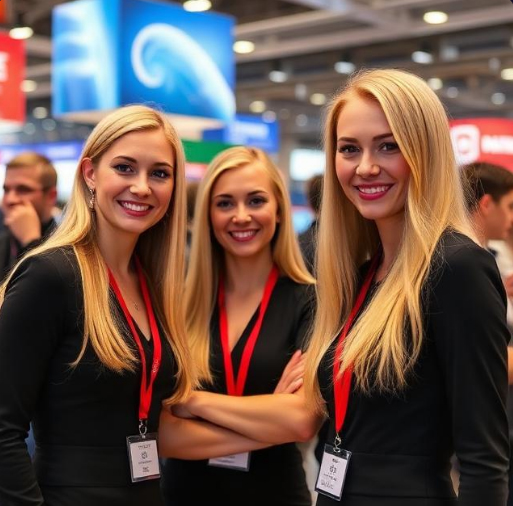
Participating in an exhibition at Crocus Expo, Russia’s largest and most prestigious exhibition complex, is a strategic move for any company looking to break into the Eastern European or CIS markets. However, the physical booth is only half the battle. The true determinant of success often comes down to the quality and professionalism of your Russian booth personnel.
Whether you are exhibiting at Prodexpo, WorldFood Moscow, or Comtrans, understanding the local staffing landscape—from official venue regulations to cultural expectations—is critical for maximizing your Return on Investment (ROI).
The Official Hiring Process
Crocus Expo operates under a strict set of regulations to ensure quality control across its vast halls (Pavilions 1, 2, and 3). Unlike in some Western venues where you can bring anyone with a badge, Crocus Expo mandates specific rules regarding who can work on the floor and what tasks they can perform.
1. General Staff vs. Third-Party Contractors
Exhibitors have two primary options for staffing: hiring directly via the venue’s official Temporary Personnel services, or contracting with an accredited external agency like MoscowHostess.ru.
The official services provided by Crocus Expo (as per their Exhibitor Manual) offer a regulated safety net. Prices are standardized and published annually. For example, in 2025-2026, the rates for official staff include:
- Stand Attendant (no foreign languages): Approximately 7,308 RUB per day.
- Stand Attendant (basic foreign language): Approximately 9,576 RUB per day.
- Interpreter (Major European languages): Approximately 11,520 RUB per hour.
2. The Role of the “Assistant” vs. “Promoter”
It is important to distinguish between job titles. According to the official service guide:
- Stand Attendants focus on hospitality: keeping the stand clean, taking out rubbish, preparing drinks, and washing dishes. They are the hosts of the booth.
- Promoters focus on engagement: distributing flyers and attracting foot traffic. However, they require an official “pass for the distributor of information,” and specific rules apply (such as a ban on using life-size cut-outs without permission).
Why Hire Russian Nationals?
For international exhibitors, flying in your domestic team might seem logical, but local expertise is irreplaceable. Russian business culture has nuances that local staff navigate instinctively.
Bridging the Language Gap
While many Russian buyers in Moscow speak English, they conduct business in Russian. A local booth assistant ensures seamless communication. They de-escalate misunderstandings that machine translation might miss and build the “trust” necessary for B2B deals in the Russian market.
Navigating Bureaucracy and Logistics
Exhibiting in Russia involves layers of logistics, from cargo delivery to customs.
Local staff are crucial for:
- Receiving Deliveries: Coordinating with forwarders like DMW EXPO or HMS EXPO LLC.
- Security Coordination: While Crocus offers official security guards (up to 21,600 RUB/day), your local manager knows when you actually need one versus when you need a simple logistics coordinator.
- Vendor Management: Interacting with electricians and plumbers provided by the center, who are required to handle any technical work on the stand.
The “Hands-On” Reality: A Case Study in Russian Exhibitions
A review of job postings for exhibitions at Crocus Expo reveals the specific, gritty reality of the role. A typical job listing for an exhibition assistant (circa August 2025) outlines duties that go beyond just smiling at visitors.
Real-world responsibilities include:
- Setup & Teardown: Meeting contractors, accepting deliveries, distributing heavy product samples to stands, and collecting empty containers.
- Hospitality Operations: Managing “Coffee-Break” zones—refilling automatic coffee machines, monitoring food supplies, and restocking consumables during the event.
- Security & Compliance: Policing the zone for “strange people” or unauthorized distributors (competitors handing out flyers) and maintaining general order in the hall.
This “all-in-one” nature of the Russian booth assistant means they often act as security, cleaner, hostess, and logistics manager simultaneously.
Professionalism and Presentation
Russian exhibition culture places a high value on presentation. However, the standard is functional elegance.
- Dress Code: While business attire is expected, practicality is valued. For booth staff setting up stands, comfortable shoes and branded polo shirts are standard. Hostesses typically represent the brand in custom corporate wear, but heavy evening gowns (common in some Asian expos) are rare unless specifically requested for luxury brands.
- Work Ethic: The Russian approach to work is direct. Staff are generally punctual, efficient, and solution-oriented. They are trained to handle the high pressure of major trade fairs where thousands of visitors pass through daily.
Strategic Recommendations
To get the most out of your Crocus Expo experience, consider the following staffing strategy:
1. The Bilingual Captain
Hire a team leader who is fluent in Russian and your native language (English, Chinese, German). This person handles contract negotiations and high-level visitors.
2. The Logistics Specialist
Recruit local staff specifically for the build-up (2 days before the show) and dismantling (1 day after). They ensure your products arrive on the stand and your booth doesn’t incur storage fines for leftover crates.
3. The Hospitality Team
Hire official stand attendants or promoters for the “live” days of the exhibition. Ensure they understand your KPIs—whether it is collecting 100 leads or simply demonstrating a specific technical product.
Final Checklist Before You Hire:
- Budget for the full day: Most shifts are 10–12 hours (e.g., 8:00 to 20:00).
- Order through official channels: If you use third-party cleaners or security, you risk fines. Crocus Expo requires that any specialized cleaning or technical work be done by their staff or approved contractors.
- Provide a brief: Russian staff are highly capable, but they need clear instructions regarding your product’s unique selling points.
In conclusion, the booth personnel at Crocus Expo are far more than “hostesses.” They are logistical coordinators, cultural interpreters, and operational managers rolled into one. Investing in professional, local talent is not an expense—it is the key that unlocks the Russian market.