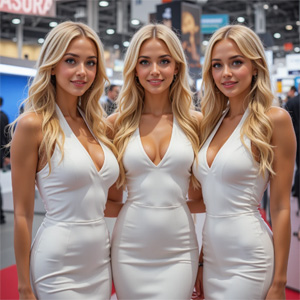
In the world of high-end event management, first impressions are everything. Whether it is an international business forum in Moscow, a luxury product launch in St. Petersburg, or a private gala dinner in Sochi, the success of an event often hinges on the invisible infrastructure of hospitality. And at the heart of that infrastructure, across Russia and increasingly at major international venues worldwide, is a distinctive professional: the Russian event hostess.
The term “Russian hostess” carries specific connotations in the global events industry. It evokes an image of tall, immaculately dressed young women with perfect posture, flawless makeup, and an air of calm, understated efficiency. But beyond the aesthetic, these professionals are highly trained operational assets. They are the grease that keeps the wheels of an event turning smoothly, allowing organizers, sponsors, and guests to focus on the main attraction.
Defining the Role: More Than a Pretty Face
It is important to distinguish between different types of event hostesses, as the term is often misunderstood. In the Russian events industry, hostesses generally fall into several categories:
- Welcome & Registration Hostesses: The first point of contact. They greet guests, check names against guest lists, distribute badges and programs, and answer basic logistical questions.
- VIP & Guest Relations Hostesses: Assigned specifically to high-profile attendees (CEOs, government officials, celebrities). They provide personalized attention, escort VIPs to private areas, and handle special requests with discretion.
- Booth & Exhibition Hostesses: As discussed in the context of Crocus Expo, these hostesses work at corporate stands, engaging visitors, qualifying leads, and representing brands.
- Aisle & Directional Hostesses: Stationed at key points throughout a venue, they guide foot traffic, answer directional questions, and ensure that guests find seminar rooms, restrooms, and catering areas without frustration.
- Coat Check & Hospitality Suite Hostesses: Often overlooked, these roles require speed, memory, and organizational skill, especially during large winter events where thousands of coats must be retrieved accurately within minutes.
The Russian Difference: What Sets Them Apart
Why do international event organizers specifically request Russian hostesses? The answer lies in a unique combination of cultural factors and professional training.
1. A Culture of Formality and Protocol
Russian society places a high premium on formal etiquette. From holding doors to addressing guests by their proper titles, Russian hostesses are raised with an intuitive understanding of hierarchy and decorum. This translates into a professional demeanor that is respectful without being subservient, attentive without being intrusive.
2. Impeccable Presentation
Russian event agencies are famously demanding when it comes to appearance. Height, posture, grooming, and even nail polish color are specified in contracts. Uniforms are tailored, not off-the-rack. Hair is styled, not simply brushed. This attention to detail sends a powerful message to event guests: if the hostesses look this polished, the event itself must be world-class.
3. Multilingual Capabilities
Many Russian hostesses speak fluent English, and a significant number speak a third language (German, French, Chinese, or Arabic are common). This is not accidental. Russia’s top event staffing agencies recruit heavily from university programs in linguistics, international relations, and tourism. For international conferences and diplomatic events, language skills are non-negotiable.
4. Composure Under Pressure
Perhaps the most valuable trait of a Russian hostess is her ability to remain calm in chaos. Event days are unpredictable: VIPs arrive early, speakers go missing, technology fails. A Russian hostess does not panic. She does not complain. She solves the problem quietly or finds someone who can, all while maintaining a serene expression. This emotional resilience is deeply cultural and exceptionally rare in many other hospitality markets.
Where Russian Hostesses Shine: Key Event Types
While Russian hostesses work across all event categories, they are particularly sought after for certain high-stakes occasions:
| Event Type | Role of Hostess | Critical Skills Required |
|---|---|---|
| International Business Forums (e.g., SPIEF, EEF) | VIP escorting, accreditation control, simultaneous session management | Discretion, protocol knowledge, advanced English, crisis management |
| Luxury Brand Launches (automotive, fashion, watches) | Guest greeting, product presentation assistance, champagne service | Aesthetic sensitivity, grace under flash photography, product knowledge |
| Private Galas & Weddings (high-net-worth clients) | Guest check-in, cloakroom management, directional guidance, personal assistant to the host family | Absolute discretion, memory for faces, ability to work 12+ hour days |
| Corporate Conferences & Award Ceremonies | Stage assistance (handing microphones, guiding awardees), speaker management, backstage flow control | Precision timing, ability to follow strict scripts, calm under stage lights |
| Film Festivals & Cultural Events | Red carpet management, press area coordination, talent escorting | Poise in front of cameras, crowd control, handling of over-eager fans or journalists |
The Hiring Process: How Agencies Select the Best
Reputable Russian event staffing agencies (such as Crocus Expo’s internal service, Eventum Premium, Staff Service, or independent boutique agencies) maintain rigorous selection criteria. To be hired as a hostess for a top-tier event, a candidate typically must:
- Meet physical requirements: Height is often specified (usually 168 cm / 5’6″ or taller). Age range is typically 18 to 30, though more senior “hostess-managers” may be older.
- Possess a relevant educational background: Current enrollment in or graduation from a university program (linguistics, PR, hospitality, international business) is preferred.
- Demonstrate language proficiency: English is tested via interview. Additional languages are considered strong assets.
- Pass a personal interview: Agencies assess grooming, posture, voice tone, and ability to answer unexpected questions under pressure.
- Provide a professional portfolio: High-quality photographs showing full-body, headshot, and previous event experience are standard.
- Complete event-specific training: Before each major event, hostesses undergo briefing on the venue layout, guest list (including VIP photos to memorize), dress code, and emergency procedures.
The Economics: What Do Hostesses Earn?
Rates for Russian event hostesses vary widely based on the event’s prestige, the hostess’s experience and language skills, and the duration of the assignment.
- Standard hostess (registration, directional): 150–300 per day
- VIP hostess (fluent English, experienced): 300–600 per day
- Bilingual hostess with specialized knowledge (e.g., medical or legal terminology): 500–1,000+ per day
- Hostess-manager (supervising a team of 10+ hostesses): 600–1,200 per day
It is important to note that agencies typically take a significant commission (30-50%), and hostesses are often paid as independent contractors, meaning they are responsible for their own taxes, transportation to the venue, and sometimes even their own meals during shifts lasting 10-12 hours.
Challenges and Criticisms
The industry is not without its darker aspects. Despite increasing professionalism, several persistent problems remain:
- Objectification: Some clients explicitly request hostesses based on physical measurements rather than professional skills. Reputable agencies refuse such requests, but less scrupulous ones do not.
- Exploitation: Unpaid overtime, last-minute cancellations without compensation, and pressure to work in unsafe conditions (e.g., extreme weather in inappropriate uniforms) are real issues. Social media and review platforms have empowered hostesses to publicly name problematic agencies, but exploitation still occurs.
- Lack of career progression: Most hostess work is project-based freelance. There is no clear path to full-time employment, benefits, or pension contributions. The work is physically demanding, and most hostesses cannot continue past their early 30s.
- Legal ambiguity: Many hostesses work without formal contracts, leaving them vulnerable to non-payment or sudden changes in scope.
The Evolution: Technology and Professionalization
The Russian event hostess industry is slowly changing for the better. Key trends include:
- Digital platforms: Apps and Telegram bots now allow hostesses to sign up for shifts, track payments, and leave anonymous reviews of clients and agencies.
- Training certification: Some agencies now offer formal certification programs in event protocol, first aid, and conflict resolution, creating a more skilled and respected workforce.
- Diversification of roles: As simple tasks (badge printing, coat retrieval) are automated, hostesses are being trained in higher-value activities like CRM data entry, social media content creation, and even basic technical troubleshooting.
- Inclusivity push: While still limited, some agencies are beginning to hire male hostesses (often called “event assistants”), older professionals for senior roles, and individuals with diverse body types, recognizing that competence matters more than measurements.
How to Hire Russian Hostesses for Your Event (A Practical Guide)
If you are planning an event in Russia or an international event where you wish to employ Russian hostesses, follow these steps:
- Use a reputable agency: Do not attempt to hire directly via social media without vetting. Major agencies include Eventum Premium, Crocus Expo Official Staff Service, and Russian Event Staff. Check reviews on professional forums like Eventista or Professional Hostess Russia (Telegram).
- Define clear requirements in writing: Specify:
- Number of hostesses needed
- Dates and hours (including setup and breakdown days)
- Dress code (color, style, uniform provided by whom)
- Language requirements (English only? Additional languages?)
- Specific duties (registration only? VIP escorting? Stage assistance?)
- Request a briefing session: Before the event, require the agency to provide a briefing where hostesses learn the floor plan, guest list, schedule, and emergency procedures. Do not skip this step.
- Treat hostesses with respect: Provide a proper break area, access to water and snacks, and clear instructions. Hostesses who feel valued perform better and stay longer. The most successful events have hostesses who return year after year because they are treated as professionals, not props.
- Pay promptly: Standard industry practice is payment within 14-30 days after the event. Late payments quickly damage an organizer’s reputation and make it harder to book quality staff for future events.
Conclusion: The Gold Standard of Event Hospitality
Russian hostesses have earned their international reputation not through luck or stereotype, but through consistent excellence. They arrive early. They stay late. They memorize the floor plan. They learn the VIP faces. They smile through exhaustion. They solve problems without being asked.
In a global events industry increasingly dominated by automation and impersonality, the Russian hostess remains a proudly human touchpoint. She is the calm voice that welcomes a nervous first-time attendee. She is the discreet presence that ensures a CEO’s private meeting remains uninterrupted. She is the professional who, when something goes wrong, fixes it before anyone even notices it was broken.
To hire a Russian hostess is to invest in the invisible architecture of a flawless event. And for those who understand the art of hospitality, there is simply no substitute.
To every Russian event hostess who has ever stood gracefully under pressure, solved an impossible problem with a smile, and made a guest feel truly welcome: ваша работа бесценна. (Your work is priceless.)