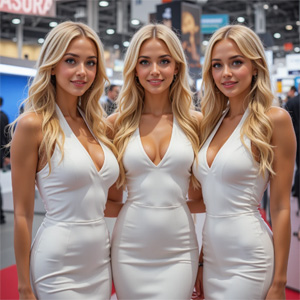
Russia’s entertainment landscape is a vast and vibrant ecosystem, stretching from the historic stages of Moscow and St. Petersburg to the modern digital production hubs of Kazan and Yekaterinburg. Despite global market shifts, the country’s $6+ billion media and entertainment market remains active, driven by a strong demand for local content, cutting-edge technology, and live experiences. For industry professionals, navigating this market means understanding its key events—gatherings that serve as launchpads for new projects, networking hubs, and windows into the future of Russian entertainment.
Here’s a look at the most prominent entertainment industry trade shows and events in Russia.
1. CSTB (Convergence, Service, Technologies in Broadcasting): The Media & Telco Powerhouse

Often called the “Russian CES” for broadcasting and telecom, CSTB is the country’s largest and most influential media technology event. With a history spanning over two decades, this expo is the definitive meeting point for broadcasters, content creators, streaming platforms, and technology providers.
- Focus: Broadcast and pay-TV technologies, OTT/streaming platforms, IPTV, content delivery networks (CDN), 5G media applications, and cloud production.
- Why Attend: CSTB is where major deals for content rights and distribution are made. In recent years, the event has heavily focused on import substitution, showcasing Russian-made broadcast servers, studio equipment, and software designed to replace Western solutions. It’s a critical event for understanding the technical and regulatory direction of Russian media.
- Typical Timing: Late January / Early February.
- Location: Moscow (usually Crocus Expo or Expocentre).
2. Kinobusiness (Key Buyers Event & Content Market): The Deal-Maker’s Hub
For those in film and television production and distribution, Kinobusiness is the central marketplace in Russia. This is not just a traditional expo; it’s a structured, invitation-only event primarily focused on pre-scheduled B2B meetings.
- Focus: Buying and selling film, TV series, animation, and format rights. Major Russian broadcasters (Channel One, Russia-1, NTV, CTC Media), streaming giants (Kinopoisk, Ivi, Okko, Start), and independent studios attend to pitch and acquire content.
- Why Attend: This is where the economics of Russian content come to life. It’s the primary venue for international distributors looking to sell into Russia (for theatrical, TV, or digital) and for Russian producers seeking co-production partners or pre-sales. The shift towards domestic and “friendly” country content (from China, India, Turkey, and Latin America) has made this event even more relevant.
- Typical Timing: Late October / Early November.
- Location: Moscow (often in major hotels like the Ritz-Carlton or Hyatt).
3. MITT (International Travel & Hospitality Show): The Live Entertainment & Tourism Connector

While MITT is officially a travel and hospitality exhibition, it has become a major stage for destination entertainment, cultural events, and live show promotion. For event organizers, theme park operators, and concert promoters, MITT offers a unique platform.
- Focus: Entertainment tourism, destination branding, major concert and festival logistics, theme park equipment, and cultural event planning.
- Why Attend: Regional governments and private operators use MITT to launch cultural festivals and entertainment projects designed to attract tourists. It’s a key venue for sourcing suppliers for sound, lighting, pyrotechnics, and staging for large-scale live events across Russia’s diverse regions.
- Typical Timing: March.
- Location: Moscow (Crocus Expo).
4. IBC CIS (International Broadcasting Convention – CIS Edition): The Technical Deep Dive
A spin-off of the renowned IBC show in Amsterdam, IBC CIS is a smaller but highly technical conference and exhibition focused on the professional broadcast and production community. It’s less about deal-making and more about engineering, post-production, and new workflows.
- Focus: Advanced cinematography, post-production software (editing, VFX, color grading), virtual production studios, LED volumes, audio engineering, and outside broadcasting vehicles.
- Why Attend: As Western brands like Sony, Canon, and Blackmagic Design adjust their Russian operations, IBC CIS has become a crucial forum for understanding alternative supply chains and the rise of local equipment manufacturers and system integrators.
- Typical Timing: May / June.
- Location: Varies (often St. Petersburg or Moscow).
5. Comic Con Russia (IgroMir & Comic Con Russia): The Fan & Consumer Powerhouse

While technically a fan convention, Comic Con Russia (co-located with IgroMir – the largest gaming expo in Eastern Europe) is a massive entertainment industry event in its own right. It draws over 200,000 visitors, making it a critical barometer for consumer engagement.
- Focus: Merchandising, licensing, collectibles, video games, tabletop games, cosplay, movie premieres, and anime.
- Why Attend: For licensing agents, toy manufacturers, and gaming studios, this event provides direct access to the Russian fan base. Major film studios (now mainly local and Chinese) use the event to generate hype for new releases. It’s a goldmine for understanding what Russian pop culture consumers want.
- Typical Timing: Late September / Early October.
- Location: Moscow (Crocus Expo).
| Event Name | Primary Focus | Key Attendees | Timing |
|---|---|---|---|
| CSTB | Media Tech, Broadcasting, OTT | Broadcasters, ISPs, tech vendors | Jan/Feb |
| Kinobusiness | Content Rights, Distribution | Studios, streamers, distributors | Oct/Nov |
| MITT | Entertainment Tourism, Live Events | Promoters, theme parks, regional govt | March |
| IBC CIS | Production, Post-Production, VFX | Engineers, DPs, post houses | May/June |
| Comic Con Russia | Licensing, Merchandise, Gaming | License holders, retailers, fans | Sept/Oct |
Navigating the New Reality
The Russian entertainment industry has pivoted significantly since 2022. Western major studios and tech giants have largely exited, creating a vacuum filled by Russian, Chinese, Indian, Turkish, and Korean companies. Here is how this affects the trade show landscape:
- Import Substitution is King: All events now feature dedicated pavilions for Russian-made equipment—from broadcast cameras to audio interfaces and LED displays.
- New International Partners: Expect to see a strong presence from Chinese brands (e.g., Hikvision, Dahua in broadcast tech) and Indian/Turkish content studios looking to fill primetime slots.
- Digital & Local Content Boom: Streaming services are investing heavily in original Russian content. Events like Kinobusiness are buzzing with demand for high-quality series and animation, while CSTB focuses on the tech needed to deliver it.
- Practicalities for Attendees: Most major events are still held at Crocus Expo or Expocentre in Moscow. While visa processes remain straightforward for most “friendly” nations, travel and payment logistics (due to sanctions) require careful planning. Using Russian-based logistics partners and having a local interpreter/guide is highly recommended.
Russia’s entertainment industry trade shows are not what they were a decade ago—they have become more localized, pragmatic, and focused on self-sufficiency. For professionals from Turkey, China, the Middle East, India, and the CIS countries, these events represent a unique opportunity to enter a market that is actively seeking new technologies, content, and partnerships. Whether you are selling a drama series, a 4K broadcast camera, or a theme park ride, the stages in Moscow are where the Russian entertainment business gets done.