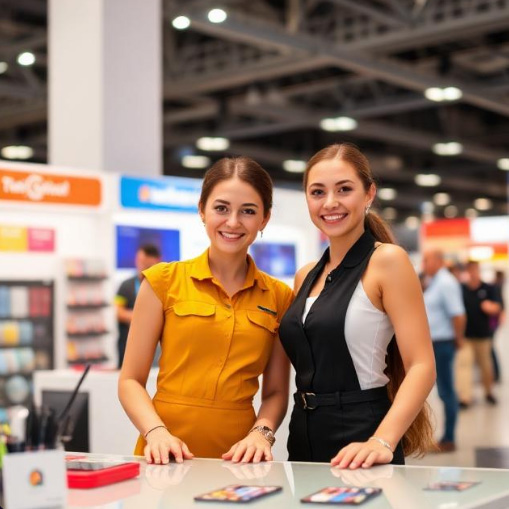
In the vibrant, bustling halls of Moscow’s Crocus Expo International Exhibition Center and Timiryazev Centre, the air carries the unmistakable energy of commerce. It is the rustle of product catalogs, the clink of glassware samples, the scent of new textiles, and the focused hum of B2B negotiation. This is the world of Russia’s premier consumer goods events—a vast, competitive, and opportunity-rich marketplace spanning everything from home décor and kitchenware to electronics, gifts, and pet supplies.
At the center of this landscape is MosHome, the International Exhibition for Home & Garden, DIY, and Consumer Goods, which serves as the sister event to the giant MosBuild. Launched in 2023 by the ITE Group, MosHome has quickly become a strategic gateway to the Russian market, attracting over 16,000 professional visitors from Russia, Belarus, Kazakhstan, and beyond . Meanwhile, WorldFood Moscow draws 1,100+ exhibitors from 81 countries and over 26,000 visitors , while RosUpack spans six exhibition halls with 1,037 exhibitors from 16 countries . The Mir Detstva exhibition for toys and baby products has run for over 30 years, bringing together 400 exhibitors and 10,000+ buyers .
Amidst the product testing, sample distribution, and fast-paced wholesale negotiations, one professional ensures that every visitor interaction converts into a tangible business opportunity: the Russian consumer goods exhibition assistant. In a sector where the difference between a distribution deal and a missed connection often comes down to first impressions and effective communication, these specialized staff members have become the indispensable frontline of international brand presence in Russia.
The “Retail-Ready” Professional: More Than a Sample-Giver
Unlike industrial or technical trade fairs, consumer goods exhibitions operate on the front lines of retail psychology, volume negotiation, and brand storytelling. The standard “booth model” or a passive brochure-greeter is insufficient in this environment. According to Moscow-based staffing specialists, the modern consumer goods assistant functions as a hybrid professional: part sales promoter, part brand storyteller, and part retail buyer concierge .
The visitor profile at MosHome and WorldFood Moscow demonstrates why this expertise is essential. Attendees include:
| Visitor Category | Examples |
|---|---|
| Retail Buyers | Category managers from federal chains (X5 Group, Lenta, Auchan, Magnit) |
| E-commerce Platforms | Representatives from Ozon, Wildberries, Yandex Market seeking sellers |
| Wholesalers & Distributors | Importers serving 60+ Russian regions |
| HoReCa Buyers | Hotel, restaurant, and café procurement specialists |
| Private Label Directors | Managers seeking contract manufacturing partners |
These are not casual shoppers browsing for personal use—they are professional buyers evaluating products for inventory, assessing packaging quality, comparing pricing, and making decisions that affect thousands of stores across Russia’s 11 time zones.
The Consumer Goods Lexicon: From SKUs to Shelf Placement
To succeed at Moscow’s consumer goods exhibitions, a professional assistant must master a specific vocabulary that bridges the gap between product features and retail requirements. The range at MosHome alone is enormous, covering ten core categories :
| Category | Products | Key Buyer Concerns |
|---|---|---|
| Home Décor | Storage, small furniture, lighting, textiles | Design trends, color matching, visual appeal |
| Household & Kitchenware | Glassware, ceramics, cleaning products, plastics | Durability, dishwasher/microwave safe, unit pricing |
| Home Textiles | Bedding, towels, curtains, carpets | Material quality, shrinkage, color fastness, packaging |
| Gifts & Holiday | Seasonal decorations, gift wrap, party supplies | Timing for seasonal orders, MOQs for custom designs |
| Consumer Electronics | Smart home devices, mobile accessories, wearables | Certifications, warranty, after-sales support |
| Sports & Outdoors | Fitness equipment, camping gear, garden tools | Durability for Russian climate, storage requirements |
| Pet Supplies | Food, toys, accessories, grooming products | Russian certification, palatability, packaging |
| Baby & Kids | Toys, strollers, furniture, apparel | Safety certifications (EAC), age ratings, chemical testing |
A skilled assistant at RosUpack, focusing on packaging and labeling, also needs to understand shelf-ready packaging (SRP) , materials sustainability, and labeling compliance with Russian language requirements .
At WorldFood Moscow, the stakes are even higher, with tasting sessions, culinary demonstrations, and retail academy conferences where buyers evaluate taste, shelf life, and ingredient compliance .
The Three Pillars of the Consumer Goods Booth Assistant
Based on the commercial density and retail focus of events like MosHome, Mir Detstva, and WorldFood Moscow, the role of the consumer goods assistant rests on three critical pillars.
The Retail Buyer Concierge & Lead Qualifier
At MosHome, the show features a dedicated Retail Connect program, where buyers and sellers have pre-arranged face-to-face meetings . The assistant acts as the first point of contact, ensuring that walk-up traffic is qualified before engaging senior sales staff.
A skilled assistant engages visitors with targeted questions:
- “Which retail chain or marketplace do you represent?”
- “Are you looking for stock products or private label manufacturing?”
- “What is your target MOQ (minimum order quantity) and unit price range?”
- “Do you have specific packaging requirements (shelf-ready, Russian labeling)?”
- “What is your delivery timeline for the next season?”
This qualification process is essential at Mir Detstva, where 10,000+ professional buyers from 30 countries attend . The assistant ensures that the 400 exhibitors connect with the right buyers—not wasting time with students or non-professionals.
The Product Storyteller & Sample Manager
Consumer goods are often sold based on experience, demonstration, and sensory appeal. The assistant serves as the hands-on storyteller who brings products to life.
For a home textiles exhibitor, the assistant might:
- Invite visitors to touch fabric samples, explaining thread count and material benefits
- Display color variations under different lighting conditions
- Explain care instructions and shrinkage expectations in simple Russian terms
For a housewares supplier at MosHome, the assistant might:
- Demonstrate the durability of non-stick coatings
- Showcase stackable storage solutions for space efficiency
- Provide pricing breakdowns for different packaging options (bulk vs. retail-ready)
For a food exhibitor at WorldFood Moscow, the assistant is critical during tasting sessions in the Culinary Marathon Zone, where chefs prepare dishes with exhibitor products . The assistant must explain ingredients, shelf life, and certification while managing high volumes of sampling.
The E-commerce and Omnichannel Bridge
A distinctive feature of MosHome and other major consumer goods exhibitions is the presence of Russia’s top e-commerce platforms: Ozon, Wildberries, and Yandex Market . These platforms actively attend to recruit new sellers and products for their marketplaces .
A professional assistant understands the unique requirements of e-commerce buyers:
- Photography-ready packaging: Products must look good in online listings
- GTIN/EAN barcodes: Required for marketplace listing
- Logistics compatibility: Can the product be shipped efficiently through fulfillment centers?
- Competitive pricing: How does the product compare to existing online offerings?
The assistant can bridge the conversation between a manufacturer and an Ozon category manager, translating the technical requirements for marketplace success.
The Cultural and Linguistic Bridge: The “Secret Weapon”
The most successful international exhibitors at MosHome and similar events invest in Russian assistants because they provide something that no brochure or display can: cultural fluency.
According to industry experts, a professional Russian assistant in the consumer goods sector:
- Navigates Russian Business Etiquette: They use formal address (patronymics), exchange business cards respectfully, and understand the importance of hospitality (offering tea/coffee during negotiations) .
- Understands Local Preferences: They know that Russian buyers value competitive pricing, long shelf life (for food), durable materials (for home goods), and bright, stylish packaging that appeals to Russian aesthetics .
- Bridges Compliance Concerns: They can reassure buyers about EAC certification, sanitary norms (for food and baby products), and labeling requirements for the Russian market .
- Manages the “Moscow Factor”: They know the traffic patterns to Crocus Expo, the location of the Myakinino metro station, and the logistics of loading docks, ensuring they arrive early and stay late.
The Venue Factor: Conquering Crocus Expo and Timiryazev Centre
Moscow’s consumer goods exhibitions are hosted at two primary venues, each presenting distinct operational demands.
Crocus Expo International Exhibition Center (home of MosHome, Mir Detstva, and RosUpack) is a sprawling complex located approximately 20 kilometers from central Moscow at the 65-66 km mark of the MKAD ring road . Traffic is notoriously unpredictable, particularly during morning rush hour. Professional assistants know to arrive early—often before the 9:00 AM opening—to ensure that product samples are displayed, tasting stations are set up, and the booth is pristine before the first buyer walks in .
The Myakinino metro station provides direct access to Crocus Expo, and many professional assistants use public transport to avoid traffic delays. For RosUpack in June 2026, assistants must be prepared for the summer season and the venue’s 18 thematic sections spread across multiple pavilions .
Expocentre (on Krasnopresnenskaya Naberezhnaya) hosts WorldFood Moscow and other consumer goods events . Located near the Moscow City business district, this venue is more central but has its own logistical challenges, including multi-building layouts and high foot traffic during peak hours.
The Hierarchy of Consumer Goods Booth Assistants
Given the diverse product range and varying needs of exhibitors, Moscow agencies typically offer a tiered staffing model for consumer goods events :
| Role | Primary Function | Required Knowledge | Best For |
|---|---|---|---|
| Bilingual Hostess | Welcoming visitors, badge scanning, brochure distribution, crowd management | Professional appearance; basic Russian/English fluency; friendly demeanor | Brands needing general visitor management and brand presence |
| Product Demonstrator | Product presentations, sample distribution, basic Q&A, lead qualification | Consumer goods terminology; understanding of product features (materials, sizes, colors); sales awareness | Mid-sized exhibitors with physical products requiring demonstration |
| Retail Negotiator | VIP buyer engagement (retail chain representatives), private label discussions, complex negotiation support | Deep understanding of retail metrics (MOQ, pricing, lead times); knowledge of EAC certification; multilingual skills | Large exhibitors targeting federal retail chains or e-commerce marketplaces |
Daily rates for consumer goods assistants typically range from ₽15,000 to ₽30,000, with retail specialists and rare language combinations (Mandarin/Russian, Turkish/Russian) commanding premium rates .
Training: Preparing the Perfect Ambassador
A professional consumer goods booth assistant is not simply hired—they are meticulously prepared. According to Moscow staffing agencies, the most successful assistants undergo intensive training prior to the exhibition :
- Product Immersion: Deep-dive sessions into the brand’s product line, features, pricing, and unique selling points
- Category Training: Understanding the specific retail category (e.g., housewares vs. textiles vs. electronics)
- Objection Handling: Role-playing scenarios for common buyer questions (price negotiation, MOQ discussions, certification inquiries)
- Sample Management: Protocols for food tasting (hygiene, portion control) or product demonstration (safety, handling)
- Lead Capture Training: Using tablets or forms to collect buyer contact information and specific requirements
This preparation ensures that the assistant can answer questions with confidence, building immediate trust with visiting retail buyers.
The Growing Importance of the Russian Consumer Goods Market
Several factors make the Russian consumer goods market particularly dynamic—and particularly demanding for exhibition staff.
The 1.46 Billion Consumer Market
Russia’s population of 146 million consumers, combined with the wider Eurasian market of 380 million people across 11 countries, represents a massive opportunity for international brands . The internet penetration rate of 85% (over 120 million users) has fueled explosive e-commerce growth, with platforms like Ozon, Wildberries, and Yandex Market actively recruiting new sellers .
The “Import Substitution” Opportunity
Following geopolitical shifts, Russia’s federal retail chains are aggressively replacing departed Western brands with new suppliers from China, Turkey, India, and other friendly nations . MosHome and similar exhibitions have become the “fast-track” for these new entrants to gain access to Russian store shelves.
The E-commerce Explosion
At MosHome, the presence of Russia’s top three e-commerce platforms is a major draw for exhibitors . The platforms participate in dedicated “e-commerce zones” and forum sessions on seller onboarding, logistics, and category management . A professional assistant who understands marketplace requirements is invaluable for exhibitors targeting the online channel.
The Private Label Boom
Russian retailers are aggressively expanding their private label (own-brand) offerings. At MosHome, the Retail Connect program facilitates meetings between private label directors and potential manufacturing partners . An assistant who speaks the language of private label—minimum order quantities, packaging customization, exclusive territories—can dramatically accelerate the deal cycle.
Why Your Consumer Goods Brand Cannot Afford a Novice
In the high-volume, highly competitive world of consumer goods exhibitions—where a single contract with a federal retailer can mean container loads of product and where product presentation directly impacts perceived quality—the margin for error in communication is significant.
A professional Russian exhibition assistant:
- Builds Retail Credibility Instantly: They speak the language of the buyer—units, pricing, MOQs, lead times, packaging, and shelf placement.
- Filters the Crowd Effectively: They distinguish between a student looking for a free sample, a small boutique owner, and the Head of Category for a federal chain—ensuring your sales team talks to the right people.
- Bridges the Language Gap: They facilitate nuanced negotiations about delivery terms, payment schedules, and quality standards in fluent Russian .
- Manages Sample Logistics: They handle the chaos of product sampling—ensuring hygiene standards for food, maintaining inventory of giveaways, and replenishing displays.
- Navigates E-commerce Requirements: They can discuss GTIN barcodes, logistics compatibility, and online listing optimization with marketplace representatives .
- Collects Actionable Lead Data: Using tablets or lead capture systems, they capture detailed information about buyer requirements, budget ranges, and follow-up timelines for effective post-show sales outreach.
As one Moscow staffing agency noted, “professional exhibition assistants can help you get 3 times more qualified leads than an unattended booth” .
Finding Qualified Consumer Goods Assistants in Moscow
The most successful international exhibitors source their assistants through specialized Moscow agencies that maintain rosters of pre-vetted professionals with retail, FMCG, and consumer goods experience .
Agencies like MoscowHostess provide stand assistants specifically for WorldFood Moscow, Prodexpo, and RosUpack, with expertise in:
- Pre-show preparation: Product line briefings, retail terminology training, lead capture training
- During-show support: Visitor engagement, sample management, buyer meeting coordination
- Post-show follow-up: Lead database organization, buyer feedback analysis, market intelligence gathering
Exhibitors are advised to book their assistants 4–6 weeks in advance of major shows:
- MosHome (late March/early April, Crocus Expo)
- WorldFood Moscow (September, Expocentre)
- Mir Detstva (September, Crocus Expo)
- RosUpack (June, Crocus Expo)
Conclusion: The Frontline of Russian Retail Success
In the dynamic, fast-paced world of Moscow’s consumer goods exhibitions, a beautiful display of products or a colorful array of packaging is not enough. The difference between a successful market entry and an expensive lesson in silence often comes down to the person standing at the front of the booth.
The professional Russian exhibition assistant is the first handshake, the product storyteller, and the lasting impression for thousands of potential retail buyers. They translate not just words, but material quality, design trends, pricing strategies, and compliance requirements. They ensure that a Chinese housewares manufacturer connects with a Russian federal retailer, that a Turkish textile supplier gains the trust of a Moscow department store buyer, and that a Polish home décor brand catches the eye of an Ozon category manager.
For any international consumer goods company looking to break into the dynamic, demanding, and opportunity-rich Russian market—a market of 146 million consumers actively seeking new products and brands—investing in a professional Russian exhibition assistant is not an expense. It is the most effective marketing tool you will deploy on the exhibition floor.
After all, in consumer goods, the quality of the first impression often determines whether a product makes it from the exhibition hall to the store shelf. The assistant is that first impression—and the key to unlocking Russia’s vast and resilient consumer economy.