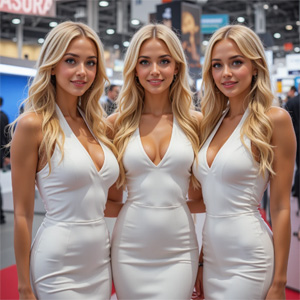
In the bustling, high-stakes halls of Moscow’s Crocus Expo International Exhibition Center, the air carries a surprisingly diverse set of scents—not just the familiar tang of cheese samples and the sweetness of fresh yogurt, but also the mineral scent of stainless steel milking machines, the sterile precision of laboratory testing equipment, and the crisp efficiency of automated packaging lines. This is the world of Russia’s premier dairy industry events—a sector of monumental importance to the Russian economy and consumer.
At the forefront of this industrial landscape is DairyTech, Russia’s only specialized exhibition dedicated entirely to the equipment, technologies, and solutions for milk processing and dairy production. This event is the nexus where science meets commerce, drawing together a highly specialized audience. PRODEXPO, one of the largest food and beverage exhibitions globally, also features a massive dairy sector, attracting over 1,800 exhibitors and nearly 70,000 visitors. Meanwhile, broader agro-industrial exhibitions like AGRAVIA and WorldFood Moscow feature dedicated zones for dairy farming and finished dairy products.
Amidst discussions of membrane filtration, starter cultures, aseptic filling, and cold chain logistics, one professional ensures that the complex process of B2B engagement runs as smoothly as a well-calibrated separator: the Russian exhibition assistant. In an industry where a single contract for a cheese vat or a year’s supply of probiotics can run into millions of dollars, these specialists have become an indispensable asset for international market entry.
The “Full-Fat” Professional
Unlike general consumer fairs, Moscow’s dairy events operate in a world of exacting sanitary standards, complex food chemistry, and heavy industrial decision-making. The standard “booth model” or a simple brochure-greeter is not just inadequate—it can actively undermine a brand’s credibility in this precision-driven and safety-critical sector.
According to Moscow-based agencies that specialize in industrial exhibition staffing, the modern dairy industry assistant has evolved into a strategic asset. They function as a tripartite resource: language expert, business assistant, and operations manager, with a critical fourth component—technical familiarity with dairy science and production equipment.
The visitor profile at DairyTech demonstrates why this expertise is non-negotiable. 100% of visitors are industry professionals, including owners of dairy plants, production directors, chief engineers, quality assurance specialists, procurement managers, and veterinarians. Over 8,300 visitors from 25 countries attend, specifically to source new technologies and form strategic alliances. These are not browsers—they are decision-makers with deep domain knowledge.
The Dairy-Specific Skillset: From Herd to Shelf
To understand the specific demands of a dairy industry booth assistant, one must look at the exhibit categories at Moscow’s premier events.
At DairyTech, the exhibition covers the entire dairy value chain, from receiving raw milk to the final packaged product:
| Category | Specific Examples |
|---|---|
| Milk Reception & Storage | Receiving systems, silos, tanks, cooling systems, plate heat exchangers |
| Milk Processing Equipment | Separators (clarifiers, standardizers), homogenizers, membrane filtration systems (micro/ultra/nanofiltration), evaporators, spray dryers (for powder) |
| Fermentation & Culturing | Cheese vats (open/closed), curd cutting tools, fermentation tanks, starter culture dosing systems |
| Heat Treatment | Pasteurizers (HTST, HHST), UHT systems (direct/indirect), autoclaves, holding tubes |
| Filling & Packaging | Aseptic filling lines, form-fill-seal machines, bottling lines (glass, PET, Tetra Pak), labeling, capping, shrink wrapping |
| Utilities & Ancillary | Boilers, CIP (Clean-in-Place) systems, water treatment, refrigeration units, air compressors, wastewater treatment |
| Ingredients & Additives | Starter cultures, rennet, probiotics, stabilizers, emulsifiers, preservatives, colorings, flavorings |
| Quality Control & Lab | Composition analyzers (fat/protein/somatic cell count), antibiotic test kits, pH meters, texture analyzers, incubators, microbiological safety equipment |
| Finished Products | Fluid milk, yogurt, cheese (soft, hard, processed), butter, cream, ice cream mix, milk powder, whey powder, casein |
| Farm Technologies (at AGROS) | Milking parlors (rotary/herringbone), automatic milking systems (robots), cow identification tags, health monitoring, cooling plates |
A booth assistant working this floor must be able to intelligently discuss these categories, ask the right qualifying questions, and know exactly when to hand off to a technical expert.
Key Terminology for Dairy Booth Assistants
To be effective, a Russian exhibition assistant must command a working vocabulary spanning food science, process engineering, and quality control:
| Category | Key Terms (English/Russian) |
|---|---|
| Processing | Pasteurization (пастеризация), homogenization (гомогенизация), separation (сепарирование), standardization (нормализация), ultrafiltration (ультрафильтрация) |
| Equipment | Separator (сепаратор), homogenizer (гомогенизатор), heat exchanger (теплообменник), cheese vat (сыродельная ванна), aseptic filler (асептический розлив) |
| Cultures & Chemistry | Starter culture (закваска), rennet (сычужный фермент), probiotic (пробиотик), preservative (консервант), emulsifier (эмульгатор), stabilizer (стабилизатор) |
| Quality & Safety | Somatic cell count (соматические клетки), total bacterial count (общая бактериальная обсемененность), shelf life (срок годности), CIP (мойка на месте), HACCP (ХАССП) |
| Finished Products | Cheese (сыр), yogurt (йогурт), kefir (кефир), tvorog (творог), smetana (сметана), butter (сливочное масло), whey (молочная сыворотка) |
| Farm Level | Milking parlor (доильный зал), cooling tank (танк-охладитель), bulk tank (молоковоз), footbath (копытная ванна) |
The Three Pillars of the Dairy Booth Assistant
Based on the technical density and commercial stakes of events like DairyTech and PRODEXPO, the role of the dairy industry assistant rests on three critical pillars.
The Technical Filter and Lead Qualifier
At PRODEXPO 2025, 18,000+ products were on display and foot traffic in the dairy pavilions was intense. The assistant’s first job is to filter and qualify visitors rapidly.
A skilled assistant engages visitors with strategic questions that narrow down their business needs:
- “What segment of the dairy industry are you in? Fluid milk, cultured products (yogurt/kefir), cheese, butter, powder, or ice cream?”
- “What is your current production capacity (liters per day/shift)? Are you looking to upgrade a line or build a new plant?”
- “Are you sourcing primary processing equipment, filling/packaging lines, ingredients/cultures, or laboratory/testing solutions?”
- “Do you require delivery of a turnkey production line or specific modular components?”
- “What sanitary certifications are critical for your operation? Do you export to EAEU markets requiring specific veterinary approvals?”
At DairyTech, which is supported by SOYUZMOLOKO (the Russian National Union of Milk Producers), the presence of senior industry figures is significant. The assistant ensures that VIP visitors are identified immediately and directed to company leadership, maximizing the impact of high-level engagement.
The Technical Communicator and Bridge
In the dairy industry, precision and hygiene are non-negotiable. A misunderstanding about UHT temperature profiles, membrane pore sizes, starter culture compatibility, or CIP (Clean-in-Place) protocols can be catastrophic.
The assistant serves as the technical bridge between international exhibitors and Russian dairy technologists, who demand high performance and compliance with strict Eurasian Economic Union (EAEU) sanitary and veterinary regulations.
Russian buyers come with hyper-specific technical questions. They want to know:
- Does your separator achieve the required skim milk fat content (e.g., below 0.05%) for our regulatory standards?
- Is your homogenizer compatible with high-viscosity products like cream or yogurt mix?
- What is the energy consumption (kW/kg of powder) of your spray dryer?
- Can your packaging line handle multi-format aseptic filling for ESL (Extended Shelf Life) milk?
- Do your starter cultures have proven phage resistance in Russian raw milk conditions?
The assistant translates not just words, but the nuance of these technical inquiries. They signal competence and build the immediate trust required to initiate a technical dialogue.
The Food Safety & Hygiene Protocol Officer
Dairy is a highly regulated sector, and Russian buyers are extremely sensitive to hygiene standards. A professional exhibition assistant in this field is more than a translator; they are an ambassador of food safety.
- Sanitary Presentation: They ensure the booth is pristine. No dirty coffee cups, no cluttered counters. They manage tasting samples with hygienic protocols (separate utensils, gloves, disposable cups).
- Professional Credibility: They dress immaculately. In the dairy sector, sloppiness in appearance translates to sloppiness in sanitation protocols in a buyer’s mind.
- Navigating Veterinary Compliance: They are aware of the key regulatory bodies (Rosselkhoznadzor) and can reassure buyers about documentation related to veterinary certificates and health claims.
The Venue Factor: Conquering Crocus Expo
Moscow’s dairy industry events are held primarily at Crocus Expo International Exhibition Center. This sprawling complex is located approximately 20 kilometers from central Moscow at the 65-66 km mark of the MKAD ring road. Traffic is notoriously unpredictable, and professional assistants are famous for their strict punctuality—often arriving before 9:00 AM to ensure the booth is fully prepared.
However, Crocus Expo has a distinct logistical advantage that professional assistants leverage heavily: the Myakinino metro station is directly connected to the venue. While executives may be stuck in traffic, the savvy assistant arrives via the efficient (though often crowded) Moscow Metro.
The Growing Importance of the Russian Dairy Market
Several factors make the Russian dairy market particularly dynamic—and particularly demanding for exhibition staff.
The $31 Billion Market
Russia is one of the world’s largest dairy markets, with consumption valued at over $31 billion USD. The market for yogurt, cheese, and ultra-pasteurized milk is growing steadily. However, Russian producers face pressure to upgrade aging Soviet-era equipment to meet modern standards of efficiency and safety. At DairyTech, they search for specific solutions: energy-efficient separators, longer-life UHT lines, and automated CIP systems.
The Push for Self-Sufficiency (Import Substitution)
Dairy is a strategic sector for Russia’s food security. Since 2014, the government has heavily subsidized the construction of new dairy farms and processing plants. While this boosts domestic production, it requires vast amounts of new technology. International suppliers from China, Turkey, and Belarus fill this gap, but they must navigate complex EAEU certification processes—a topic often discussed at the event’s business conferences.
The Shift in Supply Chains
With evolving global trade dynamics, the Russian dairy technology market has seen a significant influx of equipment and ingredients from China, Turkey, Belarus, Iran, and India. At DairyTech, hundreds of companies exhibit, many from these friendly nations. An assistant who can bridge Russian with Mandarin or Turkish is an invaluable asset, smoothing negotiations that might otherwise be lost in translation.
The Hierarchy of Dairy Booth Assistants
Given the technical demands and varying needs of exhibitors, Moscow agencies typically offer a tiered staffing model for industrial events:
| Role | Primary Function | Required Knowledge | Best For |
|---|---|---|---|
| Bilingual Hostess | Welcoming visitors, badge scanning, brochure distribution, traffic management | Professional presentation; basic Russian/English fluency; sanitized appearance | Brands needing general visitor management and brand presence |
| Booth Assistant | Product presentations, basic Q&A, lead qualification, explaining product ranges | Dairy industry terminology; understanding of production categories (fluid, cheese, powder); sales awareness | Mid-sized ingredient or component suppliers |
| Technical Specialist / Interpreter | In-depth technical discussions (heat treatment, separators), VIP buyer engagement, complex negotiation support | Advanced dairy processing knowledge (chemistry, engineering); understanding of EAEU compliance; multilingual skills | Premium equipment manufacturers and turnkey solution providers |
According to Moscow staffing data, professional exhibition assistants can help reduce operating costs by approximately 30% and increase lead generation by as much as 50%. Daily rates for experienced dairy industry assistants typically reflect the specialized nature of the field, with technical specialists commanding a premium.
Why Your Dairy Brand Cannot Afford a Novice
In the high-stakes world of dairy processing equipment—where uptime, yield, and hygiene are the only things that matter—the margin for error in technical communication is zero.
A professional Russian exhibition assistant:
- Builds Instant Credibility: They answer questions about fat content standardization and CIP chemical compatibility without hesitation.
- Filters the Crowd: They identify the chief engineer of a large holding company amidst the sea of 8,000+ visitors, ensuring your sales team talks to the right people.
- Navigates Regulation: They offer reassurance about Russian veterinary compliance, defusing a major point of tension for dairy buyers.
- Bridges the Hygiene Culture: They maintain a booth that is spotless, signaling to every visitor that your brand takes food safety as seriously as they do.
Conclusion: The Culture for Success
In the high-stakes, high-hygiene world of Moscow’s dairy industry exhibitions, a gleaming display of a separator or a stack of technical datasheets is not enough. The difference between a successful market entry and an expensive lesson in silence often comes down to the person standing in front of the booth.
The professional Russian exhibition assistant is the first handshake, the technical bridge, and the lasting impression for thousands of potential buyers. They translate not just words, but flow rates, sanitation protocols, and yield percentages. They ensure that a Chinese UHT line finds its way to a Russian yogurt plant, that a Turkish cheese vat gains the trust of a Siberian cheesemaker, and that a Belarusian starter culture proves its value in a Moscow lab.
For any international dairy equipment, ingredient, or service provider looking to break into the dynamic, demanding, and opportunity-rich Russian market—a market actively pursuing modernization and hungry for efficiency—investing in a professional Russian exhibition assistant is not an expense. It is the essential starter culture for the growth of your business in the region.
After all, in the dairy industry, the quality of the final product depends entirely on the quality of the processing. The same is true for market entry: success depends on the quality of the professionals you place at the interface between your brand and the Russian buyer.