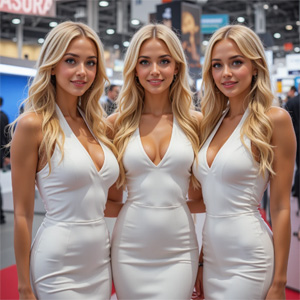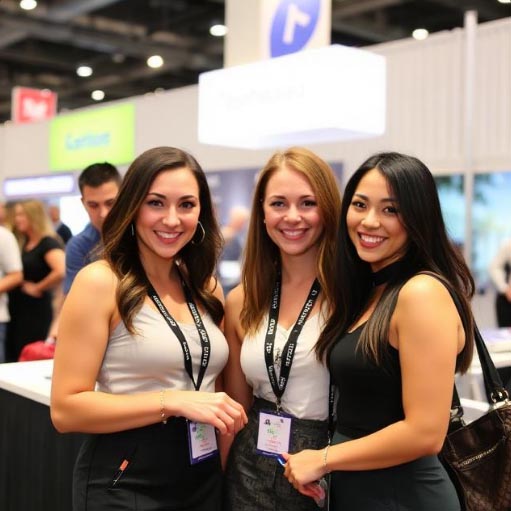
In the vast, brightly lit halls of Crocus Expo, Timiryazev Centre, or VDNKh, where billions of roubles in deals are sealed and industries showcase their latest innovations, one factor often separates a successful exhibition from a forgettable one: the quality of the staff behind the stand.
Moscow has rapidly become a critical hub for international commerce, hosting giants like MosBuild (construction), Interlakokraska (chemicals/paints), and Comtrans (commercial vehicles). As global brands flock to Russia to tap into markets worth hundreds of billions of dollars, the demand for specialized, professional trade show personnel has evolved beyond simple hospitality.
Today’s “Exhibitor Assistant” or “Booth Professional” in Moscow is a strategic asset—acting as a cultural diplomat, a technical expert, and a lead generation engine all rolled into one.
1. The Modern Roles: More Than Just a Hostess
While the visual appeal of a brand ambassador remains important, the Moscow market demands depth. Major staffing agencies now categorize personnel into specific, skill-based tiers.
The following table outlines the key roles international exhibitors typically hire for in Moscow:
| Role | Primary Function | Key Requirement |
|---|---|---|
| Multilingual Hostess / Brand Ambassador | Greeting visitors, distributing materials, crowd management, and creating a welcoming atmosphere. | Fluent Russian & English; strong presentation skills. |
| Business / Technical Interpreter | Facilitating deep technical conversations, translating complex product specs, and assisting in negotiations. | Native Russian + English/Chinese/German; ability to handle industry jargon. |
| Sales & Product Demonstrator | Explaining product mechanics (e.g., automotive tech, industrial machinery), answering FAQs, and qualifying leads. | Industry knowledge (IT, Engineering, Medical); soft sales experience. |
| Exhibitor Liaison / Booth Manager | Acting as the main point of contact for exhibitors, resolving logistical issues, and managing the daily schedule. | Problem-solving, diplomacy, and crisis management. |
| Technical Support Staff | Setting up AV systems, maintaining digital displays, and running live demos without glitches. | Technical aptitude specific to exhibition equipment. |
2. The “Moscow Factor”: Language, Culture, and Technical Know-How
What makes Moscow unique is the specific intensity of the requirements. In a market where English is not widely spoken among the general population, bilingualism is mandatory. However, due to shifting supply chains and increased interest from Asia, the demand for Chinese, German, and Arabic speakers has skyrocketed, often commanding salary premiums of 40-60%.
Furthermore, staff in Moscow are expected to act as “Cultural Mediators”. Russian business culture places a high value on hospitality and relationship-building. A successful hostess knows not just how to scan a badge, but how to navigate local etiquette—such as offering tea or snacks in the booth, which is a prevalent and expected practice.
“In a market where business culture has distinct nuances, your staff serve as cultural ambassadors, lead generation engines, and technical facilitators.”
3. Salary & Compensation Landscape (2026)
The compensation for trade show staff in Moscow reflects the high-stakes nature of the events. While full-time exhibition managers earn an average monthly salary of approximately 96,000 Rubles (~$1,050 USD), temporary event staff command significantly higher daily rates due to the specialized, short-term nature of the work.
Average daily rates for freelance trade show personnel in Moscow:
- Standard Promo Staff/Hostess: 8,000 – 10,000 Rubles
- Bilingual Technical Interpreter: 10,000 – 15,000 Rubles
- Luxury/Automotive Specialist: 20,000+ Rubles
Note: Many agencies implement incentive structures, such as bonuses of 500–1,000 Rubles per qualified lead generated, to motivate staff.
4. Recruitment Strategies for International Exhibitors
Finding reliable staff in a foreign market can be daunting, but Moscow has a mature ecosystem for event personnel.
Professional Agencies
For risk-averse companies, agencies and specialized booth services are the gold standard. They handle vetting, training, and payroll.
Freelance Platforms
University Partnerships
Moscow is home to elite institutions like MGIMO (foreign affairs) and the Higher School of Economics. Recruiting students from these universities ensures a baseline of intelligence, language skills, and cultural sophistication.
5. The Rise of Hybrid & Technical Roles
The modern Moscow trade show is increasingly digital. Staff are now required to assist with live streaming on platforms like VK and Telegram, manage virtual booths, and create real-time social media content during the event.
Moreover, for massive events like MosBuild 2026 (expected to be the largest in its history with over 80,000 visitors), staff must be trained to handle high foot traffic efficiently, directing engineers to experts while keeping casual browsers engaged.
6. Best Practices for Managing Your Moscow Team
To maximize ROI on your personnel investment, experts recommend the following checklist:
- Pre-Training is Non-Negotiable: Schedule at least 1-2 days of paid training. Staff need to understand your product specs, brand voice, and the specific Russian market context.
- Implement Rotation Schedules: Exhibition work is exhausting. Implement a “2-hour rotation” system to keep staff fresh and smiling.
- Daily Debriefs: hold a 15-minute meeting at the end of each day to gather intelligence on visitor feedback and competitor movements.
In the competitive landscape of Moscow’s exhibition industry, your stand is only as good as the people standing in it. Whether you need a charming hostess to draw a crowd or a trilingual engineer to close a complex B2B sale, investing in top-tier trade show personnel is not an expense—it is the most effective marketing strategy in Russia today.